- Web
- 4 Hours ago
Who is Faiz Hameed, the Pakistani spymaster sentenced to 14 years?
-

- Web Desk
- Dec 11, 2025
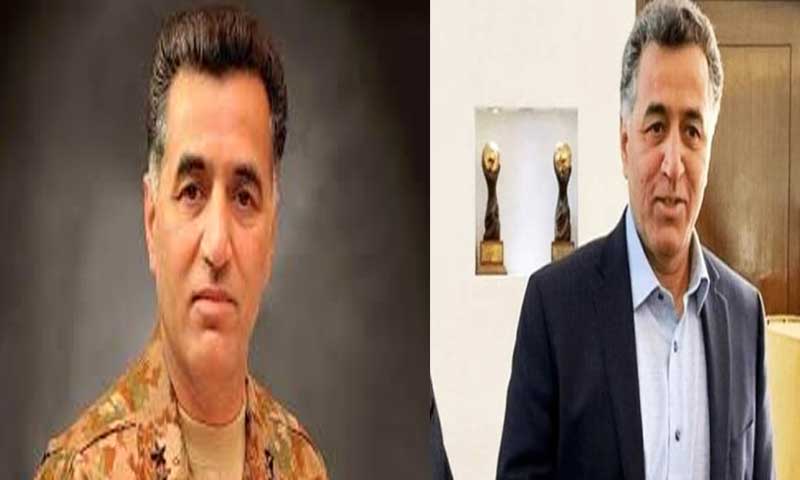
WEB DESK: Pakistan has perhaps made history today by sentencing the former Lieutenant General (Retired) Faiz Hameed who was director general of the premier spy agency Inter-Services Intelligence (ISI) for 14 years owing to his role in the politics of the country. But who is Faiz Hameed who against whom Field General Court Martial was initiated on August 12, 2024, under the Pakistan Army Act.
Hameed can be seen as a figure whose career within Pakistan’s powerful military establishment encapsulates both profound institutional influence and enduring public controversy. Best known as the former former DG ISI, his trajectory from a senior intelligence officer to a retired general now embroiled in legal scrutiny offers a window into the intricate and often opaque interplay between Pakistan’s military, politics, and security apparatus.
Hameed’s ascent to the apex of Pakistan’s intelligence community began with his appointment as ISI chief in June 2019, a decision announced during the tenure of former Prime Minister Imran Khan. He replaced then General Asim Munir, who was reassigned to command the Gujranwala Corps and would later become Chief of Army Staff, Field Marshal and more recently Chief of Defence Forces. This high-level reshuffle underscored Hameed’s standing within the military’s top echelons. His promotion was part of a broader series of appointments that saw other key roles, such as Adjutant General at the General Headquarters, filled by contemporaries like General Sahir Shamshad Mirza.

A career infantry officer from the Baloch Regiment, Hameed’s path to the directorship was paved by extensive experience within the ISI itself, long before he assumed its leadership. He held several pivotal positions inside the agency, most notably as the head of its internal security wing and, previously, the counter-intelligence wing. In these roles, he operated deep within the machinery of Pakistan’s national security framework. His work was praised internally; in 2018, a military spokesperson highlighted his department’s “critical role” in averting terrorist incidents, stating publicly that the full scope of his contributions was largely unknown to the public.

It was, however, the 2017 Faizabad agreement that first thrust Hameed into the national spotlight. The agreement ended a disruptive sit-in by religious groups protesting legal amendments. Hameed did not merely facilitate the talks; he formally signed the document as a “guarantor,” an unusual step that publicly cemented the military’s role as a political arbiter and marked him as a key operator in managing domestic civil unrest. This episode foreshadowed the politically sensitive nature of his future tenure.

As director general, Hameed’s tenure spanned a period of significant regional upheaval. His most visually iconic moment came in September 2021, just weeks after the Taliban’s takeover of Kabul. A brief video clip from his visit to the Afghan capital, showing him calmly sipping tea at the Serena Hotel and assuring a reporter that “everything will be okay,” went viral. This trip, though light on disclosed details, was widely interpreted as a signal of Pakistan’s deep engagement with the new Taliban regime and a move to solidify strategic influence in Afghanistan at the expense of regional rivals, an outcome some analysts termed a strategic win for Islamabad.

Domestically, his time as spymaster was intensely politicised. The opposition Pakistan Muslim League-Nawaz (PML-N) repeatedly accused him of using the agency’s influence to enable legal convictions against its leadership. His tenure concluded abruptly in October 2021 after just over two years, when he was replaced by Lieutenant General Nadeem Anjum. This change followed reported tensions between then-Prime Minister Imran Khan, who wished to extend Hameed’s term, and then-Army Chief General Qamar Javed Bajwa.
Following the ouster of Imran Khan’s government in 2022, Hameed opted for early retirement, a move seen by many as a quiet exit from service amid shifting political alignments. Despite rampant media speculation, he firmly denied any plans to enter politics, telling a journalist that such reports were “totally false.” His retirement, however, did not lead to a quiet private life. In a dramatic turn of events, the military’s media wing announced in August 2024 that he had been taken into custody in connection with the Top City housing scheme scandal. This development indicates he is facing a military court martial, a stark postscript to a career spent at the heart of the state’s most powerful institutions.
Today, Faiz Hameed’s legacy is multifaceted. He is viewed by some as a consummate intelligence professional who navigated extreme internal and external security challenges. To others, he remains a controversial symbol of the military’s entrenched role in Pakistan’s political domain. His current legal troubles further complicate this narrative, transforming the former spy chief from a powerful guarantor of agreements into a defendant, and highlighting the enduring, and often perilous, consequences of influence in Pakistan’s high-stakes establishment politics.
You May Also Like