- Web Desk
- 19 Minutes ago
Why is Trump ‘considering’ withdrawal from NATO amid US-Iran tension?
-

- Web
- 5 Minutes ago
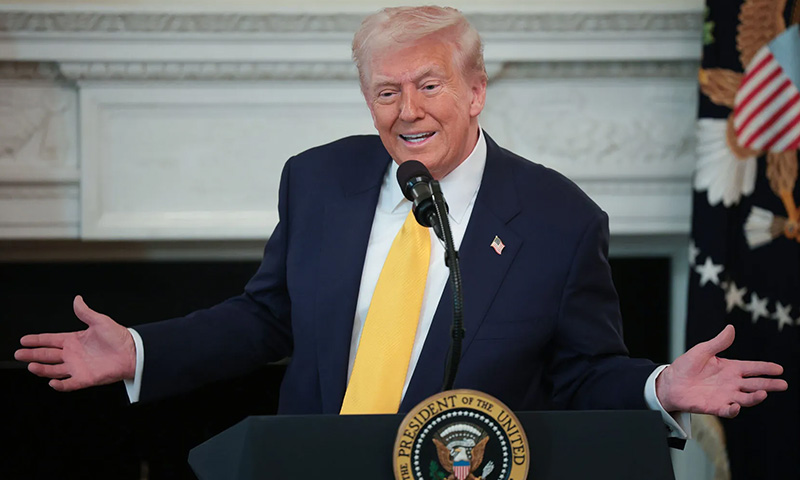
WASHINGTON: US President Donald Trump has announced that they are considering their withdrawal from NATO, after the key countries of the body stepped back to join Trump’s military campaign in Iran amid the US-Iran tensions.
The US president said the war on Iran started after the killing of the Iranian Supreme Leader Ayatollah Khomeini on February 28 could end within “two to three weeks.” However, at the same time, the US administration is also “seriously considering withdrawing the United States from NATO,” he said.
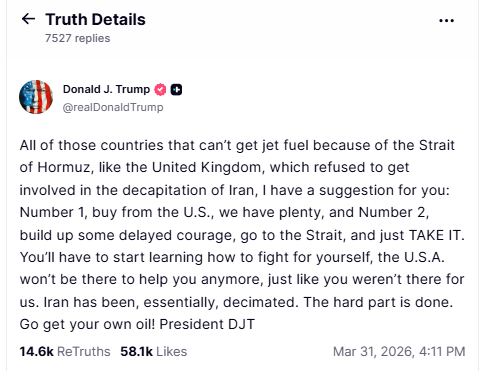
Trump says NATO failed to support US operations in Iran and called it a “paper tiger.” He has also said that allies “weren’t there” when the US needed them. Now the “USA won’t be there to help you anymore, just like you weren’t there for us.”
Earlier, several major NATO allies declined US military involvement. France offered only limited cooperation while refusing offensive operations. Italy took a similar stance, denying landing rights and access to bases. Germany was more direct, stating, “This is not our war.” Spain strongly opposed the move and blocked the US use of its airspace. The United Kingdom initially refused offensive support, later limiting its role to defensive cooperation.
Meanwhile, efforts are underway to ensure the war ends and the Strait of Hormuz is restored diplomatically.
Pakistan, Turkey, Egypt and Saudi Arabia are actively involved in restoring the Strait to ensure the trading ships are allowed in the area. The foreign ministries of the said countries attended a joint meeting in Islamabad last week, but the results are yet to come in.
The UK Prime Minister Keir Starmer also announced today (Wednesday) that Britain will host a multi-nation meeting on the Strait of Hormuz this week, as tensions in the Middle East continue.
Why does the Strait of Hormuz matter?
The Strait of Hormuz is one of the most important waterways in the world. Around 20–25 per cent of global oil and gas passes through it, making it a critical route for energy exports from Gulf countries. This steady flow helps maintain global energy supply and stabilises oil prices.
It supports major trade between the Middle East and regions like Asia and Europe. Its location provides the shortest and most cost-effective shipping route for oil tankers and cargo vessels.
Strategically, control or influence over the strait gives countries like Iran significant geopolitical power. It allows them to impact global energy markets and exert pressure on other nations.
Iran’s tax on ships
According to sources, Iran is considering imposing a tax of $2 million per ship for vessels passing through the Strait of Hormuz. Ships are required to obtain approval and pay for what Iran describes as “safe passage.”
The purpose of this toll is to generate revenue, especially during conflict, and to strengthen Iran’s control over a key global trade route. It also serves as a tool to pressure Western countries and increase Iran’s geopolitical leverage.
However, under international law, such tolls are not permitted. Despite this, many ships comply to avoid risks such as delays, blockades, or potential attacks.
You May Also Like