- Farah Mehjabeen
- October 26, 2026
Why the ending of ‘Main Vaapas Aaunga’ is getting everyone talking?
-

- Zoya Anwer
- June 16, 2026
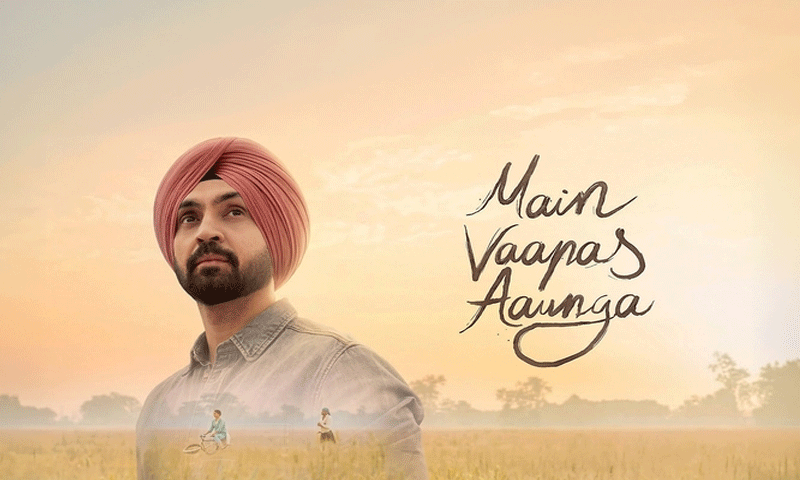
Imtiaz Ali’s latest film Main Vaapas Aaunga has sparked a wave of discussion online, not because of its star-studded cast or its music by A.R. Rahman, but because of a brief sequence that appears during the film’s closing credits.
Released on June 12, Main Vaapas Aaunga stars Diljit Dosanjh, Naseeruddin Shah, Vedang Raina, Sharvari and Banita Sandhu. Written and directed by Imtiaz Ali, the film explores themes of memory, longing and belonging, examining how the trauma of displacement can echo across generations.
While critics have largely focused on the performances and the film’s emotional storytelling, many viewers have been discussing something else entirely: the film’s closing credits.
Several audience members on social media pointed to the inclusion of footage associated with Palestinian refugees and the Nakba alongside imagery connected to migration and displacement. According to viewers, the montage broadened the film’s central themes beyond Partition and linked them to other experiences of exile and loss around the world.
Many praised the decision, arguing that it transformed the film from a historical love story into a wider reflection on displacement and the human cost of being forced from one’s home. Some viewers described the sequence as one of the most memorable moments of the film, saying it reinforced the idea that stories of migration and separation are not confined to one country or one period in history.
Others viewed the inclusion as a bold creative choice from a mainstream filmmaker. Several social media users argued that the sequence demonstrated how cinema can connect different historical experiences through shared emotions such as grief, longing and nostalgia.
However, the scene also generated criticism. Some viewers accused the film of introducing contemporary political themes into a story centered on Partition, while others argued that the comparison was unnecessary. A number of online commentators even labelled the film a “Muslim apologist” project, criticizing what they saw as an attempt to draw parallels between different historical conflicts.
The polarised reactions have become one of the most talked-about aspects of the film’s release, with discussions extending far beyond its storyline.
Despite the debate, many critics responded positively to the film itself. Reviews praised Naseeruddin Shah’s performance as emotionally powerful, while several critics highlighted the film’s exploration of memory and migration. Others commended Imtiaz Ali for tackling the lingering psychological effects of Partition through an intimate and personal narrative.
The film’s commercial performance, however, has been less impressive. Reports suggest that Main Vaapas Aaunga opened to modest box-office numbers despite its large-scale production and acclaimed cast. Some viewers and industry observers have speculated that the film’s unconventional storytelling and slower pace may have limited its appeal among mainstream audiences, though there is no clear consensus on why it struggled commercially.
What is clear is that Main Vaapas Aaunga has become one of the most debated films of the year. For many viewers, the conversation is no longer just about the love story at its center but about the final images that appear after it ends and the questions those images raise about memory, migration and the stories societies choose to remember.
You May Also Like