- Web Desk
- 54 Minutes ago
Why US presidents “Pardon” Turkeys every Thanksgiving?
-

- Web Desk
- Nov 27, 2025
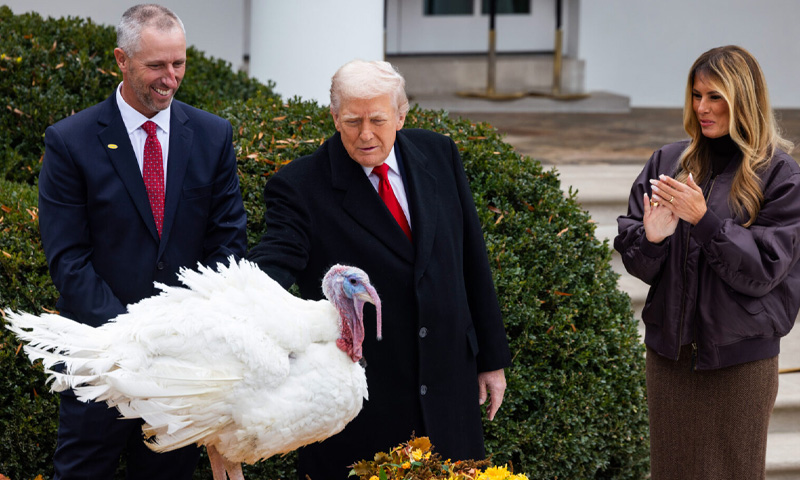
Each Thanksgiving, the president of the United States grants a symbolic pardon to a turkey, sparing it from becoming part of the holiday feast. This tradition, though formalized in 1989 by President George HW Bush, has roots that stretch back more than 150 years.
The story goes that in the 1860s, President Abraham Lincoln’s son Tad grew fond of a turkey that had been sent to the White House for Christmas dinner and asked his father to spare it. Lincoln reportedly agreed, setting the stage for the idea of presidential clemency for turkeys.
Over the decades, presidents occasionally saved turkeys from slaughter, but it was not yet an official ritual. For instance, John F Kennedy returned a turkey sent to the White House in 1963, and Ronald Reagan was the first to use the word “pardon” when referring to a turkey in a public ceremony.
The modern ceremony began when George Bush officially pardoned a turkey in 1989, declaring it would live out its days on a farm rather than the dinner table. Since then, each president has continued the tradition, often presenting two birds, a primary turkey and a backup, for the pardon. Pardoned turkeys are typically sent to farms, petting zoos, or educational programs, where they live out their retirement and sometimes even become local mascots.
The turkey pardon combines Thanksgiving’s themes of gratitude and mercy with a lighthearted public ritual. While millions of turkeys are still eaten each year, the pardoned few enjoy a reprieve and a moment in the national spotlight, reminding Americans of both history and holiday cheer.
On November 26, 2025, President Donald Trump continued the annual White House tradition by officially pardoning two Thanksgiving turkeys, Gobble and Waddle. Addressing the birds at the ceremony, Trump declared, “You are hereby unconditionally pardoned,” sparing them from the fate that befalls millions of turkeys each year.
Donated by the National Turkey Federation, the birds stayed temporarily at a Washington, DC hotel before returning to North Carolina, where they will live under the care of poultry experts and students at NC State University’s College of Agriculture and Life Sciences.
You May Also Like