- Web Desk
- 43 Minutes ago
Why was call sign ‘SAM095’ used for JD Vance’s flight to Islamabad?
-

- Web Desk
- 1 Minute ago
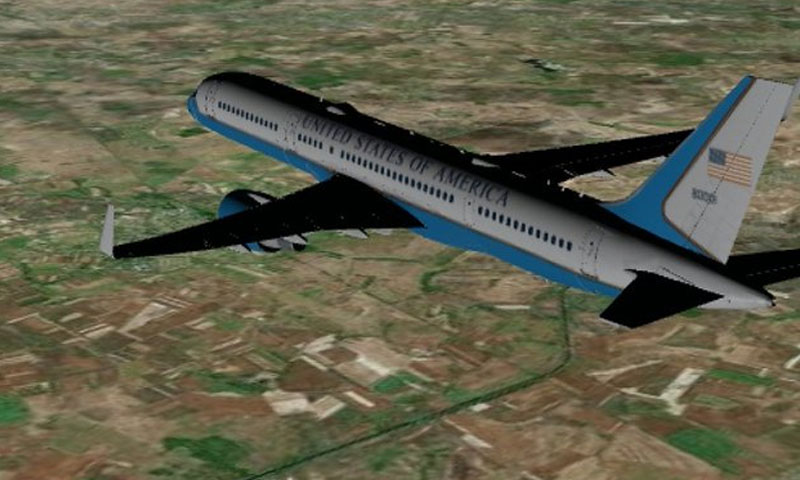
ISLAMABAD: The special flight carrying US Vice President JD Vance to Pakistan used the call sign ‘SAM095’, aviation sources said, indicating the mission was part of a broader official operation rather than a standard vice-presidential trip.
The call sign refers to a Special Air Mission (SAM), typically assigned to US Air Force flights transporting senior government, military or political officials.
While flights carrying the vice president are usually designated “Air Force Two” when he is onboard, the use of “SAM095” suggests the aircraft may be part of a wider official mission involving multiple high-level figures.
Aviation officials said “SAM” denotes Special Air Mission, while “095” is an operational identifier assigned to that specific flight under its mission plan.
Vance arrived in Islamabad aboard a C-32A aircraft, a modified Boeing plane commonly used to transport senior US leadership.
Senior US and Iranian officials gathered in Islamabad on Saturday for high-stakes negotiations aimed at ending a six-week-old war, though uncertainty loomed after Tehran signalled conditions for starting talks.
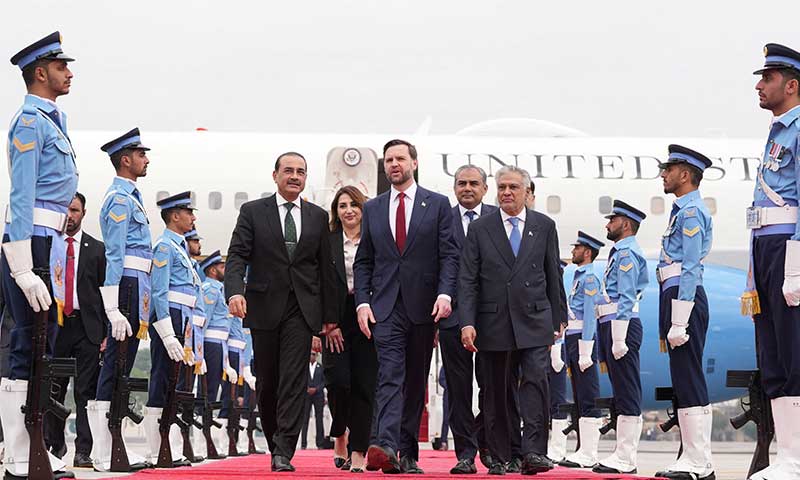
The US delegation, led by Vice President JD Vance and including President Donald Trump’s envoy Steve Witkoff and adviser Jared Kushner, arrived aboard two US Air Force aircraft earlier in the day.
One of the flights used the call sign “SAM095”, indicating a Special Air Mission rather than the conventional “Air Force Two” designation.
They were received by Pakistan’s army chief Field Marshal Asim Munir and Foreign Minister Ishaq Dar.
An Iranian delegation led by parliamentary Speaker Mohammad Baqer Qalibaf and Foreign Minister Abbas Araqchi had arrived a day earlier.
These talks are expected to be the highest-level engagement between Washington and Tehran since Iran’s 1979 Islamic Revolution, and the first official face-to-face negotiations since the 2015 nuclear agreement.
However, Qalibaf said negotiations could not begin unless prior US commitments — such as unblocking Iranian assets and securing a ceasefire in Lebanon — were fulfilled.
The United States and Israel have rejected linking the Lebanon conflict to the broader Iran-US ceasefire framework.
Iranian state media reported that Tehran’s delegation was scheduled to meet Prime Minister Shehbaz Sharif to decide the timing and format of possible negotiations.
US President Trump, responding on social media, said Iran had “no cards” and suggested Tehran’s leverage was limited to disrupting international waterways.
Vance, speaking ahead of his arrival, expressed cautious optimism but warned that Washington would not tolerate negotiating tactics it deemed insincere.
Pakistani officials have already held preliminary discussions with advance teams from both sides. Sources said around 70 Iranian delegates and roughly 100 US personnel were in Islamabad as part of preparatory efforts.
Security in the capital has been tightened, with thousands of troops deployed and parts of the city under lockdown. Minister of State for Interior Talal Chaudhry said a multi-layered security plan was in place to ensure “zero disruption”.
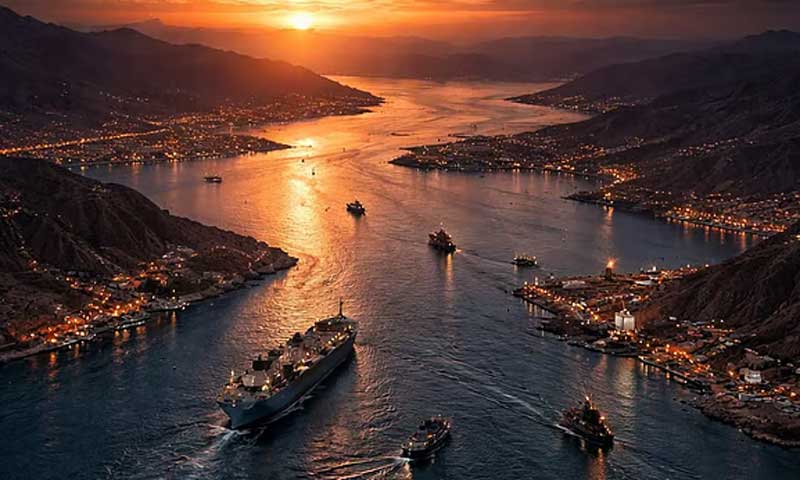
A two-week ceasefire announced earlier this week has paused US and Israeli airstrikes on Iran. However, tensions remain high as Iran continues its blockade of the Strait of Hormuz, disrupting global energy supplies, while fighting persists between Israel and Iran-backed Hezbollah in Lebanon.
You May Also Like