- Aasiya Niaz
- 18 Minutes ago
Will there be an acid rain in Pakistan after Iran oil refinery explosion?
-

- Syeda Masooma
- Mar 10, 2026
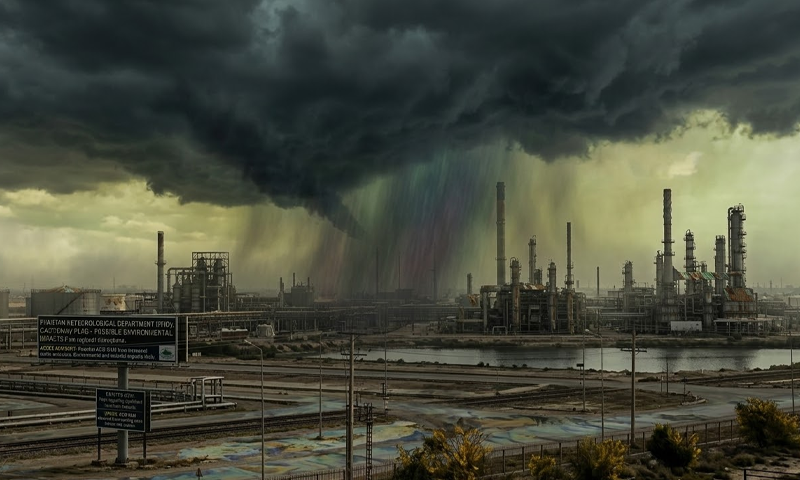
The Pakistan Meteorological Department (PMD) has warned that pollution generated by recent strikes on Iranian oil facilities could potentially affect air quality in Pakistan’s western regions.
In a statement issued on Monday, the Met Office said winds blowing from Iran may carry polluted particles toward Pakistan because of the ongoing conflict involving the United States and Israel. These pollutants could worsen air conditions in areas closer to the border if atmospheric conditions allow them to travel eastward.
The department also forecast changing weather conditions across northern Pakistan. A westerly weather system is expected to move into the country from the night of March 9 and remain active until March 12. Under its influence, several areas of Khyber Pakhtunkhwa, Gilgit-Baltistan and Kashmir may experience cloudy weather, rainfall, strong winds and thunderstorms, with occasional heavy downpours.
Light rain and thunderstorms are also expected in districts including Peshawar, Swabi, Mardan and Charsadda on March 10 and 11. Islamabad, the Potohar region, Murree and the Galliyat may also receive rain during the same period, while isolated hailstorms could occur in some places.
The PMD also warned that temperatures in northern regions could drop by around three to four degrees Celsius. Authorities also cautioned about the risk of landslides in mountainous areas and issued an alert for possible glacial lake outburst floods (GLOF) in parts of Gilgit-Baltistan and upper Khyber Pakhtunkhwa due to above-normal temperatures in recent days.
EXPERT SAYS FEARS OF “PETROLEUM RAIN” ARE UNREALISTIC
However, environmental experts say some fears circulating online are exaggerated. Dr Zainab Naeem, who holds a PhD in environmental sciences and is associated with the Sustainable Policy Development Institute (SDPI), said that there is no scientific basis for claims that petroleum rain or toxic oil clouds could reach Pakistan from Iran.
According to her, the pollutants that might travel long distances are likely to be highly diluted gases such as sulphur oxides (SOx), nitrogen oxides (NOx) and volatile organic compounds. These substances could contribute to haze or smog in the region but are unlikely to produce hazardous “oil rain” or cause direct chemical burns in Pakistan.
She said that the scale and distance involved make such extreme scenarios physically unrealistic.
Meanwhile, there are apprehensions among the denizens of Pakistan, who recall an increase in fatal diseases in the tribal areas after the US bombing in the bordering Afghan region.
TOXIC SMOKE AND “BLACK RAIN” REPORTED IN TEHRAN
Meanwhile, Iran is facing severe environmental consequences after strikes targeted oil depots and refineries around Tehran.
The attacks reportedly released large quantities of hydrocarbons and industrial gases such as sulphur dioxide and nitrogen oxides into the atmosphere. When these pollutants mixed with rainfall, residents reported dark, oily precipitation often described as “black rain”.
Massive plumes of smoke rising from damaged facilities have also darkened the skies over parts of the Iranian capital, with thick pollution reducing visibility and raising concerns about respiratory health. Authorities warned that exposure to these fumes could irritate the eyes and lungs and aggravate breathing problems.
Environmental groups have also raised alarms about the broader ecological impact, saying the pollution could contaminate soil and water sources and threaten migratory birds travelling across the Persian Gulf.
WHAT IT COULD MEAN FOR PAKISTAN
For Pakistan, the immediate risk is not toxic rainfall but possible deterioration in air quality, particularly in western regions if winds carry pollution across the border.
Meteorologists say any pollutants reaching Pakistan would likely be diluted by the time they travel such long distances. Still, authorities are monitoring the situation closely as atmospheric conditions evolve.
At the same time, the approaching weather system may bring rain, thunderstorms and cooler temperatures to northern parts of the country over the next few days, which could help disperse pollutants in the atmosphere.
You May Also Like