- Shafiq Sharif
- November 14, 2026
World Diabetes Day: Why are millions of Pakistanis living with diabetes?
-

- WEB DESK
- November 14, 2026
One in four Pakistani adults is living with diabetes, millions remain unaware of their condition, and the number of people affected could double by 2050. As the country marks World Diabetes Day on November 14, the figures raise a troubling question: why is diabetes so widespread in Pakistan, and how much of this burden could be prevented?
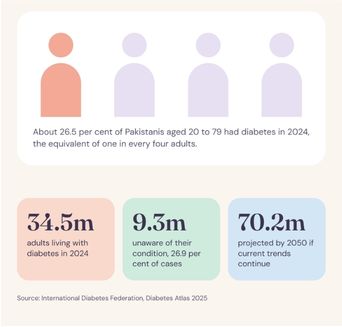
According to the International Diabetes Federation’s Diabetes Atlas (2025), an estimated 34.5 million Pakistanis aged 20 to 79 were living with diabetes in 2024, giving the country the world’s highest age-standardised diabetes prevalence at 31.4 per cent.

The findings place Pakistan at the centre of a growing global health crisis, with researchers pointing to a combination of genetic susceptibility, changing lifestyles, obesity and inadequate preventive healthcare.
How serious is Pakistan’s diabetes crisis?
Pakistan ranks fourth globally in the estimated number of adults living with diabetes, behind China, India and the United States, according to the IDF’s 2025 report.
Its 31.4 percent age-standardised prevalence is the highest among the countries surveyed. The actual estimated proportion of affected adults aged 20 to 79 is approximately 26.5 per cent, with age-standardisation allowing comparisons between countries with different population structures.
Perhaps more concerning is the number of people unaware that they have the disease. The IDF estimates that approximately 9.3 million Pakistanis, or 26.9 per cent of adults with diabetes, remained undiagnosed in 2024.
The federation projects that Pakistan could have approximately 70.2 million adults living with diabetes by 2050 if current trends continue.
Earlier national research supports the scale of the problem. The 2016–17 National Diabetes Survey of Pakistan, involving more than 10,000 adults, found diabetes prevalence of 26.3 per cent and prediabetes prevalence of 14.4 per cent.
Urban prevalence stood at 28.3 per cent, compared with 25.3 per cent in rural areas, demonstrating that diabetes is a nationwide concern rather than an exclusively urban problem.
Is diabetes really just about eating too much sugar?
In Pakistan, diabetes is commonly referred to simply as “sugar”, reinforcing the misconception that the disease develops primarily from eating too many sweets or adding sugar to tea. However, the relationship between diet and diabetes is considerably more complex.
According to the American Diabetes Association, the body breaks down carbohydrates, including starches, into glucose, which enters the bloodstream and raises blood sugar levels.
This means that foods without added sugar, including white rice, naan, bread made from refined flour (maida) and other starch-heavy foods, can also significantly affect blood glucose.

Diabetes UK identifies refined carbohydrates, including white bread and white rice, alongside sugary drinks as dietary factors associated with an increased risk of type 2 diabetes.
However, carbohydrates are not all alike. Whole grains, lentils, vegetables and other fibre-rich foods generally offer better nutritional value and can help regulate blood glucose.
The distinction is particularly relevant to Pakistani diets, where rice and roti are everyday staples. Portion sizes, the type of flour used and the overall balance of a meal all matter.
Importantly, diabetes is not caused by one food alone. Genetics, abdominal obesity, physical inactivity and insulin resistance also contribute to risk.
Avoiding sweets, therefore, is only one part of diabetes prevention. Understanding the quantity and quality of carbohydrates consumed is equally important.
Why are Pakistanis more vulnerable?
Diabetes is frequently associated with excessive sugar consumption, but researchers say its causes are considerably more complex.
South Asians, including Pakistanis, are particularly susceptible to developing type 2 diabetes at younger ages and lower body weights than many other populations.
A study published in Nature Medicine, involving more than 50,000 British Pakistani and Bangladeshi participants, identified genetic factors associated with reduced insulin production and unfavourable fat distribution.
Participants with the highest combined genetic risks developed type 2 diabetes approximately eight years earlier and at a body mass index three points lower than those with the lowest combined risks.
This helps explain why some people develop diabetes despite appearing relatively slim.
However, genetics alone cannot explain Pakistan’s high prevalence. Diets containing large quantities of refined carbohydrates and sugary drinks, physical inactivity, excess abdominal fat, family history and limited access to preventive healthcare also contribute.
The interaction between inherited susceptibility and environmental factors makes early screening particularly important.
How can you tell if you have diabetes?
One of the biggest challenges is that type 2 diabetes may develop without obvious symptoms.
Common warning signs include frequent urination, excessive thirst, persistent tiredness, unexplained weight loss and blurred vision.
According to the American Diabetes Association’s 2026 clinical guidelines, diabetes can be diagnosed through laboratory blood tests.
An HbA1c reading of 6.5 per cent or higher indicates diabetes. This test measures average blood glucose over approximately three months and generally does not require fasting.
A fasting blood glucose level of 126 mg/dL or higher also meets the diagnostic threshold. In people without clear symptoms, an abnormal result generally requires confirmation.
An HbA1c between 5.7 and 6.4 per cent indicates prediabetes, when blood sugar is elevated but has not reached diabetic levels.
Routine screening is generally recommended from age 35, with earlier testing for people with additional risk factors, including a family history.
Can diabetes be reversed?
Understanding the type of diabetes is essential.
Type 1 diabetes is an autoimmune condition in which the body produces little or no insulin. Patients require insulin treatment, and there is currently no cure rather the patient has to learn to manage it.
Type 2 diabetes develops when the body becomes less responsive to insulin and cannot produce enough to maintain normal blood sugar levels.
Gestational diabetes develops during pregnancy and increases the risk of type 2 diabetes later in life.
While type 1 diabetes cannot currently be reversed, some people with type 2 diabetes can achieve remission, meaning blood sugar returns below the diabetic threshold without glucose-lowering medication.
A major UK clinical trial known as DiRECT found that 46 per cent of participants receiving intensive, medically supervised weight-management treatment achieved remission after one year. At two years, 36 per cent remained in remission.
However, remission is not a permanent cure. Diabetes can return, and patients should never discontinue prescribed medication without medical supervision.
What can Pakistan do to contain the crisis?
The World Health Organization recommends healthier diets, maintaining an appropriate body weight, avoiding tobacco and undertaking at least 150 minutes of moderate physical activity each week.
For Pakistani households, preventive measures could include reducing sugary drinks, moderating portions of refined carbohydrates, increasing vegetable intake and making regular walking part of daily routines.
However, individual choices alone cannot address a crisis affecting millions.
In his World Diabetes Day message, Prime Minister Shehbaz Sharif said the federal government had allocated Rs6.8 billion for its diabetes prevention and control programme, aimed at expanding screening, strengthening primary healthcare and improving access to treatment.
The challenge is ensuring that these services reach communities where routine blood tests, specialist consultations and long-term medication remain difficult to access.
With millions of Pakistanis potentially living with undiagnosed diabetes, expanding affordable screening and timely treatment could prevent complications involving the kidneys, heart, eyes and nerves.
For a country facing one of the world’s highest diabetes rates, early detection may be among its most important public health priorities.
You May Also Like


- WEB DESK
- November 14, 2026
Musadik Malik to represent Pakistan at SCO conference in New Delhi

- Reuters
- November 14, 2026