- Web Desk
- 13 Minutes ago
Zardari, Shehbaz convene high-level security moot amid regional tensions
-

- Web Desk
- 4 Minutes ago
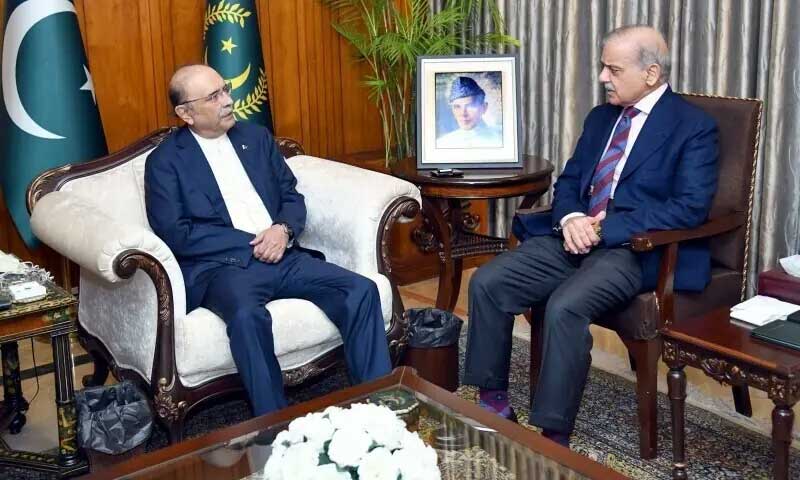
WEB DESK: President Asif Ali Zardari and Prime Minister Shehbaz Sharif held a pivotal meeting on Monday to review Pakistan’s national security framework and navigate the escalating geopolitical volatility following the outbreak of conflict involving Iran.
The huddle at the President’s Secretariat follows a significant quadrilateral ministerial moot in the capital, where the foreign ministers of Saudi Arabia, Turkiye, and Egypt joined Pakistan to demand an “early and permanent end” to the regional war, according to Dawn News.
The high-powered session underscores Islamabad’s growing concern over the spillover effects of the Middle Eastern crisis on domestic stability.
Strategic coordination and regional implications
The meeting was attended by a cohort of the country’s top civilian and military leadership, including Deputy PM and Foreign Minister Ishaq Dar, PPP Chairperson Bilawal Bhutto-Zardari, and Interior Minister Mohsin Naqvi. Crucially, the National Security Adviser and the Director General of the ISI, Lt Gen Asim Malik, were present to provide briefings on the “evolving regional scenario.”
The participants engaged in a comprehensive review of how the Iran conflict could impact Pakistan’s borders and internal security. With the regional landscape shifting rapidly, the leadership underscored the imperative for a coordinated national strategy and institutional harmony to safeguard the country’s interests against external shocks.
Addressing economic and energy vulnerabilities
Beyond traditional security, the leadership deliberated on the pressing “triple threat” of economic, energy, and supply chain disruptions. This follows a previous high-level session involving Field Marshal Asim Munir, where the government voiced serious concerns regarding oil and gas supply stability.
The Secretariat noted that the discussions focused on fuel conservation through the implementation of strict measures to manage potential energy shortages, alongside austerity efforts aimed at streamlining government spending to cushion the economic impact.
It was also emphasised that public relief remains a priority, ensuring that volatility in global oil prices does not disproportionately burden the citizenry.
By aligning the top brass and political stakeholders, the government aims to present a unified front as it navigates one of the most complex diplomatic and economic periods in recent history.
You May Also Like