- Web Desk
- Mar 31, 2026
Flood warning for Ravi, Chenab as rains pound catchment areas
-

- Web Desk
- Aug 27, 2025
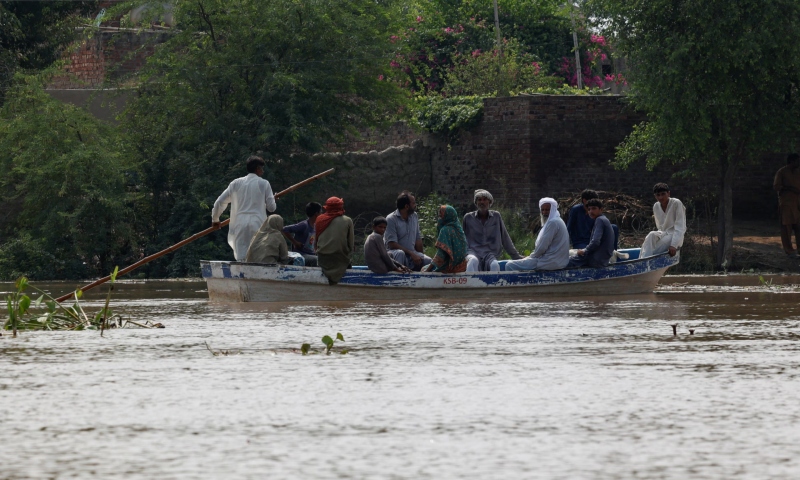
LAHORE/ISLAMABAD: With heavy monsoon rains in the catchment areas of eastern rivers as well as Chenab in Occupied Kashmir and India for the last several days, the National Disaster Management Authority (NDMA) on Tuesday warned of high to extremely high flood in Ravi and Chenab rivers.
Meanwhile, the district administration around midnight said Sialkot had received 405mm of rain in just 12 hours on Tuesday.
Also, the government declared the next 12 hours as very critical, as Information Minister Attaullah Tarar said Chenab could witness extremely high flood with the waterflow touching 700,000 cusecs.
He said the water level was very high in the three rivers — Chenab, Ravi and Sutlej.
Tarar warned that the rising water could affect the private housing societies along Ravi in Lahore, while Sialkot city might also be in the line fire.
RISING WATER
On Tuesday evening, the NDMA said the waterflow in Chenab at Marala Headworks had crossed 400,000 cusecs and could reach 600,000 cusecs before midnight.
As far as Sutlej is concerned, the river was in very high flood — 224,000 cusecs — at Ganda Singh Wala.
Meanwhile, India opened the spillways of Thein Dam after which Ravi was in high flood — 190,000 cusecs — at Kot Naina, a town in Shakrgarh tehsil of Narowal district located near the border with India.
SIALKOT INUNDATED
On the other hand, northeastern Punjab — from Okra, Kasur and Lahore in the south to Narowal and Sialkot in the north — received heavy rains during the last 36 hours due the same weather system affecting Occupied Kashmir and India.
And downpour continued in the region on Tuesday. It was heaviest in Sialkot, Daska and surrounding areas, with the low-lying areas have been inundated.
In Sialkot, the Met Office recorded 228mm of rain, the heaviest in the last 24 hours, according to its 5:30pm bulletin. However, Sialkot deputy commissioner later told HUM News that the total had crossed 350mm while the downpour continued to lash the area.
Sialkot started receiving rain at 12am on the night between Monday and Tuesday, submerging roads, business centres and residential neighbourhoods, which caused a loss of millions of rupees.
Meanwhile, more than half of Sialkot was plunged into darkness with the suspension of power supply amid heavy downpour.
For the next 24 hours, the Met Office has warned of flash flooding in Kashmir and urban flooding in northeastern Punjab — Narowal, Sialkot, Gujrat, Jhelum, Mandi Bahauddin, Gujranwala and Lahore.
The flood warning comes as the overflowing Sutlej River has already inundated a large swath of Kasur — over 70 villages — and nearby areas, with the flood starting to affect downstream of Ganda Singh Wala.
Read more: Extremely high flood expected in Sutlej
It is the Ferozepur Headworks in India near Ganda Singh Wala, Kasur, that regulates waterflow in Sutlej.
INDUS WATERS TREATY
Earlier, India didn’t inform about the flooding threat in Sutlej, it did share the information about Ravi and its tributaries with Pakistan.
However, New Delhi did not come follow the procedures prescribed under the Indus Waters Treaty, as it used diplomatic channels to pass on the information.
Read more: India shared flood warning through diplomatic channels, not IWT: FO
Meanwhile, Reuters in a story claimed that Pakistan evacuated at least 150,000 people in areas along three rivers in its agricultural heartland to escape flooding, as neighbouring India warned it plans to release excess water from a dam.
However, a spokesperson at the NDMA told Reuters that the forced evacuations started on Friday ahead of the Indian warning and have continued to date.
Read more: Record drought in Europe, hundreds dead in Pakistan flash floods
DAM FILLED
Earlier in the day, the Thein Dam in India had attained 97 per cent of its capacity and spillways could be opened any time amid heavy downpour and rising flow in streams/nullahs feeding Ravi.
In this connection, it said the streams and nullahs — the tributaries of Ravi and Chenab — originating from the Pir Panjal mountain range of Occupied Kashmir were also in high flood.
Some of these enter Pakistan from Jammu and are already inundating the areas around them in Sialkot and Narowal.
Meanwhile, the NDMA say waterflow in Ravi at Jassar Headworks in Narowal district was recorded at 115,000 cusecs which could reach 150,000 cusecs in next 24 hours.
At Lahore’s Shahdara, the waterflow in Ravi was 50,000 cusecs with the possibility of reaching 90,000 cusecs after water is released from the Thein Dam.
On the other hand, Chenab was in high flood with an inflow of 240,000 cusecs at Marala Headworks in Sialkot.
WHAT’S HAPPENING IN JAMMU
An AFP story describes the devastation in Jammu, Occupied Kashmir.
Quoting Indian media, it says fierce floods swamped Jammu on Tuesday as intense monsoon rainstorms in the Himalayan region caused widespread chaos, sweeping away bridges and swamping homes.
The Press Trust of India (PTI) news agency reported five people had been killed by a landslide in the Reasi district, citing local officials.
It also released videos that showed brown torrents of raging water smashing into bridges and covering Hindu temples.
Chief Minister Omar Abdullah said he would be taking the “next available flight” to Jammu, calling the situation in many parts of Jammu province “quite serious”, he said in a statement.
PTI reported that phone lines were damaged.
AFP was not able to immediately contact officials to confirm the exact extent of the flood damage.
Floods and landslides are common during the June-September monsoon season, but experts say climate change, coupled with poorly planned development, is increasing their frequency, severity and impact.
Floods on August 5 overwhelmed the Himalayan town of Dharali in India’s Uttarakhand state and buried it in mud. The likely death toll from that disaster is more than 70 but has not been confirmed.
Read more: 100 missing, four dead as flash flood hits Indian village
On August 14, powerful torrents driven by intense rain smashed into Chisoti village in Indian-administered Kashmir, killing at least 60 people.
Read more: Flash flood claims at least 46 lives in Indian Occupied Kashmir, 200 missing
You May Also Like