- Web Desk
- Mar 31, 2026
Gilgit-Baltistan sees decline in out-of-school children
-

- Hum News Tanveer Abbas
- Mar 09, 2024
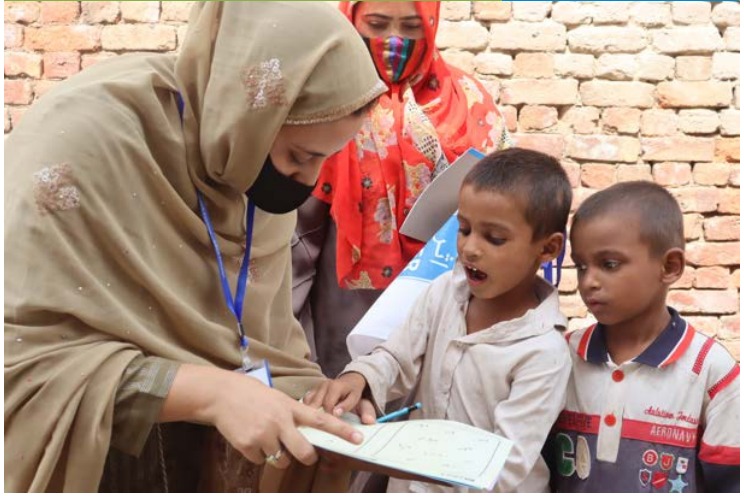
Gilgit: The latest findings from the Annual Status of Education Report (ASER) 2023 show a promising decrease in the number of out-of-school children in Gilgit-Baltistan.
Conducted across 10 rural districts encompassing 5,866 households in 298 villages, the survey’s findings offer a beacon of hope and progress. The comprehensive study, facilitated by Idara-e-Taleem-o-Aagahi and covering 15,341 children aged 3-16, reveals a decrease in out-of-school children aged 5-16 to 6.3 per cent in 2023 from 10 per cent in 2021, signalling a move in the right direction towards inclusive education.
The survey’s detailed examination reveals a nuanced landscape of school enrollment, with 94pc of all school-aged children within the age bracket of 6-16 years now attending educational institutions. This figure represents a mix of enrollment in government schools, which has seen a decrease to 63 per cent from 73 per cent in 2021, and a significant rise in non-state/private institution attendance, now at 37 per cent, up from 27 per cent in the previous survey.
Notably, the share of private schools has surged by 10 percentage points, returning to pre-COVID levels, indicating a shift in parental preference or perceived educational quality.
Empathy: how to learn to feel more for other people
Gender disparities in school enrollment persist but with varying degrees across different types of institutions. Government schools report a 39 per cent female enrollment, whereas private schools boast a more balanced gender ratio with 46 per cent girls.
The report also casts light on the early childhood education (ECE) scenario, showing a positive trend with 50 per cent of children aged 3-5 enrolled in ECE in 2023, up from 38 per cent in 2021. In terms of learning outcomes, the survey presents a mixed bag of results.
Urdu and English literacy levels have seen an uptick among class 3 and class 5 students, indicating improvements in language competencies. However, arithmetic skills have witnessed a decline, with a notable drop in the ability to perform two-digit division among the same age groups, signalling a critical area for intervention.
A noteworthy finding from the ASER 2023 report is the superior performance of children enrolled in private schools in literacy and numeracy compared to their counterparts in government schools. The report also sheds light on gender performance, revealing that boys slightly outperform girls in literacy, while girls lead in numeracy skills among children aged 5-16.
The report also notes the higher incidence of private tuition among private school students, underscoring a dependency on additional education to achieve desired academic results. However, it has decreased significantly for government school students (21 per cent in 2021). Overall, among those who attend paid tuition, 19pc are enrolled in private schools as compared to 9pc in government schools.
In terms of infrastructure and facilities within government primary schools, the ASER 2023 report provides a detailed update. About 53 per cent of the surveyed government primary schools have functional toilets, which is a slight decrease from 57 per cent in 2021. On a brighter note, 65 per cent now has clean drinking water available, marking a substantial improvement from 47 per cent in 2021.
However, 60 per cent of these schools had complete boundary walls, witnessing a slight reduction from 63 per cent in the previous survey. There’s a significant positive change in recreational facilities, with 44 per cent of surveyed government primary schools now having playgrounds, up from 29 per cent in 2021.

The availability of electricity remains stable, with 67 per cent of schools having an electricity connection, unchanged from 2021. Among government secondary schools, technological resources remain limited, with only 8 per cent having computer labs and 5 per cent equipped with internet facilities, highlighting areas that need further investment and improvement.
The survey found that 62 per cent of surveyed private primary schools have functional toilets, a decrease from 72 per cent in 2021. Conversely, the availability of clean drinking water has seen a notable increase, with 85 per cent of these schools now providing it, up from 75 per cent in 2021.
Read more: Scattered rains predicted for Sindh, thunderstorms expected in Balochistan
The presence of complete boundary walls in private schools has declined to 65pc from 75pc, while playground availability has slightly decreased to 49 per cent from 52 per cent. However, there’s been an improvement in the provision of electricity, with 72 per cent of private primary schools now connected, up from 67 per cent. Additionally, a more significant percentage of private schools are equipped with technological facilities; 20 per cent have computer labs, and 25 per cent boast internet availability.
You May Also Like