- Web Desk
- Mar 31, 2026
Markup payments soar to 63%: finance ministry sounds alarm amid fiscal challenges
-

- Web Desk Shahzad Paracha
- Dec 27, 2023
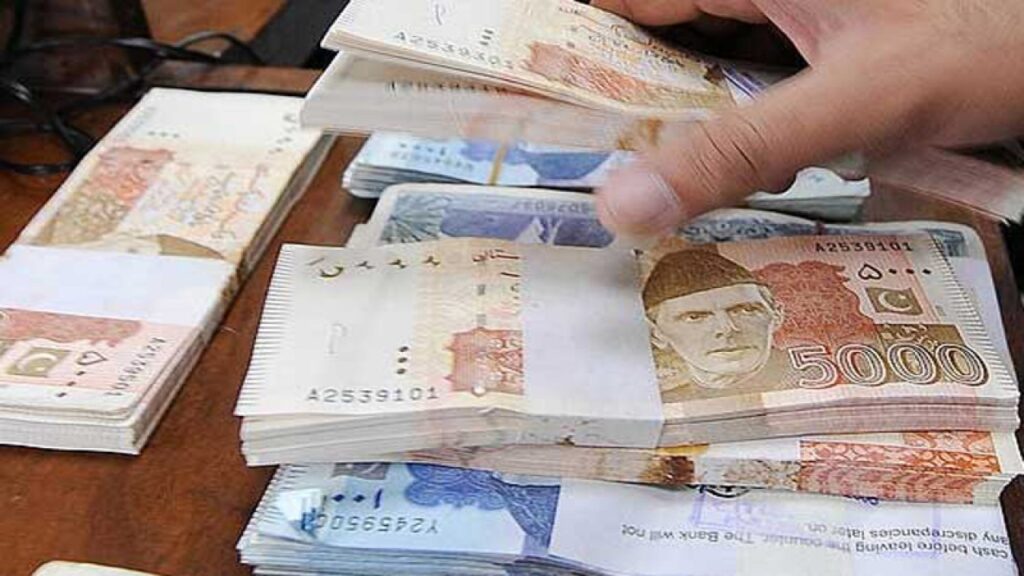
ISLAMABAD: Markup payments surged to 63% in the initial four months of the current fiscal year, prompting a cautionary alert from the Ministry of Finance regarding the persistent challenge of elevated markup payments.
The Ministry of Finance’s monthly economic update and outlook for December 2023 highlighted the pivotal role of prudent expenditure management in curbing non-essential spending, but despite that the issue of rising markup payments remains.
In response, the government reaffirmed its commitment to the current fiscal strategy, emphasizing the dual approach of augmenting revenue and exercising judicious control over expenditures to meet set targets.
The report disclosed that year-on-year Consumer Price Index (CPI) inflation stood at 29.2% in November 2023, compared to 23.8% in November 2022. Key contributors to this increase included alcoholic beverages and tobacco (82.8%), furnishing and household equipment maintenance (34.5%), non-perishable food items (31.7%), housing, water, electricity, gas, and fuel (33.0%), transport (26.5%), health (24.9%), clothing and footwear (20.9%), and perishable food items (9.6%).
Despite challenges, a substantial rise in revenues relative to expenditures resulted in a reduction of the fiscal deficit to 0.8% of GDP (Rs861.7 billion) for the July-October fiscal year 2023-24, compared to 1.5% of GDP (Rs1,265.8 billion) in the previous year. The primary surplus also improved, reaching Rs1,429.7 billion (1.4% of GDP) during the same period, up from Rs136.2 billion (0.2% of GDP) last year, attributed to controlled growth in non-markup spending.
Total expenditures for July-October fiscal year 2023-24 grew by 35% to Rs3,706.7 billion, with current spending increasing by 44%, primarily due to a notable surge in markup payments (up by 63%) during the first four months. Non-markup spending, however, experienced restrained growth of 19%, aligning with the government’s cautious expenditure management strategy.
The report highlighted a current account deficit of $1.16 billion for July-November fiscal year 2023-24, an improvement from the $3.3 billion deficit recorded last year, largely attributable to a positive shift in the trade balance. Exports increased by 5.0% to $12.5 billion, while imports decreased by 16.0% to $21.3 billion, resulting in a narrowed trade deficit of $8.8 billion compared to $13.4 billion last year.
Weekly inflation declines by 0.51% but remains above 42% YoY
The inflation outlook for the remaining months of fiscal year 2023-24 remains moderate, anticipating inflation to hover around 27.5-28.5% in December 2023 and further ease to 24-25% in January 2024. Stable exchange rates, contained aggregate demand, improved supply conditions, moderation in international commodity prices, and a favorable base effect are expected to contribute to this trend.
Despite significant challenges, the overall economic outlook is optimistic, characterized by diminishing inflationary pressures, positive indicators in agriculture and signs of potential recovery in the industrial sector. The 2.13% growth achieved in the first quarter of fiscal year 2023-24, propelled by agriculture and industry, underscores this positive momentum. Furthermore, the downward trajectory of the twin deficit signals improved economic management and lays the groundwork for sustained and higher economic growth in the future. The positive momentum is expected to strengthen in the coming months.
You May Also Like