- Web Desk
- Mar 31, 2026
Mashkel residents march 600km to protest Pak-Iran border closure
-

- Web Desk
- May 31, 2024
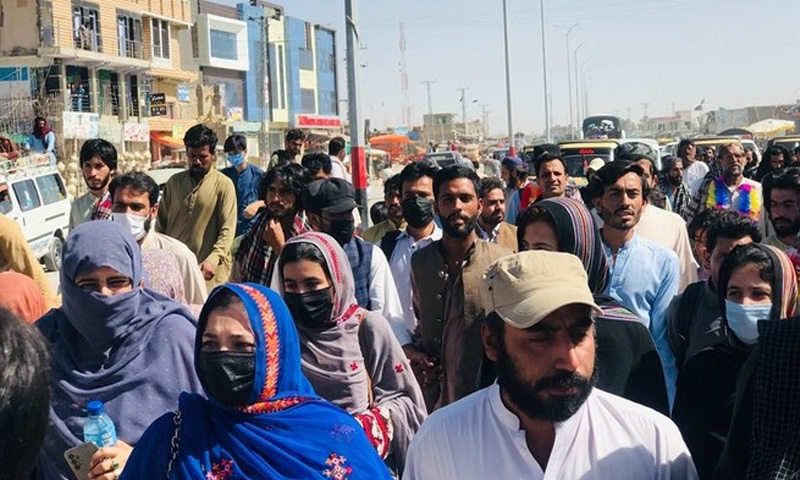
QUETTA: The long protest march initiated by the residents of Mashkel, a border town in Balochistan bordering Iran, against the closure of the Pakistan-Iran border crossing and the shortage of food items, reached Quetta late on Friday.
Upon reaching Quetta after traveling more than 600 kilometres, the marchers were welcomed by local people, political and social leaders, and tribal elders.
The participants of the long march stated that due to the rains a few months ago, Mashkel was cut off from other cities in the province.
Additionally, they said, the Pakistani government’s closure of the border crossing with Iran has led to a severe food shortage in the area.
The marchers demanded the immediate reopening of the Pakistan-Iran border crossing, the establishment of road connections between Mashkel and other cities in the province, and the fulfillment of other related demands by the government.
Jayand Khan Riki, a resident of Mashkel who led the march, told Urdu News that around 20 people, including a 60-year-old man and an 11-year-old child, participated in the long march.
He mentioned that they undertook this long and exhausting journey on foot, during which one of his companions fell ill and had to be taken to the hospital. The participants also suffered from blisters on their feet.
Jayind Khan Riki explained that they opted for such a difficult form of protest out of necessity. “In Mashkel, we protested for a month, but our demands were ignored, so we decided to start a long march on foot,” he said. The purpose of the protest, he added, is to wake up the government.
Mashkel, a border town with a population of 70,000, has been facing a food shortage for several months, forcing people to buy food at three to five times higher prices.
In Mashkel, the price of a 40 kg bag of flour has reached Rs10,000 (Rs250 per kg), and the price of chicken has soared to Rs1,800 per kg. Common vegetables like pumpkin and okra are being sold at Rs500 per kg.
According to Jayind Khan, most residents are struggling to have two meals a day, with many families forced to feed their children only once daily.
He highlighted that Mashkel, a border town in the Washik district, is facing these difficulties due to its geographical location and the lack of government attention.
Also read: Pak-Iran bilateral trade to be increased to $10 billion: Ebrahim Raisi
Washik district, spread over 33,000 square kilometers, is the second largest district in Pakistan by area. Despite this, Mashkel lacks a solid road to connect it with the rest of Pakistan, leading most residents to rely on Iran for their basic needs.
Jayand Khan explained that Mashkel is effectively cut off from Pakistan. He said that the government has not built a paved road in 70 years, and people depend on neighboring Iran for essential supplies.
Four years ago, during the COVID-19 pandemic, the government closed the Maza Sar border crossing, which connected Mashkel with Iran, halting the import of food items from Iran.
Previously, people brought flour, lentils, beans, sugar, meat, and other necessities from Quetta and other cities via Chagai. However, this route was rendered unusable by rains a few months ago. The road connecting Mashkel with the Nokundi area of Chagai passes through a swampy area called Hamon Bag, which becomes impassable after rains.
Naseer Ahmad, a businessman from Mashkel, explained that due to road closures, traders bring food items through rough and difficult mountainous areas. “These alternative routes are very long and take many days, leading to high transportation costs. Earlier, the rent for a sack was 500 rupees, but now it costs several thousand rupees, affecting the prices of goods,” he said.
Jayind Khan Riki mentioned that three years ago, a project to build a 103 km road from Mashkel to Nokundi was started, but despite the release of more than Rs3 billion, less than five per cent of the work has been completed. He called for the immediate completion of this project.
He said that worldwide, border cities facilitate transportation and trade. In a city like Mashkel, the border crossing is a lifeline for the people, and the government should restore it immediately.
You May Also Like