- Web
- Mar 18, 2026
Flawed US sanctions list ensnares innocent Chinese, Hong Kong businesses
-

- Reuters
- May 02, 2025
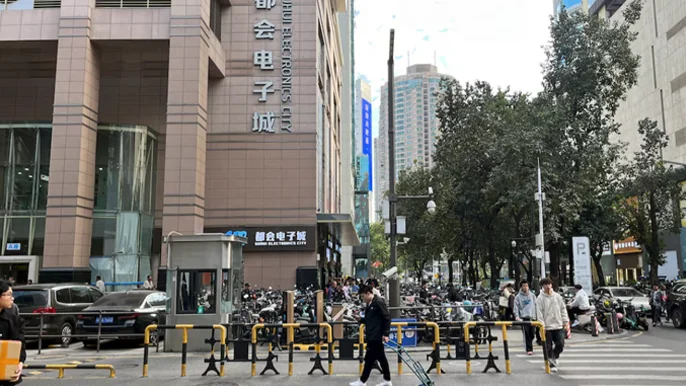
HONG KONG: Doris Au, a seller of door locks and hardware in Hong Kong for 25 years, received a letter from her bank, DBS Group, last June stating that her business account would be closed. The bank gave little explanation but subsequently froze the account, killing her business with international suppliers, she said.
Au discovered after searching online that another firm with a similar name was added to the US trade blacklist in October 2023 for “providing support to Russia’s military and/or defense industrial base.” The entry identified two addresses, one of which was Au’s warehouse.
“We are not that company. It’s totally a mistake,” Au told Reuters in her warehouse stacked with locks, hinges and sliding-door kits from well-known brands.
Au’s predicament captures the challenge facing the administration of US President Donald Trump as it ramps up limits on China’s access to American technology by adding dozens of Chinese firms to its blacklist.
A Reuters review of almost 100 Chinese and Hong Kong companies added to the US entity list in 2023 and 2024 found more than a quarter, or 26 entries, contained erroneous details, such as incorrect names and addresses and outdated information.
For each listed entity, Reuters visited at least one address identified by the US to determine whether the blacklisted firms were still there. Businesses at those locations included a beauty salon, a tutoring firm, a massage parlour and a counselling center.
At one site in Shenzhen, Reuters found weed-covered remnants of a factory locals said was demolished years earlier.
Yet Reuters also found evidence of trade in restricted items by some entities, aided by loopholes, paper companies and networks of freight forwarders and shipping agents, illustrating the challenge of containing access to sensitive technology.
The entity list, established in 1997, has become an increasingly important tool for the US to limit technology transfers to Russia and China, including semiconductors, that might undermine US security. It is managed by the Bureau of Industry and Security (BIS), a Commerce Department agency.
Five former US officials acknowledged difficulties in evaluating possible cases of mistaken identity and updating information on the entity list, due in part to limited staffing. BIS is “woefully under-resourced,” one said.
Many listed entities are front companies, said Matthew Borman, who until March was a senior BIS official overseeing US export controls, including those targeting China and Russia.
“The challenge is that they can move to a different address with a different name,” he said.
BIS and the Commerce Department didn’t respond to detailed questions about errors on the trade blacklist and any actions to rectify them.
Singapore-based DBS declined to comment on Au’s case. In its letter to Au, DBS didn’t mention the entity list but said it had reviewed her business account and found “activity/information that is not consistent with your account profile.”
Read next: Oil prices edge higher as hopes rise for US-China trade talks
You May Also Like