
- Web
- Mar 18, 2026
European Parliament gives final approval to landmark AI law
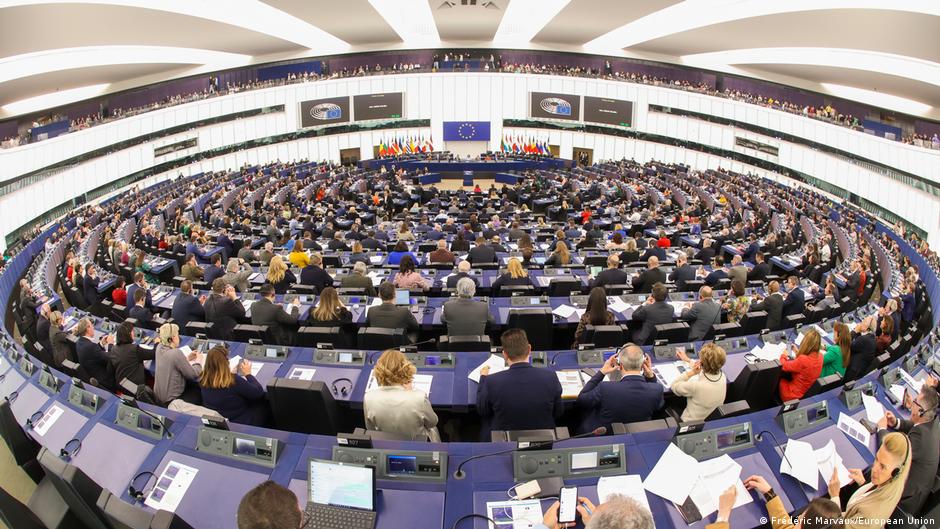
WEB DESK: The legislation governing artificial intelligence is to come into force later this year. The new rules are expected to serve as a global signpost for other governments racing to regulate the fast-changing technology.
European Union lawmakers on Wednesday gave their final approval to landmark legislation to govern artificial intelligence.
The Artificial Intelligence Act was passed in the European Parliament in Strasbourg with 523 votes in favor and 46 against.
The new law aims to protect citizens in the bloc’s 27 member states from the possible risks associated with the fast-changing technology, as well as allow innovation to thrive.
“Our ground-breaking AI law will allow us to be world leaders in digital and tech innovation based on EU democratic values, because Europe has the ability to set the tone worldwide and lead responsibly,” European Parliament President Roberta Metsola said after the vote.
EU industry chief Thierry Breton welcomed the parliament’s “overwhelming support.”
“Europe is now a global standard-setter in trustworthy AI,” he said.
What are the EU’s new AI rules?
The new law categorizes different types of artificial intelligence according to risk, with strict requirements for AI tools deemed to pose more danger.
For example, AI providers considered “high risk” must conduct risk assessments and ensure their products comply with the law before they are released to the public.
Real-time facial recognition in public spaces is banned, although there are some exceptions for law enforcement. The law also prohibits the use of AI for predictive policing and systems that use biometric information to infer individual’s race, religion or sexual orientation.
Rules covering AI models such as ChatGPT will come into effect 12 months after the law becomes official, while companies must comply with most other provisions in two years.
Companies that violate the law can face fines ranging from €7.5 million to €35 million ($8.2 million to $38.2 million).
What happens next?
The AI Act still needs to be endorsed by the individual EU member states, but that is considered a formality.
It is expected to come into force later this year.
You May Also Like