- Web
- Mar 18, 2026
ICJ concludes hearing on South Africa’s plea on Gaza genocide
-

- Web Desk
- Jan 12, 2024
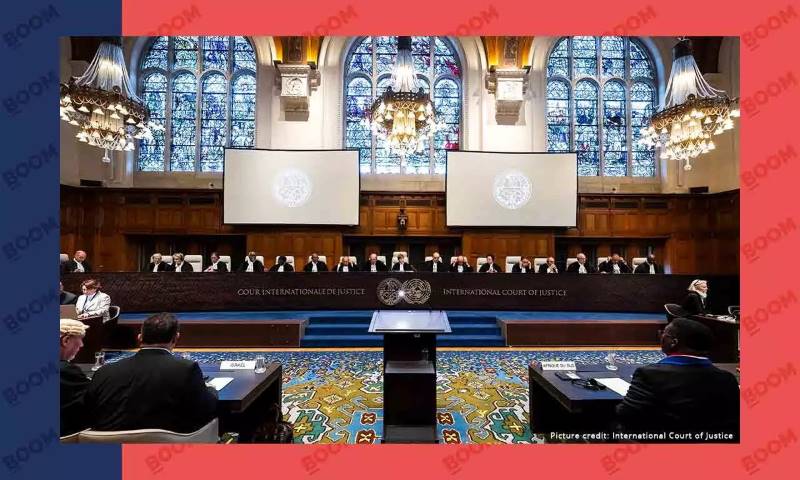
THE HAGUE: The public hearings at the International Court of Justice (ICJ) on the request for the indication of provisional measures submitted by South Africa in the case concerning Application of the Convention on the Prevention and Punishment of the Crime of Genocide in the Gaza Strip (South Africa v Israel) concluded on Friday (today), said a press release.
The delegation of South Africa was led by HE Mr Vusimuzi Madonsela, Ambassador of the Republic of South Africa to the Kingdom of the Netherlands, as Agent, and Mr Cornelius Scholtz, Legal Counsellor, Embassy of the Republic of South Africa in the Kingdom of the Netherlands, as Co-Agent. The delegation of Israel was led by Mr Gilad Noam, Deputy Attorney General for International Law, Ministry of Justice of the State of Israel, Mr Tal Becker, Legal Adviser, Ministry of Foreign Affairs of the State of Israel, and Ms Tamar Kaplan Tourgeman, Principal Deputy Legal Adviser of the Ministry of Foreign Affairs of the State of Israel, as Co-Agents. The Court will now begin its deliberation. The Court’s decision will be delivered at a public sitting, the date of which will be announced in due course.
South Africa had asked the International Court of Justice (ICJ) to order Israel to halt its military operations in Gaza and to respect the rights of the Palestinian people under the Genocide Convention.
The request was made during two days of public hearings at the ICJ in The Hague, where South Africa and Israel presented their arguments on the case concerning the Application of the Convention on the Prevention and Punishment of the Crime of Genocide in the Gaza Strip.
South Africa, as a State party to the Genocide Convention, filed the case in December 2023, accusing Israel of committing genocide against the Palestinians in Gaza, who have been living under a blockade and repeated attacks by the Israeli forces since 2007.
South Africa said that Israel’s actions amounted to killing, causing serious harm, inflicting conditions of life calculated to bring about physical destruction, and imposing measures to prevent births within the Palestinian group, in violation of Article II of the Convention. South Africa also alleged that Israel had failed to prevent and punish the crime of genocide, as required by Articles I and III of the Convention.
South Africa requested the ICJ, as a matter of extreme urgency, to indicate provisional measures to protect the rights of the Palestinians under the Convention, pending the Court’s decision on the merits of the case.
These measures included the immediate suspension of Israel’s military operations in and against Gaza, the prevention of any further steps by Israel or its agents to harm the Palestinians, the taking of all reasonable measures by both parties to prevent genocide, and the cessation of all acts of genocide by Israel, such as killing, harming, displacing, depriving, and destroying the Palestinian life in Gaza.
Israel, on the other hand, rejected South Africa’s allegations and requests, arguing that the Court had no jurisdiction to hear the case and that the Application was inadmissible. Israel contended that there was no legal dispute between the parties regarding the interpretation or application of the Genocide Convention, and that South Africa had no standing to bring the case on behalf of the Palestinians, who were not a party to the Convention. Israel also denied that it had committed or intended to commit genocide against the Palestinians, and maintained that its actions in Gaza were in self-defence and in accordance with international law.
The ICJ, the principal judicial organ of the United Nations, is composed of 15 judges elected for nine-year terms by the General Assembly and the Security Council. It settles legal disputes between States and gives advisory opinions on legal questions referred to it by authorized UN organs and specialized agencies. The Court’s decisions are binding and without appeal for the parties concerned.
The ICJ will now begin its deliberation on the request for provisional measures. The court’s decision will be delivered at a public sitting, the date of which will be announced in due course, the press release said.
You May Also Like