- WEB DESK
- October 22, 2026
AJK parties back timely elections, JKJAAC boycotts huddle over unmet demands
-

- Zafar Ali
- June 3, 2026
By Mir Shujaat Sulehria
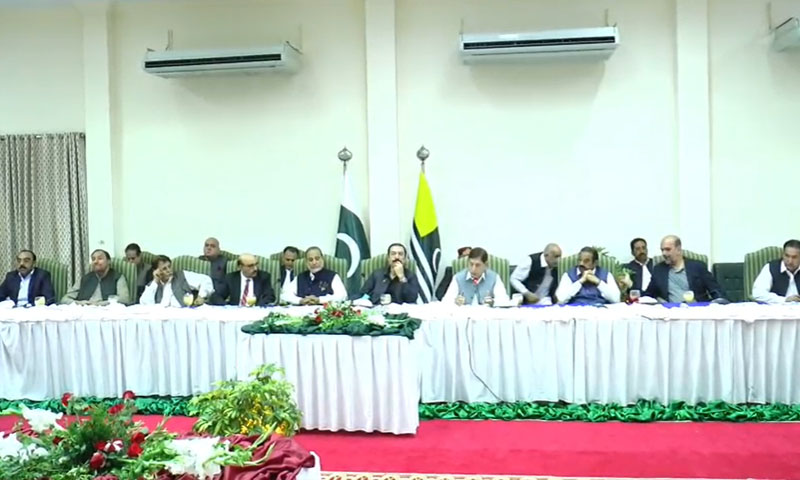
MUZAFFARABAD: Political and religious parties in Azad Jammu and Kashmir on Wednesday reaffirmed support for holding legislative assembly elections on schedule and called for any constitutional reforms to be pursued through elected institutions, while the Jammu Kashmir Joint Awami Action Committee (JKJAAC) boycotted the all-parties consultative meeting convened by the AJK government.
The meeting, chaired by AJK Prime Minister Faisal Mumtaz Rathore at the Prime Minister’s House in Muzaffarabad, brought together leaders of various political and religious parties to discuss the political situation, constitutional issues and the future electoral process in AJK.
In a joint resolution adopted unanimously, participants reiterated support for the Kashmiri people’s right to self-determination in accordance with United Nations Security Council resolutions and condemned what they described as ongoing human rights violations by Indian forces in Indian Illegally Occupied Jammu and Kashmir.
The resolution also denounced the detention of pro-independence leaders and political activists and criticised alleged Indian efforts to alter the demographic composition of the disputed region.
The meeting stressed the importance of preserving democratic continuity and constitutional governance in AJK, describing democratic institutions as the foundation of political stability in the territory.
Participants said that political disagreement was a legitimate feature of democracy but should not be used to undermine governance structures or state institutions.
They called on political, social and public groups to promote dialogue, tolerance and peaceful political engagement.
The gathering also expressed support for the role of national security institutions in maintaining stability in the region and voiced concern over what it described as Indian efforts to spread disinformation through social media and propaganda campaigns aimed at creating mistrust between state institutions and democratic structures.
A key outcome of the meeting was a pledge that elections to the AJK Legislative Assembly would be held within the constitutionally mandated timeframe.
The resolution said that AJK authorities would ensure that elections are conducted in a free, fair, transparent, impartial and peaceful manner, allowing voters to exercise their democratic rights without fear, pressure or interference.
It also warned that any attempt to sabotage, delay, influence or derail the electoral process would be dealt with in accordance with the law.
On constitutional reforms, the participants maintained that changes to AJK’s constitutional framework fall within the mandate of elected representatives and should ultimately be decided by the AJKLegislative Assembly.
However, they called for a broad consultative process involving political parties, bar associations, legal experts and civil society groups before any reforms are introduced.
The meeting also discussed the representation of Kashmiri refugees residing in Pakistan, describing their role in the Kashmir movement as a historical and constitutional reality.
Participants said that electoral and representation-related issues concerning refugee seats could be addressed through constitutional and legislative reforms.
Meanwhile, JKJAAC, one of the most influential protest movements in the region, did not attend the meeting despite receiving an invitation from the government.
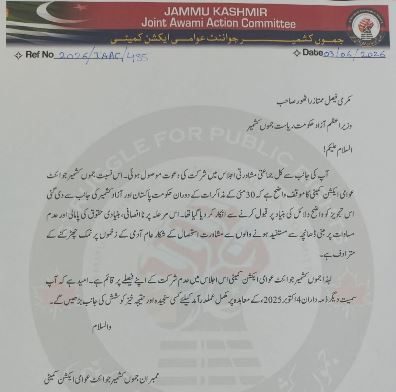
In a letter addressed to Prime Minister Rathore, the committee said it had already rejected the proposal during negotiations with the governments of Pakistan and AJK on May 30.
The committee argued that engaging in consultations with stakeholders benefiting from what it termed an “exploitative framework” based on inequality and violations of fundamental rights would not serve the interests of ordinary citizens.
The JKAAC said that it would maintain its decision to boycott the meeting and urged authorities to focus instead on implementing an agreement reached on October 14, 2025.
The boycott comes amid growing political tensions in AJK, where the JKAAC has announced a plan for a long march on the AJK Legislative Assembly on June 9to press demands related to governance, constitutional reforms and public welfare issues.
The all-parties meeting appeared aimed at building political consensus ahead of the next assembly elections and addressing debates surrounding constitutional changes and refugee representation, issues that have increasingly dominated the region’s political discourse.
While the participating parties pledged support for constitutional and democratic processes, the absence of the JKAAC underscored continuing divisions between the regional government and a movement that has emerged as a major force in AJK politics over the past two years.
You May Also Like
- WEB DESK
- October 22, 2026