- Reuters
- November 10, 2026
An affair, an alleged ‘spy’, Trump and divorce bets: Jensen Huang’s very bad week explained
-

- WEB DESK
- November 10, 2026
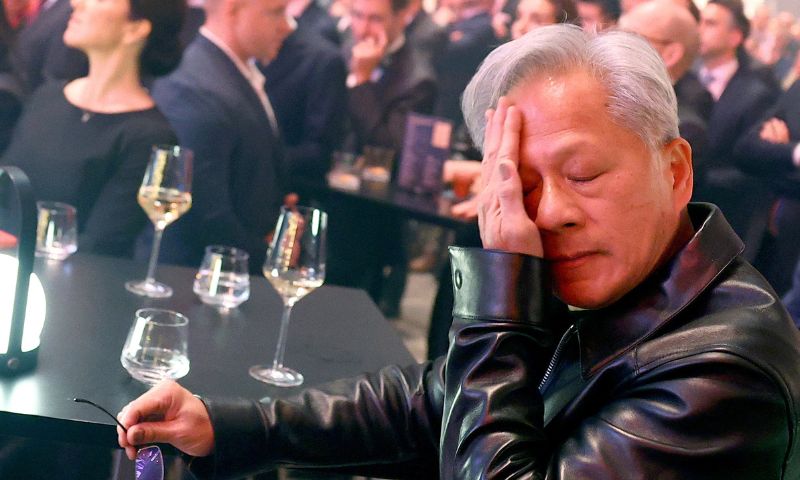
An extramarital affair, a woman ‘suspected’ by US intelligence of spying for China, an FBI inquiry, a shareholder lawsuit, the United States President Donald Trump offering moral support and, because apparently none of that was enough, people now betting on whether Jensen Huang will get divorced.
It has been quite a few days for the Nvidia founder.
Polymarket added another layer to the spectacle on Tuesday after highlighting Trump’s unusually personal comments about Huang and promoting a market on whether the billionaire and his wife, Lori, will divorce.
Trump said Huang was “suffering greatly” and indicated he would continue supporting him. At the time of Polymarket’s post, traders were pricing an 11 percent chance of a divorce by the end of 2026 and 21 percent by March 31 next year.
There is, however, no public indication that Jensen or Lori Huang plans to file for divorce. Prediction-market odds represent what traders are willing to bet, not inside knowledge about the Huangs’ marriage.
That distinction is worth keeping in mind because almost everything else about the story quickly gets more serious.
Huang is not merely another billionaire caught in a personal scandal. He runs Nvidia, the company supplying much of the computing power behind the global artificial-intelligence boom and sitting at the centre of Washington’s technological competition with China.
So how did a marriage problem become a US national-security story?
First, what has Huang actually admitted?
The affair itself is no longer an allegation.
In a company-wide message published by Nvidia on November 8, Huang told employees: “I was unfaithful to my wife.”
He apologised to Lori, their children, Nvidia employees, the board, partners and shareholders, saying there was “no excuse” for his actions and that he took full responsibility.
Huang also addressed the separate national-security questions swirling around the relationship, saying he supported Nvidia’s independent investigation and would cooperate fully.
“I am committed to protecting NVIDIA and supporting America’s national security,” he wrote.
Nvidia’s board confirmed the same day that it had opened an independent investigation after reports that Huang had been the target of a foreign intelligence effort. Independent directors and outside counsel are overseeing that review.
Crucially, the board said it currently had “no reason to believe” that either US national security or Nvidia secrets had been compromised, and publicly reaffirmed confidence in Huang and his leadership team.
That is where the confirmed facts end and the espionage allegations begin.
So who is Alice Huang?
The woman at the centre of the intelligence allegations is Alice Huang, also known as Huang Le, and she is not related to Jensen Huang.
According to reporting cited by the BBC and Associated Press (AP), US intelligence officials believed Alice Huang had been recruited by China’s intelligence services and was gathering information for Beijing. She previously worked as a senior executive at Singapore-based data-centre company Megaspeed International.
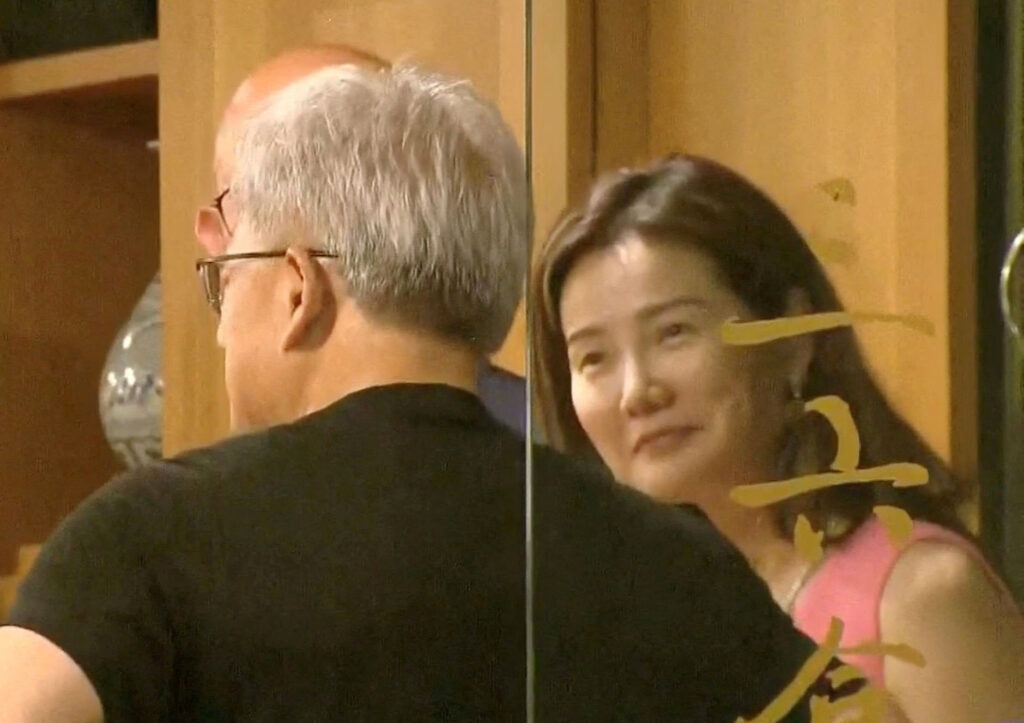
Megaspeed itself matters because the company has faced scrutiny over whether restricted Nvidia chips were diverted towards China.
Singapore authorities have investigated earlier allegations concerning possible circumvention of US chip restrictions. Megaspeed has said its current leadership takes the allegations seriously and appointed external lawyers to conduct an internal review.
The New York Times, as summarised by AP and Reuters, reported that US surveillance detected communications involving Alice Huang and an American citizen later identified as Jensen Huang.
But there are significant gaps.
It remains publicly unclear what information, if any, Alice Huang obtained from Jensen Huang, whether she passed anything to Beijing, or whether Huang knew of any alleged intelligence connection.
China has flatly rejected the allegations. Foreign Ministry spokesperson Guo Jiakun called the claims “groundless” and accused US media of smearing China. Huang has not been accused of knowingly helping a foreign intelligence service.
Then Trump called
Trump confirmed on Monday that the FBI was examining the circumstances surrounding the relationship.
Trump also revealed that he had spoken directly to Huang.
“I asked him that question, ‘Did you have any idea she was a spy?’” Trump told reporters.
According to Trump, Huang replied that he did not, and Trump said he believed him.
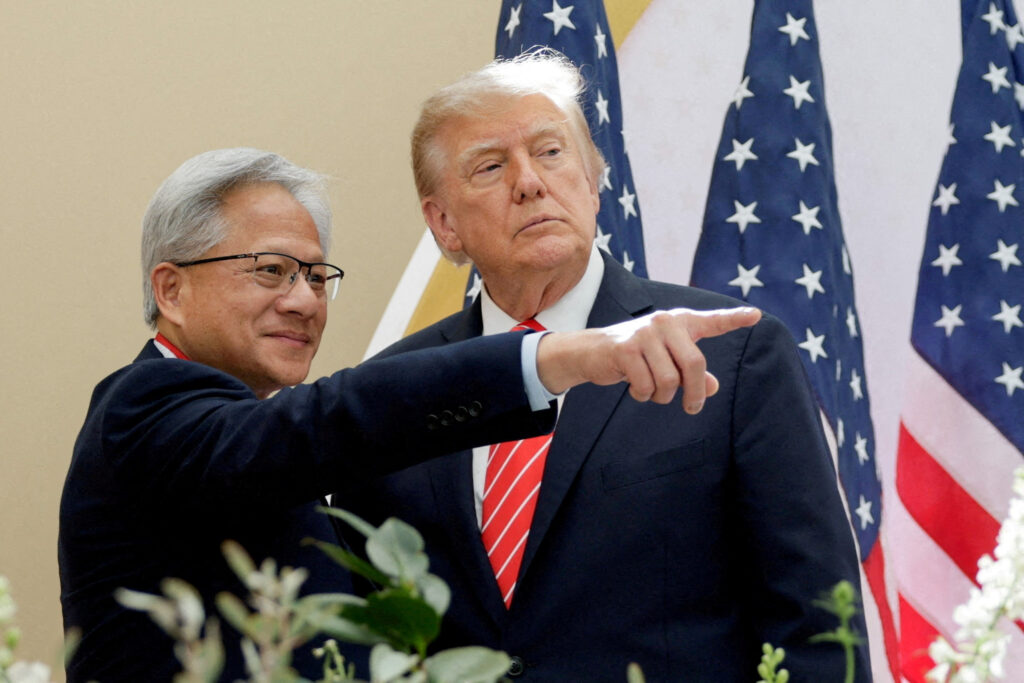
The president has gone considerably further than merely acknowledging the investigation. He has defended Huang publicly, describing him as an “honourable guy” and, in his latest remarks, saying the Nvidia chief was “suffering greatly”.
The relationship matters because Huang has become one of Trump’s closest allies in the technology industry.
Reuters reported that Huang has developed unusually close access to the administration as Nvidia has lobbied Washington over restrictions on selling advanced chips to China.
Which brings us to why Washington cares about any of this.
Why does an affair matter to US national security?
Because Nvidia is no ordinary company.
Its graphics processors have become the essential hardware used to train and run many of the world’s most advanced AI models. Amazon, Microsoft, Meta, Google and other technology giants depend heavily on Nvidia hardware.
Nvidia is currently valued at around $4.5 trillion, according to the BBC, making it one of the most valuable companies ever created.
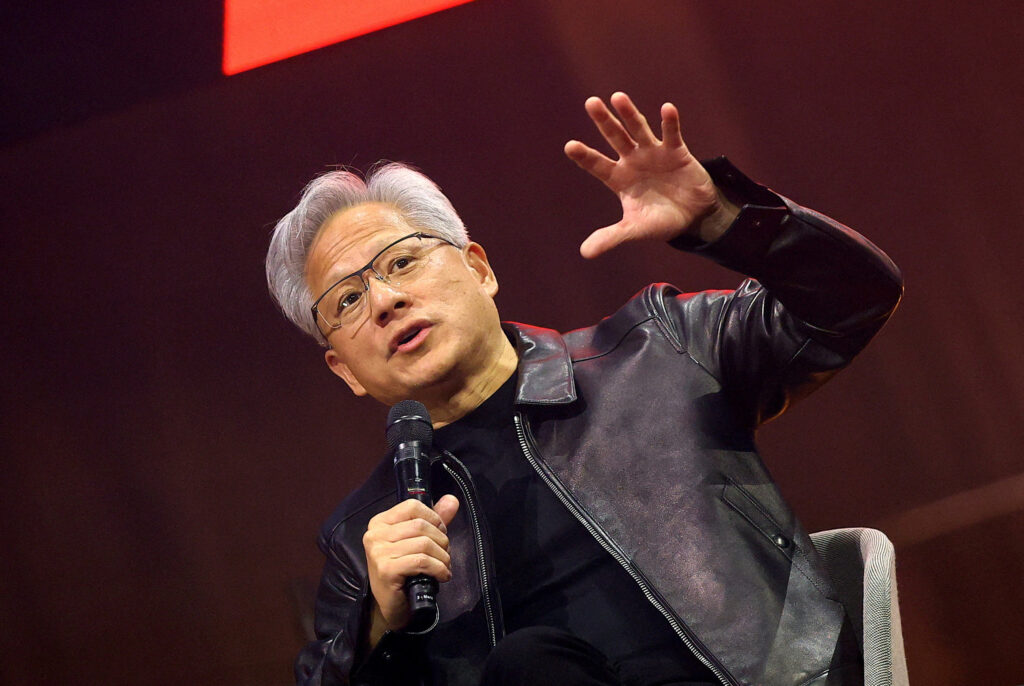
Advanced AI chips are also at the centre of the increasingly fierce US-China technology rivalry.
Since 2022, Washington has imposed export controls intended to prevent China from gaining access to the most sophisticated American semiconductor technology, arguing that advanced computing could strengthen Chinese military and surveillance capabilities.
As the BBC put it, Nvidia is sitting directly at the heart of that contest.
Huang, meanwhile, has spent considerable time trying to persuade Washington that Nvidia should be permitted to retain greater access to the Chinese market. That means an allegation that a suspected Chinese intelligence operative developed a close personal relationship with Nvidia’s chief executive inevitably becomes more than tabloid material.
The question investigators will want answered is not simply who Huang was meeting, but whether that relationship provided access to commercially sensitive, technological or policy information.
So far, Nvidia says it has no evidence that happened.
Wall Street has questions too
Investors have not waited for the board inquiry to finish.
A proposed securities class action was filed in federal court in San Jose on Monday, accusing Nvidia and Huang of failing to disclose the alleged relationship and associated national-security risks.
The shareholders argue that the omission exposed investors to undisclosed risks affecting Nvidia’s reputation and business. Those claims remain allegations and will have to survive the normal legal process.

But markets have already reacted.
Nvidia shares fell 4.3 percent on Monday, wiping roughly $190 billion from the company’s market value, according to Reuters.
That does not mean investors believe Huang committed wrongdoing. It does show how much uncertainty around one individual can matter when that individual is Jensen Huang.
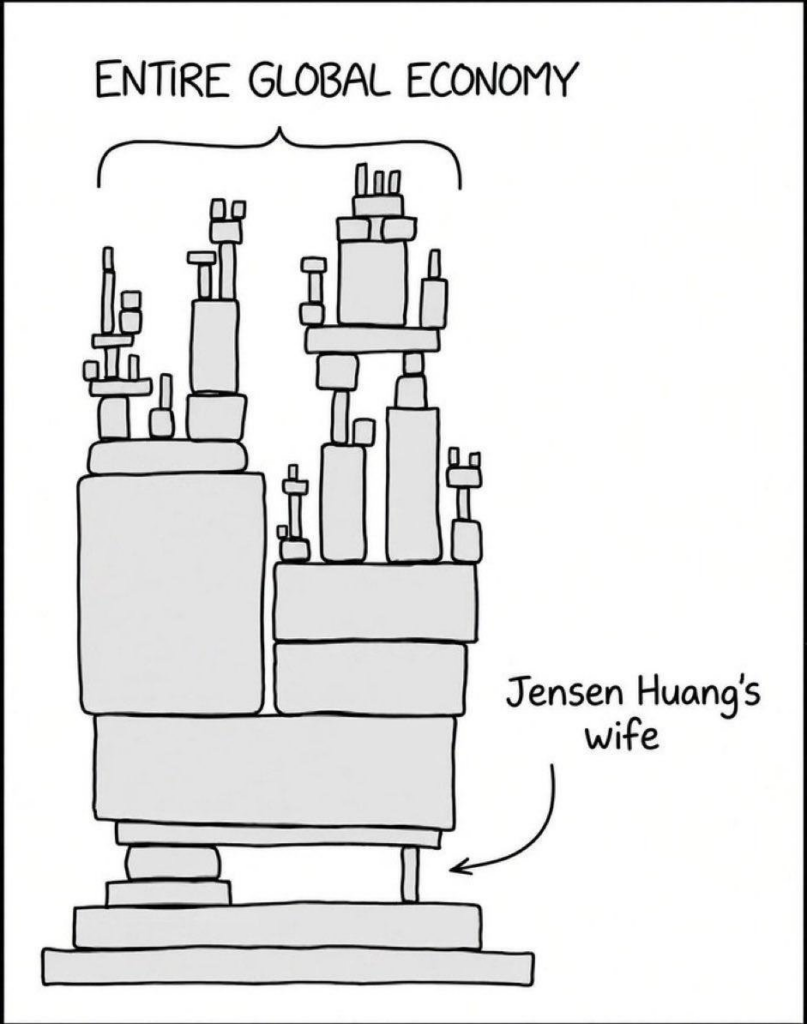
The problem: Jensen is basically Nvidia
Huang co-founded Nvidia in 1993 and has led it ever since.
His influence goes well beyond the ceremonial role of a founder who happens to remain chief executive. He is heavily involved in product strategy, partnerships, investments and relationships with governments and some of the world’s largest technology companies.
And there is no obvious successor.
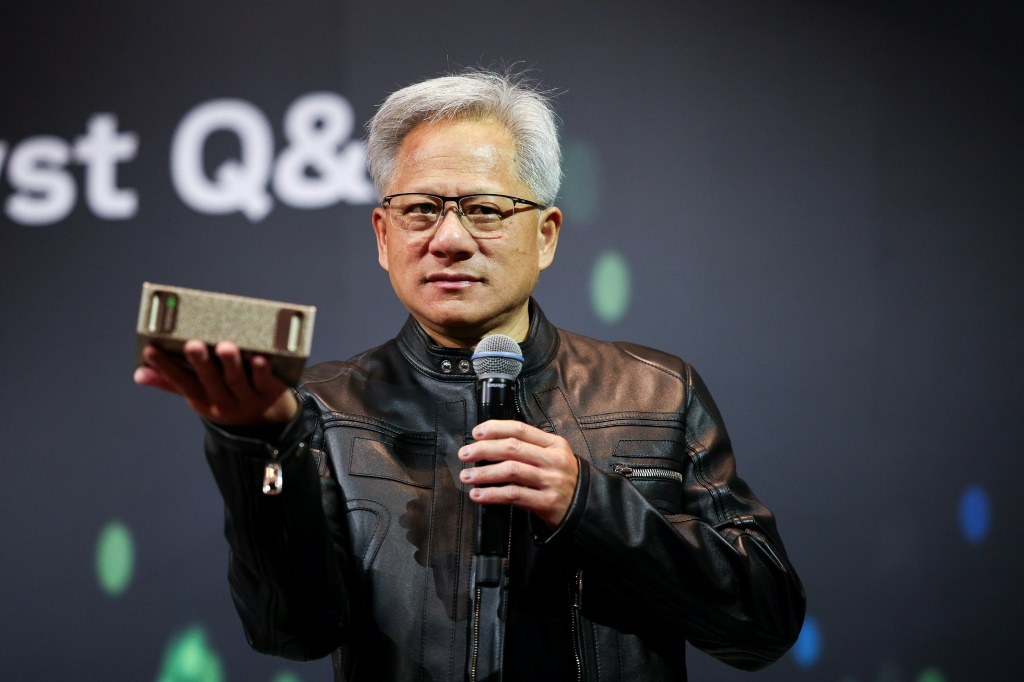
The BBC notes that Nvidia has no publicly identified succession plan for the 63-year-old Huang, who has said he hopes to remain in the job for decades.
AP also describes replacing Huang as unusually difficult because of how closely his identity has become intertwined with Nvidia’s rise from gaming-chip maker to AI giant.
That is why the board investigation matters even if it eventually concludes that no secrets were compromised.
If investigators find serious governance, disclosure or security failures, the board could face pressure to act. If they do not, Huang is likely to remain in charge, Nvidia has already said it continues to have confidence in him.
Why Korea is watching especially closely
The consequences also travel far beyond Silicon Valley.
South Korea’s semiconductor industry has become deeply tied to Nvidia’s AI expansion.
Samsung Electronics and SK hynix supply the high-bandwidth memory, or HBM, used alongside Nvidia’s AI processors. SK hynix has signed a multiyear technology agreement with Nvidia, while Samsung is supplying next-generation HBM products and discussing future generations of memory.
Korean firms have increasingly benefited from the gigantic capital spending surrounding AI data centres.

That makes uncertainty at Nvidia a supply-chain question as well as a governance one.
Korean analysts have warned that serious disruption at Nvidia could reverberate through chipmakers and financing arrangements built around the AI boom, although long-term supply agreements could cushion immediate effects.
The bigger lesson may be dependence.
Korean semiconductor experts have argued that the real vulnerability is not necessarily Huang’s personal fate, but how much the global AI ecosystem, and suppliers such as Samsung and SK hynix have come to depend on one company.
And finally, about that divorce market and well, the prenup
Which brings the story back to Polymarket.
Huang met Lori Mills while the pair were electrical-engineering students at Oregon State University. They were lab partners before marrying in 1985, eight years before Huang co-founded Nvidia. They have two children, Madison and Spencer, both of whom now work at the company.
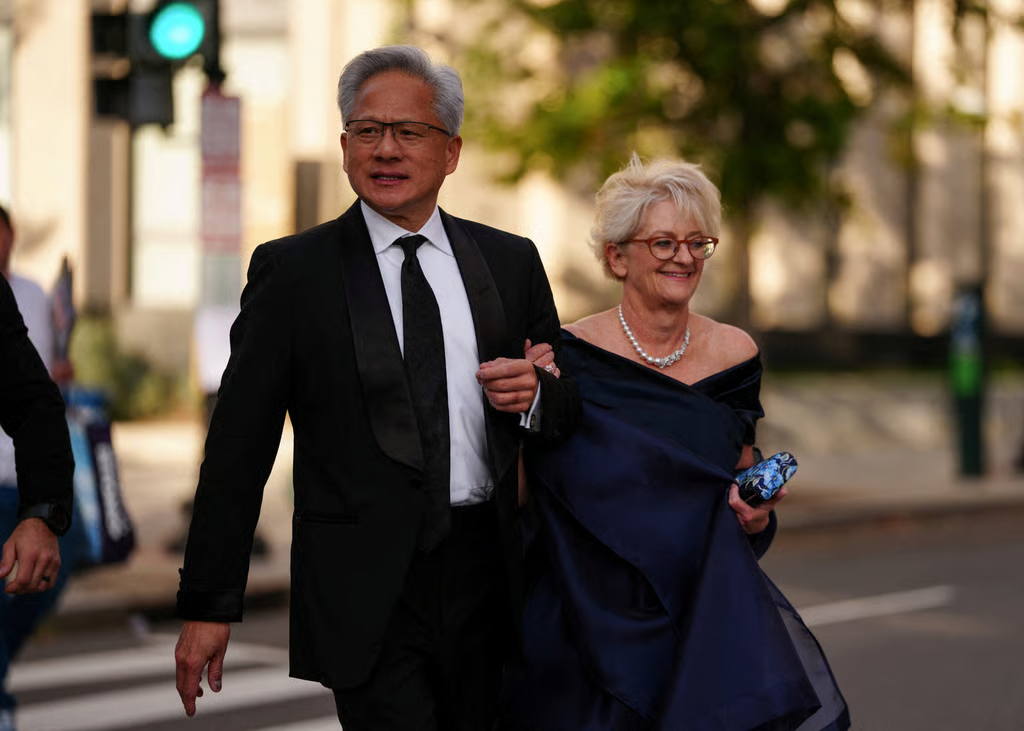
The couple have also built a large philanthropic foundation together, whose assets have risen alongside Nvidia’s extraordinary valuation. Huang’s public persona has long included frequent praise for his wife and an image centred on family as well as business.
None of that tells us what Lori intends to do now.
But what it does mean is that an already extraordinary corporate crisis has acquired one final, very 2026 twist: strangers are now trading contracts on whether the marriage survives.
For the moment, that may be the least consequential question in the entire saga.
That prenup question has become another mini-industry of speculation.
It is not publicly known whether Jensen and Lori Huang have a prenuptial or postnuptial agreement. They married in 1985, eight years before Nvidia was founded, which is why some reports have floated eye-watering estimates of what a divorce might involve. Forbes notes that California generally treats assets accumulated during marriage as community property, although any valid marital agreement, separate property or trust arrangements could substantially change the calculation.
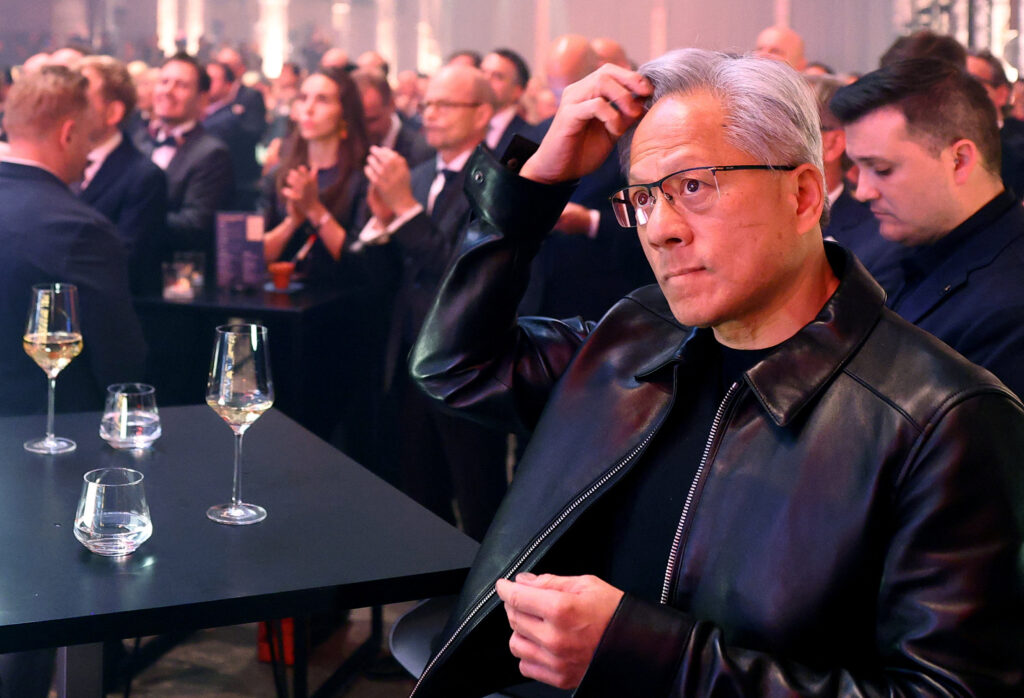
Nvidia’s own 2026 proxy filing shows that Jensen and Lori are co-trustees of a family living trust dating to 1995 that holds hundreds of millions of Nvidia shares, alongside other family trusts. That makes simplistic claims that Lori would automatically receive “half of Jensen’s fortune” exactly that simplistic.
California is also a no-fault divorce state, meaning infidelity itself would not ordinarily give one spouse a larger share of marital property. For now, the biggest unknown remains the most basic one: whether there will be a divorce at all.
The important ones are still unanswered: Was Huang deliberately targeted by Chinese intelligence? Did any sensitive information change hands? Could the affair affect US policy on selling AI chips to China? And what happens to Nvidia if its famously indispensable founder suddenly becomes less indispensable?
Until investigators answer those questions, what began as a deeply personal admission will remain something much bigger, a corporate governance problem, a geopolitical headache and a test of just how much of the global AI boom rests on one man in a leather jacket.