- Reuters
- 1 Hour ago
Andy Burnham set to become UK prime minister after decade of political turbulence
-

- Reuters
- Today
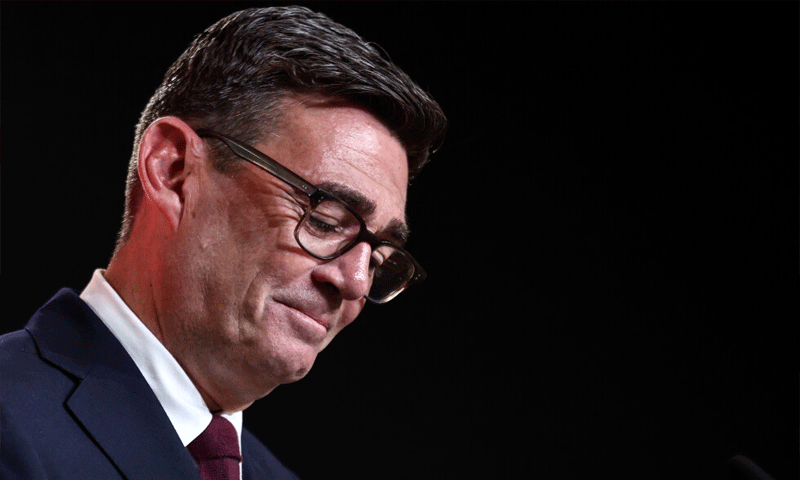
LONDON: Andy Burnham is all set to assume office on Monday as Britain’s seventh prime minister in ten years, taking leadership of a country marked by economic stagnation and political instability since the 2016 vote to leave the European Union.
Over the past decade, successive British administrations have struggled to establish a consistent policy direction while managing low economic growth, rising public debt, expanding welfare spending, and growing global security threats.
A decade of Conservative turnover
The political turbulence began in June 2016 when 52 per cent of British voters chose to exit the EU, leading to the resignation of Conservative Prime Minister David Cameron. His successor, Theresa May, lost her parliamentary majority in a June 2017 snap election and eventually resigned in May 2019 following parliamentary deadlock over Brexit terms.
Boris Johnson succeeded May, secured an 80-seat majority in December 2019, and formally withdrew the United Kingdom from the EU in January 2020. However, Johnson resigned in July 2022 following a series of government scandals and ministerial resignations.
His successor, Liz Truss, served 44 days before resigning after her unfunded tax-cutting budget caused market volatility and raised borrowing costs. Rishi Sunak then took office in October 2022, serving until July 2024, when the Labour Party ended 14 years of Conservative rule.
Labour’s struggle and Burnham’s rise
Keir Starmer led Labour to victory in July 2024, but his administration soon faced economic and political hurdles. In October 2024, Finance Minister Rachel Reeves announced £40 billion in annual tax increases, primarily targeting employers’ social security contributions. By February 2025, Nigel Farage’s Reform UK party overtook Labour in opinion polls.
Starmer faced further pressure following a June 2025 U-turn on welfare cuts, the dismissal of Peter Mandelson as US ambassador over his ties to Jeffrey Epstein, and significant losses in the May 2026 local and devolved elections. The resignations of Health Minister Wes Streeting and Defence Minister John Healey in mid-2026 further eroded support for Starmer’s leadership.
In June 2026, Greater Manchester Mayor Andy Burnham won a parliamentary seat in northern England, defeating Reform UK. Starmer resigned three days later, stating he was no longer the right person to lead the party. Burnham secured the Labour leadership unopposed after receiving nominations from a large majority of party lawmakers.