- WEB DESK
- November 15, 2026
Bahrain intercepts Iranian aerial attacks as Tehran says it attacked US base
-

- Reuters
- November 15, 2026
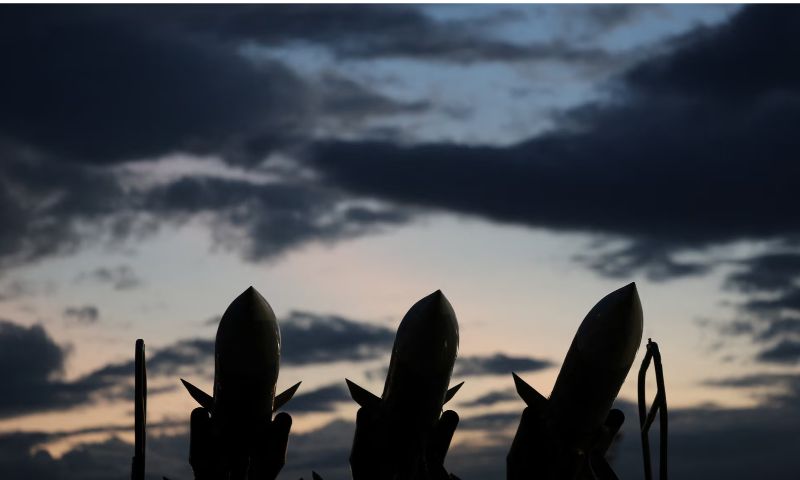
Bahrain intercepted and destroyed several Iranian aerial attacks, it said on Sunday, while Tehran said it had struck a US military base in the Gulf kingdom amid uncertainty over a deal to end the US-Israeli war on Iran.
The first such interceptions by Bahraini air defences since September followed two warnings of potential threats, urging residents to seek shelter.
Iran’s Islamic Revolutionary Guard Corps said it had attacked a US military base in Bahrain in retaliation for “hostile US actions”, Iran’s Fars news agency reported.
The Bahraini military said its air defences had intercepted several Iranian aerial attacks before they reached their targets, accusing Tehran of continuing its “systematic hostile approach” towards the kingdom.
The Revolutionary Guards said they had launched six drones targeting US air defence radar at the Al-Rifaa helicopter base in Bahrain, Iranian state-run Press TV reported. There was no immediate confirmation from US or Bahraini authorities.
Bahrain, home to the US Navy’s Fifth Fleet, urged citizens and residents to remain calm and proceed to the nearest safe location, the interior ministry said.
Two days earlier the Revolutionary Guards said they had attacked a US early-warning radar facility in Bahrain. The US military denied this, saying it had intercepted two Iranian drones without any damage.
Diplomatic efforts to end the almost nine-month conflict have yet to produce a breakthrough, with sporadic attacks continuing despite a broader lull in fighting between the US and Iran.
The war began with US and Israeli strikes on Iran on February 28 and subsequently spread across the region, with Tehran launching missile and drone attacks on US military bases in Gulf countries.
President Donald Trump has said in recent days that he might hold off from attacking Iran if the US faces no new provocations from Tehran or the Iran-backed Houthis in Yemen, but that he would maintain a US naval blockade, Reuters reported on Saturday.
On another front, however, the Houthis and the Saudi-led coalition fighting them have continued to exchange attacks, with the coalition saying on Sunday that it had intercepted two Houthi ballistic missiles launched towards Saudi capital Riyadh and three drones in the kingdom’s oil-rich Eastern Province.
Iran says it will not remain in ‘neither war nor peace’
Meanwhile, Iran’s parliament speaker Mohammad Bagher Ghalibaf said on Sunday that Tehran would not remain in a state of “neither war nor peace”, warning that Iran’s armed forces would determine the geography of any future conflict if the United States made another mistake.
Ghalibaf’s remarks came amid a deepening war of words between Tehran and Washington, with Iran accusing the United States of threatening to starve its people through economic and naval pressure and calling such policies a form of war crime.
Addressing an open session of parliament, Ghalibaf said Iran did not care whether Washington chose negotiations or war.
“If it accepts our seven reasonable conditions, the door to an agreement will be open,” he said.
He warned that any fresh US miscalculation could trigger a wider confrontation.
“If the Americans make a mistake this time, the geography of the battle will be determined by the capabilities and will of our armed forces,” he said.
The remarks underline Tehran’s increasingly firm position that it does not intend to remain indefinitely in the current state of uncertainty, in which the threat of renewed conflict persists while diplomatic efforts have failed to produce a breakthrough.
Iranian President Masoud Pezeshkian has also said the country’s leadership wants to bring the “neither war nor peace” situation to an end, while maintaining that Tehran remains prepared for negotiations based on what it describes as dignity, justice and equal conditions.
Iran’s seven conditions
Ghalibaf, who has been involved in efforts to negotiate with Washington, said earlier this week that Tehran had conveyed its position to the United States but had not received a formal and specific response.
Iran has linked further negotiations and the reopening of the Strait of Hormuz to a set of seven conditions, although Tehran has not officially published a definitive list of all seven demands.
Based on statements by Iranian officials, the demands broadly include lifting US sanctions and the naval blockade, releasing Iran’s frozen assets, ending hostilities on multiple fronts and providing guarantees against future attacks. Iranian officials have also linked the conditions to the resumption of commercial shipping through the Strait of Hormuz.
Reuters reported last week that Iran had defended a proposal to restore conditions for talks, while Washington rejected some of Tehran’s demands as unacceptable. Iranian officials have insisted that sanctions and the naval blockade must be addressed as part of any path towards negotiations.
Tehran accuses US of threatening to starve Iranians
Separately, Iranian Foreign Ministry spokesman Esmail Baghaei sharply criticised remarks attributed to US Secretary of State Marco Rubio, accusing Washington of threatening to deprive the Iranian population of food through a blockade.
Baghaei said the alleged threat amounted to an open admission of an intention to commit war crimes.
He said the United States had failed to force Iran into submission through “pressure, threats, sanctions, terrorism and aggression” and was merely repeating old policies under new names.
“The United States continues to repeat the same mistakes,” Baghaei said, describing Washington’s approach as a continuation of failed policies of coercion.
His remarks followed comments by Rubio that Iran’s worsening economic conditions and pressure from US sanctions could eventually force Tehran to change its position. Reports quoted Rubio as saying that Iranians would eventually need to eat, a remark Tehran interpreted as a threat to starve the population through economic and naval pressure.
Washington weighs next steps
The latest Iranian statements come as Washington appears to be reassessing its options in the conflict.
US Secretary of State Marco Rubio said this week that further military action against Iran was not necessary, arguing that economic pressure had severely weakened the country, although Washington has continued to maintain pressure on Tehran.
Reuters also reported that President Donald Trump had told advisers he could refrain from further attacks unless Iran or Iran-backed forces took actions that Washington considered a provocation.
However, the report said the US military remained prepared to escalate, with additional military assets heading to the region and renewed strikes remaining among the options under consideration.
The situation has left diplomacy at an impasse.
Tehran says the United States must accept its conditions before meaningful negotiations can move forward, while Washington has rejected key Iranian demands and sought to use economic and military pressure to strengthen its bargaining position.
For Iran, Ghalibaf’s latest remarks signal that the current limbo cannot continue indefinitely.
Whether Tehran moves towards a negotiated settlement or a new confrontation, however, appears likely to depend on whether the two sides can bridge their sharply differing conditions for ending the crisis.