- WEB DESK
- October 17, 2026
BHC turns down Afghan students’ plea to continue medical education in Pakistan
-

- WEB DESK
- September 15, 2026
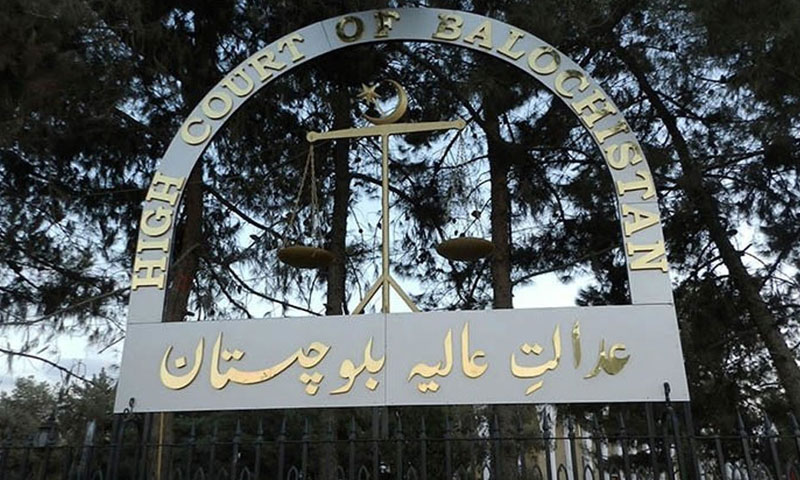
QUETTA: The Balochistan High Court (BHC) on Tuesday turned down a plea by Afghan nationals seeking permission to continue their medical education in Pakistan, ruling that foreign citizens do not have a permanent right to remain in the country or pursue education in defiance of state policy.
A BHC division bench comprising Justice Muhammad Amir Nawaz Rana and Justice Abdul Qayyum Lehari held that matters concerning the return of foreign nationals and national security fell within the domain of the state and government, and courts could not interfere in such policy decisions.
The court, however, said the state was required to treat Afghan nationals with human dignity, fairness and in accordance with the law.
“Humanitarian considerations alone did not create a permanent legal right to stay in Pakistan or continue education,” the court said, directing the affected Afghan nationals to approach the Afghan embassy if they had complaints or issues requiring redress.
Lahore court bars expulsion of Afghan medical students
The BHC ruling follows a separate development in Punjab last week, when the Lahore High Court temporarily barred medical colleges from expelling Afghan students or cancelling their examination papers.
On September 11, LHC Judge Justice Khalid Ishaq issued the order while hearing petitions filed by more than 30 Afghan medical students challenging their expulsion from Pakistani medical colleges.
The Pakistan Medical and Dental Council (PMDC) told the court that the students did not have valid visas.
The judge questioned how the students had been admitted to medical colleges and issued education visas if their legal status was now being challenged.
“You have wasted four years of their lives and are now sending them back,” Justice Ishaq told the PMDC lawyer.
The PMDC’s lawyer said that the council had issued its directive following a government order.
The judge questioned why the students had not been given an opportunity to be heard before the decision was implemented.
The PMDC lawyer argued that it was a basic international principle that foreign nationals could not remain in a country without valid visas.
The judge said Afghan students could ultimately be sent back but questioned whether they should first be allowed to complete their medical education.
The PMDC also cited state security concerns. Justice Ishaq rejected the argument at the hearing, saying he did not see a state security issue involved in the students’ cases.
The court ordered that no medical college in Punjab should expel any Afghan student or cancel their examination papers. Further proceedings were adjourned until Sept. 18.
PMDC orders Afghan students to return
On Sept 9, the PMDC issued an order ordering medical colleges to send Afghan medical and dental students back to Afghanistan.
The council had instructed medical colleges to complete the necessary administrative formalities for their return and directed relevant authorities to issue the required no-objection certificates.
The PMDC also barred Afghan nationals from admission to medical and dental programmes during the current academic session.
It had prohibited their placement, transfer or migration to medical and dental institutions and instructed colleges not to provide any form of facilitation to Afghan nationals.
Institutions were also directed to comply with previous PMDC instructions, while colleges that had not submitted compliance reports were given three days to provide complete details.
The council had warned that institutions withholding information, failing to comply or providing unauthorised facilitation could face action under the PMDC Act 2022.
The PMDC said its September 1 letter concerning Afghan students had reiterated instructions originally issued on July 31.
Rights groups criticise policy
The policy has drawn criticism from civil society and rights organisations, particularly because of its potential impact on Afghan women studying medicine in Pakistan.
Former Pakistani ambassador Mansoor Ahmad Khan had urged the PMDC to reconsider its decision on humanitarian grounds and in view of ties between the peoples of Pakistan and Afghanistan.
Amnesty International South Asia described the policy as discriminatory and arbitrary, warning that its consequences could be particularly severe for female Afghan students.
The rights organisation said many Afghan women had already lost access to higher education in Afghanistan amid restrictions imposed by the Taliban authorities.
It said students who had spent years studying medicine could have little prospect of continuing their education elsewhere if forced to return.
Amnesty had urged Pakistani authorities to find a humanitarian and practical solution that would allow Afghan students, including women and girls, to complete their education.
Lawyer Moniza Kakar also criticised the policy, describing the forced return of Afghan medical students as cruel and unjust. She said the move could end the hopes of female students seeking to become doctors and called on the PMDC to withdraw the directive and allow them to complete their degrees.
Pakistan’s Afghan repatriation policy
Pakistan began a nationwide campaign to repatriate undocumented foreign nationals in November 2023, initially focusing heavily on Afghans who did not possess valid visas or other legal documents.
The government has maintained that Afghans with valid legal status can remain in Pakistan, while those without the required documentation must leave.
Pakistan says the policy is necessary to address illegal immigration and security concerns, including what it says is the use of Afghan territory by militants to carry out attacks in Pakistan. Kabul has rejected Islamabad’s accusations.
More than two million Afghans have returned to Afghanistan from Pakistan since the repatriation drive began in 2023, according to Pakistani authorities and international agencies, with returns continuing in 2026.
The policy has drawn concern from the United Nations and human rights organisations over arrests, deportations and the risk of returning vulnerable Afghans to a country where some face serious protection concerns.
The issue has become more sensitive as relations between Pakistan and Afghanistan have deteriorated over security and border issues.
You May Also Like