- WEB DESK
- November 18, 2026
‘They have decided to fight me too’: Bilawal hits back after questioning system ‘reset’
-

- WEB DESK
- November 18, 2026
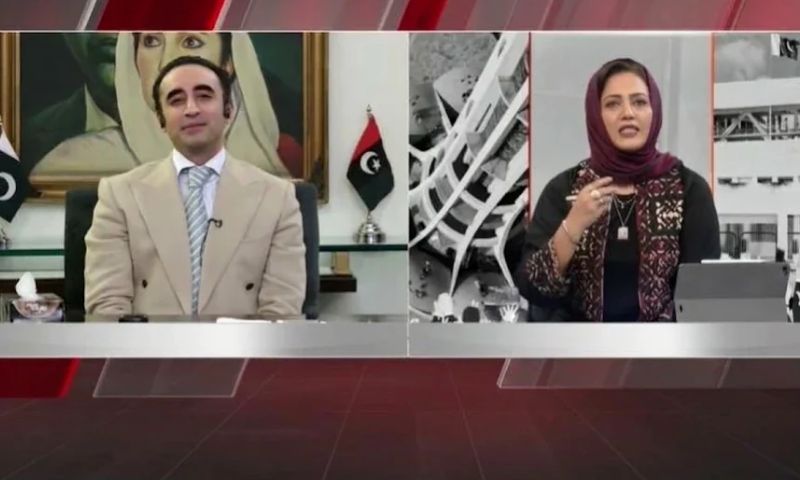
ISLAMABAD: Pakistan Peoples Party (PPP) Chairman Bilawal Bhutto Zardari has defended his right to participate in the debate over a proposed political reset, saying he is a stakeholder in the country’s governance system and should be able to question how it is reformed..
He also defended his right to participate in the debate over a proposed political reset, saying he was a stakeholder in the country’s governance system and should be able to question how it was reformed.
Speaking in an interview with HUM News programme “Faisla Aap Ka” with Asma Shirazi, his first interview with a Pakistani television channel since Tuesday’s press conference in Karachi, Bilawal said the debate over the state of the governance system could not exclude him or other political stakeholders.
He said the reaction to his remarks suggested that his critics had decided to pick a fight with him as well, showing little willingness to hear uncomfortable truths.
“I spoke a little too much truth yesterday, and they are finding it difficult to digest,” he said.
“If someone says the system has collapsed, I also have the right to put forward my position. If the system has collapsed, why has it happened? And if someone says it needs a reset, should that be a political or a non-political reset?” he said.
Bilawal said neither he nor President Asif Ali Zardari had been consulted about the proposed changes, questioning whether Interior Minister Mohsin Naqvi or the Pakistan Cricket Board (PCB) chairman had been given the authority to determine how the governance system should be reset.
His latest comments followed a press conference in Karachi on Tuesday, where he criticised proposals to create new provinces through a referendum and warned against any attempt to divide Sindh without the consent of its people.
Referring to Naqvi’s suggestion of holding a referendum on the creation of new administrative units, Bilawal said: “In our history, a referendum has always been carried out for an undemocratic act and never a democratic one.”
He also rejected the assertion that the governance system had collapsed, saying it had instead been “made to collapse”, in an apparent response to Naqvi’s earlier remarks that the existing system had failed and required a reset.
Bilawal warned that any attempt to divide Sindh by force would trigger serious unrest. He said he was raising an alarm rather than issuing a threat, recalling the province’s political history in the 1980s and 1990s.
“If something is imposed by force, there will be such a fire in this province that it will be difficult to put out,” he said, warning that bloodshed would further damage the country’s economic situation.
He argued that the Constitution provided a mechanism for creating new provinces and questioned the need to spend public money on what he described as a “fake referendum”.
Returning to the issue in the HUM News interview, Bilawal said political criticism should not be treated as an act of hostility. Referring to criticism from Jamiat Ulema-e-Islam-Fazl chief Maulana Fazlur Rehman, he questioned whether political disagreement should lead to punitive action.
He also described the establishment of the Federal Constitutional Court under the 27th Amendment as a historic achievement, stressing that he was not calling for the amendment to be reversed or the constitutional courts to be abolished.
On the opposition’s demands, Bilawal said he could not accept the notion that every prime minister of Pakistan was corrupt. He said he wanted to see a day when a prime minister completed his tenure without going to jail, adding that Pakistan Tehreek-e-Insaf founder Imran Khan was both a politician and a prisoner.
Bilawal defended his party’s position in the governing coalition, saying the PPP was supporting Prime Minister Shehbaz Sharif in the national interest despite having little interest in sitting on the government benches.
“I still want Shehbaz Sharif to succeed,” he said, adding that supporting the government came with political costs for his party.
Earlier, Defence Minister Khawaja Asif hit back at Bilawal over his criticism of the political system, saying those demanding equity must first ensure they have “clean hands”.
“If someone claims equity, he must come with clean hands,” Asif said on social media platform X, responding to Bilawal’s remarks amid differences between coalition partners PML-N and PPP.
The exchange followed Naqvi’s remarks that the existing governance system had collapsed and required a reset. The interior minister had also floated the idea of creating new administrative units, including through a referendum, to address governance challenges.
Information Minister Attaullah Tarar also responded to Bilawal’s warning over the possible division of Sindh, reminding him that the PPP and PML-N were part of the same coalition government.
“We are part of the same government. Come and sit down so we can make decisions for the betterment of the people and the country,” Tarar said.
He argued that political parties which had been part of the governing system for decades could not distance themselves from its shortcomings. Defending the proposed referendum, Tarar said people should be allowed to express their views on the creation of new provinces.
“The people are the ultimate decision-makers. If the people of Pakistan and Sindh want more provinces, then make them; otherwise, don’t,” he said.
The exchange has highlighted differences within the coalition over proposals for administrative reforms, with Bilawal opposing a referendum and warning against imposing changes on Sindh, while government representatives have called for public consultation.
You May Also Like


- Reuters
- November 18, 2026
Voyager 1 spacecraft reaches one light-day milestone
- WEB DESK
- November 18, 2026