
- WEB DESK
- November 20, 2026
Brexit reversal? All you need to know about Britain’s possible EU rethink
-

- WEB DESK
- November 20, 2026
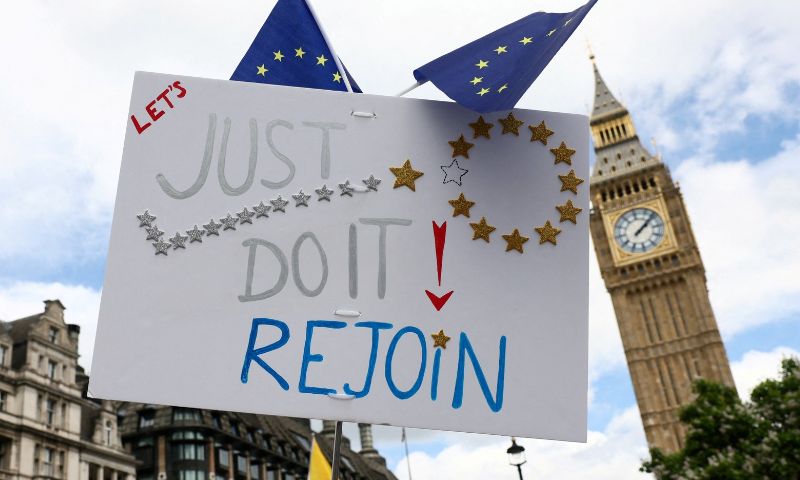
A decade after Britain voted to leave the European Union, the possibility of reversing Brexit is back in political conversation, with Prime Minister Andy Burnham’s renewed engagement with Brussels raising questions about whether the country could eventually return to the bloc.
As Burnham meets European leaders on Friday, November 20, Britain is hoping to secure agreements aimed at reducing trade barriers, improving economic cooperation and restoring some of the ties weakened by its departure from the EU.
But could the discussions eventually lead to another referendum, or even full EU membership?
According to the BBC, several senior Labour figures have begun openly advocating Britain’s return to the bloc, while former Brexit campaigners are mobilising against any attempt to reverse the 2016 referendum result.
For now, no decision has been made to pursue membership, and the government has ruled out major changes before the next general election.
What is happening between Britain and the EU?
Burnham is meeting European leaders in Brussels to advance negotiations over three proposed agreements that could reshape parts of Britain’s post-Brexit relationship with the EU.
According to CNN, the discussions centre on reducing barriers to food trade, linking British and European emissions trading systems, and introducing a youth mobility arrangement.
The proposed youth scheme could allow eligible young people to live, study, work and travel between Britain and participating European countries for limited periods.
Meanwhile, easing checks on agricultural and food products could help British exporters by reducing paperwork and border delays.
However, the negotiations remain complicated.
CNN reported that disagreements over university tuition fees, youth mobility arrangements and British participation in European industrial initiatives were among the outstanding issues ahead of the summit.
Even if agreements are reached, they would represent closer cooperation rather than a return to EU membership.
Is Britain considering rejoining the EU?
The prospect has gained attention following interventions by several prominent Labour politicians.
Former deputy prime minister David Lammy has urged Burnham to enter the next general election with a pledge to negotiate Britain’s return to the EU.
Speaking to BBC Radio 4, Lammy argued that any negotiated membership agreement should subsequently be put to the British public in another referendum.
Former chancellor Rachel Reeves, former business secretary Peter Kyle and former Welsh secretary Jo Stevens have also expressed support for rejoining.
According to the BBC, their interventions represent a significant departure from Labour’s earlier position under former prime minister Keir Starmer, whose government pledged to make Brexit work without rejoining the single market or customs union.
Burnham, however, has stopped short of committing to a reversal.
“The hard Brexit we were given is not good enough,” he said in a speech earlier this week, according to CNN.
The prime minister has indicated that he would like Britain to rejoin the EU during his lifetime, although he has ruled out pursuing membership during the current parliamentary term.
He is expected to outline options for Britain’s longer-term relationship with Brussels in December.
Why is Brexit being reconsidered?
Economic concerns appear to be driving much of the renewed discussion.
According to CNN, economists broadly agree that Brexit has weakened Britain’s growth potential, although estimates of the economic damage vary considerably.
The broadcaster cited estimates suggesting that leaving the EU may have cost Britain between 2 and 8 per cent of potential economic output.
With the government seeking ways to stimulate growth, closer ties with Europe’s single market could offer opportunities for businesses facing additional costs and restrictions.
However, the economic argument is complicated by questions of sovereignty.
Anand Menon, a professor at King’s College London and director of the think tank UK in a Changing Europe, told CNN that Burnham’s approach had so far differed little in substance from Starmer’s.
He suggested that meaningful changes would be difficult unless Britain reconsidered its existing restrictions on deeper integration.
Could another Brexit referendum happen?
A second referendum remains a possibility being discussed by politicians rather than a government commitment.
Lammy and Kyle have suggested that Labour could seek an electoral mandate to negotiate new membership terms before asking voters to approve the outcome.
But public opinion may prove difficult to navigate.
Morgan Jones, deputy director of Persuasion UK, told CNN that polling suggested considerable support for rejoining under Britain’s former membership conditions.
However, she warned that enthusiasm could weaken when voters considered potential financial contributions to the EU, the possibility of adopting the euro and the lengthy process of renegotiating membership.
The prospect has also revived resistance among Brexit supporters.
According to the BBC, former prime ministers David Cameron and Boris Johnson have warned against reopening the debate, while Conservative and Reform UK figures have challenged Burnham’s position.
Cameron cautioned that another membership debate could become “long and painful”, potentially undermining efforts to improve Britain’s existing agreements with Brussels.
Would the EU welcome Britain back?
That remains another major uncertainty.
Britain would have to negotiate new membership terms, and there is no guarantee that Brussels would restore the privileges the country enjoyed before Brexit.
Former EU Brexit negotiator Michel Barnier has warned that Britain cannot selectively adopt elements of the single market, according to CNN.
The broadcaster also quoted EU foreign policy chief Kaja Kallas as saying the bloc had experienced “a lot of trauma” from Britain’s departure, warning that future negotiations would be difficult.
Any return would consequently depend on political agreement within Britain and acceptance by EU member states.
What happens next?
Several possibilities remain open.
Britain could continue negotiating individual agreements while remaining outside the EU’s main economic institutions. Alternatively, Burnham could pursue deeper economic integration through the single market or customs union.
The most ambitious scenario would involve negotiating full membership and potentially holding another referendum.
According to the BBC, Labour MPs remain divided over how far the government should take the debate, with some concerned about reopening political divisions and others seeing an opportunity to attract pro-European voters.
Friday’s summit may offer an indication of how far Britain and the EU are prepared to move towards each other.
For now, a Brexit reversal remains a political possibility rather than a settled government policy. The coming months could determine whether Burnham’s European reset remains a series of limited agreements or develops into a much larger debate about Britain’s future.
Ten years after voting to leave, Britain may soon find itself debating the terms of a possible return.
You May Also Like
- WEB DESK
- November 20, 2026
Pakistan condemns Houthi attack on Riyadh’s tallest building

- WEB DESK
- November 20, 2026
