- WEB DESK
- October 23, 2026
CCD encounters come under scrutiny as Azma Bukhari rejects ‘policy’ claims
-

- WEB DESK
- October 23, 2026
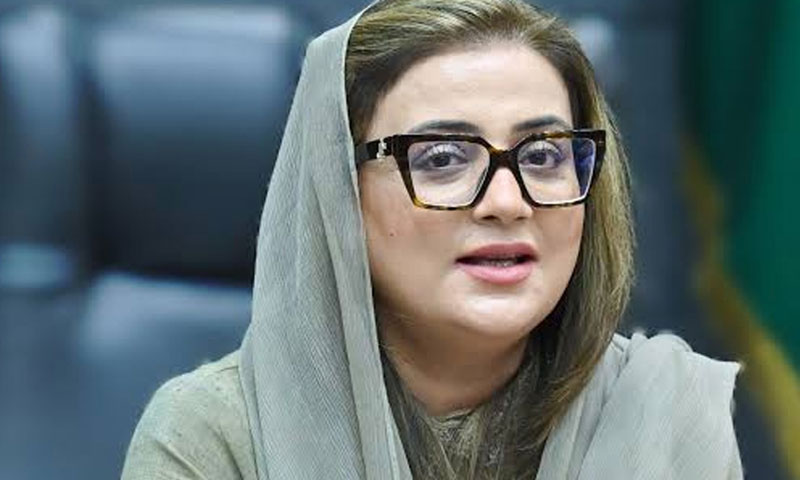
The killing of a suspect accused of deliberately running over a teenage worker in Multan has renewed scrutiny of Punjab’s Crime Control Department (CCD), with Information Minister Azma Bukhari rejecting suggestions of an official encounter policy and arguing that armed accomplices of criminals often attempt to rescue them from police.
The controversy followed the death of Tauqeer Nazir, who had been arrested after allegedly chasing and running over 15-year-old Waseem Abbas in a private housing society in Multan. CCTV footage showed the teenager attempting to flee before being pursued by a car and struck. Police arrested Nazir and a court subsequently granted his physical remand.
Police later said Nazir escaped custody before being killed in an alleged encounter with the CCD near Bahawalpur early on October 21. According to the CCD, personnel attempted to stop two people riding a motorcycle near Bahawalpur’s Northern Bypass when the men opened fire. Police returned fire, leaving Nazir dead while his alleged accomplice escaped. Another account reported that Nazir had earlier been freed after armed men attacked a police team while he was being transferred, before he was subsequently encountered by a CCD team in Bahawalpur.
The circumstances of his death prompted questions over due process and once again brought attention to a recurring feature of several CCD accounts: suspects dying during exchanges of fire after alleged accomplices attack police, while those attackers manage to escape.
Appearing on Geo News programme Aaj Shahzeb Khanzada Kay Saath on October 21, Bukhari rejected the suggestion that the frequency of such incidents indicated either staged encounters or instructions from Chief Minister Maryam Nawaz to kill suspects.
Host Shahzeb Khanzada questioned whether killing suspected criminals in this manner could be considered justice and whether circumventing the judicial process risked creating a wider problem rather than addressing crime.
Bukhari, however, argued that people involved in serious crime often belonged to wider criminal networks and that attempts by their associates to free them could lead to armed confrontations.
“Those who have this mindset are not alone,” she said, arguing that someone coming to free such a person would not arrive “carrying sweets” but would bring weapons.
Her response placed the responsibility for such shootouts on the alleged criminal networks surrounding suspects rather than on an institutional policy within the CCD.
Why does the pattern keep recurring?
Bukhari was pressed on why similar accounts appeared so frequently in CCD operations when Punjab already had a much larger conventional police force.
He cited several previous cases in which the official narrative followed broadly the same sequence: suspects were in custody or being taken for recovery, alleged accomplices attacked the police party, the suspects died in the ensuing firing and those accused of launching the attack escaped.
Among the cases raised during the programme were three men accused of a restaurant robbery who were killed in Lahore, two brothers accused of murder following a dispute over Rs30, and other alleged encounters during July and August.
When asked whether the frequency of such outcomes demonstrated extraordinary efficiency by the relatively new force or whether the CCD had been given instructions by the chief minister to conduct encounters.
“Absolutely not,” Bukhari responded.
“Why would the chief minister order an encounter?” she said, rejecting any suggestion that Maryam had directed the CCD to kill suspects.
Bukhari maintained that the chief minister could not know in advance when an operation would result in an armed confrontation and denied that encounters were being carried out as government policy. Reports of the interview similarly quoted her as rejecting allegations of chief minister-ordered encounters.
When the assumption is wrong
Questions over the speed and use of lethal force by CCD personnel carry particular weight because an earlier case involving an innocent family demonstrated what can happen when an officer incorrectly assesses a situation.
Nine-year-old Australian national Hania Ahmed was killed in Chakwal on the night of June 10-11 after a CCD constable opened fire on a car carrying her family.
Hania, her parents and her brother were themselves being robbed by two armed men outside the CCD police station when the officer fired at their vehicle. Hania was killed, while her father and brother were wounded.
An inquiry subsequently found the CCD constable responsible, concluding that he had opened indiscriminate fire without obtaining permission from his duty officer or another senior officer.
The constable claimed he had been fired upon by one of the robbers and acted in self-defence, but the duty officer and three other officials contradicted his account.
The inquiry described his self-defence claim as “completely wrong and contrary to facts” and found that he had also chased the family’s vehicle on a private motorcycle without authorisation.
The case illustrates the potential consequences when lethal force is used on an assumption that a vehicle or individual is connected to criminal activity.
In Chakwal, the people inside the targeted car were not criminals fleeing police but a family caught in the middle of a robbery.
The incident therefore adds a separate dimension to the debate surrounding encounters: beyond questions about the legal rights of accused criminals, haste, inadequate assessment or a lack of operational restraint can also endanger people with no connection to an offence.
Hina Butt post adds to controversy
The Multan encounter also triggered a political controversy after PML-N MPA Hina Pervaiz Butt shared news of Nazir’s death and wrote: “This is Maryam Nawaz Sharif sahiba’s government; justice is served immediately here.”
She subsequently deleted the post.
The comment was raised with Bukhari, arguing that describing the suspect’s death as “immediate justice” under Maryam’s government could be interpreted as attributing the encounter to the chief minister.
Bukhari distanced the government from Butt’s remarks and said the lawmaker had previously made comments without fully appreciating their implications which later created problems for her and “certainly” caused embarrassment to the government.
Butt later rejected that characterisation, saying the tweet represented her personal opinion and the feelings of an ordinary citizen rather than an official government position.
The central issue raised during the exchange, however, went beyond the deleted tweet.
Bukhari’s position was that CCD personnel were confronting organised criminal networks whose armed members could attempt to rescue their associates, while it was questioned why accounts involving attackers escaping and suspects dying appeared repeatedly in CCD operations.
The Chakwal case provides a documented example of why questions over restraint and accountability extend beyond the guilt or innocence of suspects: the CCD’s own inquiry found that an officer had fired without authorisation and mistakenly targeted a vehicle carrying an innocent family.
You May Also Like