- WEB DESK
- October 23, 2026
Kundi vows to equip police as counterterrorism takes centre stage in KP
-

- WEB DESK
- October 23, 2026
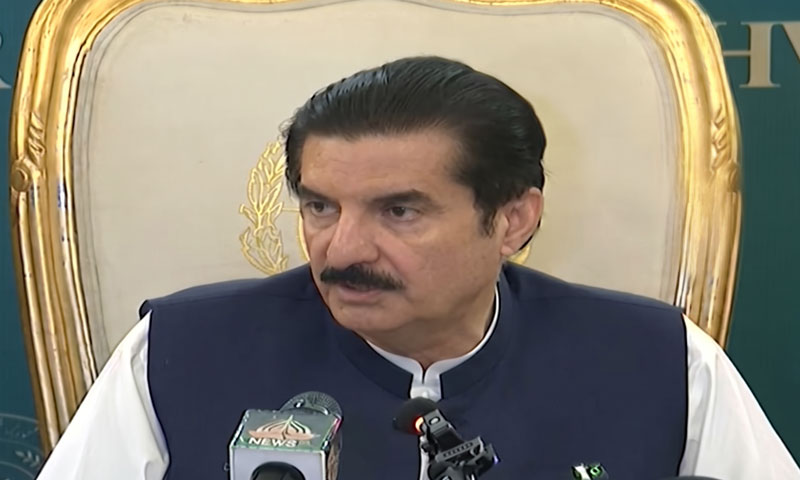
PESHAWAR: Khyber Pakhtunkhwa Governor Faisal Karim Kundi on Friday pledged to provide police with the equipment needed to fight terrorism and announced plans for a welfare package for police personnel, as counterterrorism remains the province’s top priority following the imposition of emergency and governor’s rule.
Addressing a press conference in Peshawar, Kundi said the provincial administration would ensure that police and other law enforcement agencies received the equipment required to combat militancy, adding that the government would also announce a package for police personnel whose salaries had not increased for years.
“Peace and security are our top priority,” Kundi said, adding that development and prosperity would follow once peace was restored in the province.
He said the administration was also considering the needs of the police and the Frontier Constabulary, which has recently been renamed the Federal Constabulary, as part of efforts to strengthen the response to terrorism.
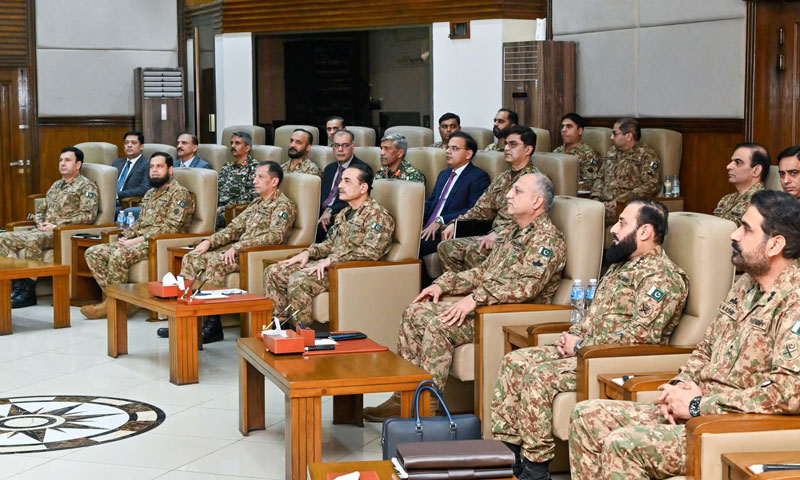
Kundi’s remarks came a day after Prime Minister Shehbaz Sharif chaired an apex committee meeting in Peshawar attended by Chief of Defence Forces Field Marshal Asim Munir and senior federal and provincial officials.
Addressing the meeting, Shehbaz defended the imposition of emergency and governor’s rule in KP as a decision taken under “extreme compulsion”, saying the federal government could not remain a silent spectator as terrorism resurged in the province.
He accused previous provincial governments of failing to strengthen the police and Counter-Terrorism Department despite receiving substantial resources, describing their handling of the deteriorating security situation as “criminal negligence”.
The prime minister said the province had once again been left “wounded” by terrorism after years of sacrifices by civilians, law enforcement personnel and the armed forces had helped restore peace across the country. He also alleged that militants had been allowed to return after terrorism had largely been brought under control by 2017-18.
The federal government imposed emergency and governor’s rule in the province on October 11, following a recommendation by the federal cabinet. President Asif Ali Zardari approved the measures under Articles 232 and 234 of the Constitution.
The Centre cited the deteriorating security situation and what it described as inadequate cooperation from the Pakistan Tehreek-e-Insaf-led provincial government on counterterrorism.
New administrative structure
Under the federal intervention, former chief minister Sohail Afridi, his cabinet and advisers ceased to hold office, while executive authority shifted to Kundi.
The federal government subsequently established an 11-member advisory council and a separate administrative structure for 12 terrorism-affected districts. On October 17, it appointed 48 members to a Regional Representative and Development Council covering the designated districts following jirga consultations.
Parliament endorsed the measures in October, with the National Assembly and Senate approving them on October 14. A joint sitting of Parliament passed a resolution supporting the intervention the following day by 214 votes to 56 amid opposition protests.
The Pakistan Tehreek-e-Insaf has rejected the federal government’s justification for the measures and challenged the emergency and governor’s rule in court. The Peshawar High Court is hearing petitions arising from the federal intervention.
Before the measures were imposed, Afridi had argued that providing additional resources to police alone would not resolve militancy without a change in counterterrorism policy.
Development tied to security
Kundi said the provincial administration would prioritise restoring peace before pursuing its wider development agenda, arguing that improved security was necessary to attract domestic and foreign investment.
He also said the federal government had agreed to provide Rs160 billion sought for the province’s development and would offer further financial support if required.
The governor said the administration would maintain zero tolerance for corruption, irregularities in government contracts and politically influenced transfers and postings. He also pledged action against officials found responsible for wrongdoing in the handling of wheat at the Azakhel warehouse.
Kundi urged political parties to work together on the province’s security and development challenges, saying the provincial government would pursue its demands with the Centre through dialogue and argument rather than confrontation.
Bilour calls for stronger police, counterterrorism capacity
Khyber Pakhtunkhwa Adviser on Information and Public Relations Samar Haroon Bilour also called for stronger police and Counter-Terrorism Department (CTD) capabilities, saying the fight against militancy cannot be won without improving their operational capacity.
Bilour said the province’s police personnel were its heroes and needed modern weapons, tracking systems, vehicles and advanced defensive equipment to confront militants. She said the federal government had assured the province of additional financial and other support wherever needed.
Referring to the apex committee meeting chaired by PM Shehbaz in Peshawar, Bilour said the discussions had covered security and development, with the provincial administration presenting its demands to the federal government.
She said the meeting also discussed establishing Danish schools in underserved areas, particularly Bajaur, to provide children with access to modern education and training.
Development plans, accountability
Bilour said the proposed development agenda included improving connectivity, addressing traffic and governance problems, and establishing IT hubs and training centres to create opportunities for young people.
She added that a tracking mechanism would be introduced for development projects to monitor when work began, the expected completion time and when projects were actually completed.
Bilour also welcomed the governor’s focus on repairing Peshawar’s damaged roads and addressing the disruption caused by excavation work across the city.
Commenting on the security situation, she rejected the suggestion that conditions in the province remained normal, describing the deaths of security personnel and others as a reminder of the continuing threat posed by militancy.
She expressed condolences over a recent incident and said the provincial administration would cooperate with those affected. Bilour also called for a firm response to attacks on people she described as heroes of the Pashtun community.
You May Also Like