- Sadiq Khan
- November 18, 2026
KP apex committee backs terror crackdown as PM Shehbaz defends emergency
-

- WEB DESK | Alishba Khattak
- October 22, 2026
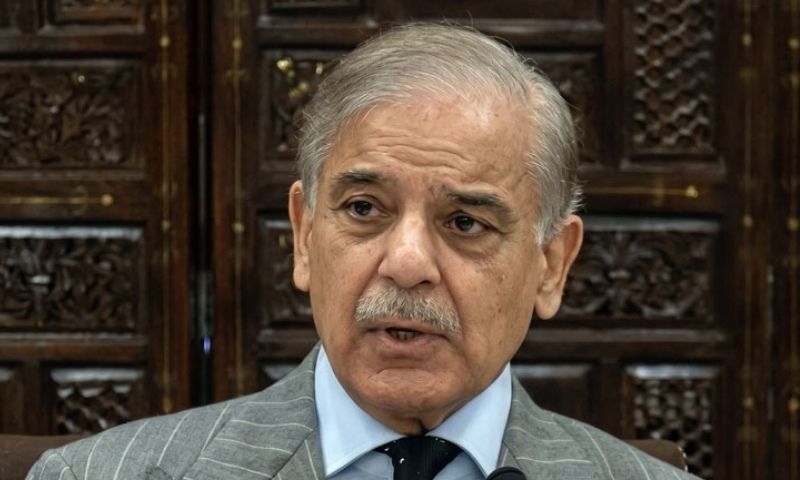
PESHAWAR/ISLAMABAD: Prime Minister Shehbaz Sharif on Thursday defended the imposition of emergency and governor’s rule in Khyber Pakhtunkhwa as a step taken under “extreme compulsion”, saying the federal government could not remain a silent spectator as terrorism resurged in the province and accusing previous provincial governments of failing to strengthen the police and Counter-Terrorism Department despite receiving substantial resources.
Addressing a meeting of the KP Apex Committee at the Governor House in Peshawar, PM Shehbaz said the province had once again been left “wounded” by terrorism after years of sacrifices by civilians, law enforcement personnel and the armed forces had helped restore peace across the country.
He accused previous provincial administrations of “criminal negligence” in dealing with the deteriorating security situation and alleged that militants had been allowed to return after terrorism had largely been brought under control by 2017-18.
“There can be no greater injustice to this country,” PM Shehbaz said, arguing that the sacrifices made to restore peace had subsequently been undermined.
The prime minister said around 80,000 people had been killed in terrorism-related violence over the years, while the country had suffered economic losses running into hundreds of billions of dollars.
He said those sacrifices had helped establish peace by 2018, but terrorism had since returned to KP.
PM Shehbaz alleged that the province had failed to fill around 5,000 vacant police posts during the previous government, while Safe City projects remained incomplete and there had been no substantial improvement in the capacity of the CTD or professional training of the police.
He also pointed to the additional share allocated to KP under the 2010 National Finance Commission Award because of its frontline role in combating terrorism.
According to the prime minister, more than Rs800 billion had either been transferred or was being transferred to the province under the arrangement since 2010.
Despite those resources, he said, the province had failed to develop the weapons, trained personnel and institutional capacity required to confront the renewed militant threat.
PM Shehbaz said Pakistan had managed to stabilise its economy despite extremely difficult circumstances and was seeking to return to a path of growth, making it impossible, in his view, for the government to ignore deteriorating security in KP.
He alleged that militants were able to move around parts of the province, that some areas effectively came under their influence after dark and that extortion was being collected.
“If KP, God forbid, keeps burning and we sit and watch and play the flute, that is not possible,” PM Shehbaz said, invoking the saying that “Rome burned while Nero fiddled”.
He said neither the nation nor the government could afford to remain a silent spectator in such circumstances.
The prime minister also alleged that militants operating from Afghan territory were carrying out attacks inside Pakistan, killing civilians as well as police and military personnel.
“There has to be a point where it must come to a grinding halt,” he said.
PM Shehbaz says final political effort failed
PM Shehbaz said the federal government had made what he described as one final effort to avoid the present arrangement before deciding to impose governor’s rule.
He said a team comprising representatives of the PML-N and PPP had worked for 48 hours to reach an understanding with the then provincial government. Interior Minister Mohsin Naqvi and Rana Sanaullah were among those involved in the effort, he said.
According to PM Shehbaz, Naqvi eventually telephoned him to say an agreement had been reached.
“I asked, ‘Have the signatures been done?’ He said they have just gone to show it to Sohail Afridi and it will come back in a few minutes. Rest is history,” the prime minister said.
PM Shehbaz said it was after this effort failed, and against the backdrop of the security situation, that the federal government moved towards governor’s rule.
He said he met President Asif Ali Zardari twice for consultations before the decision was taken.
“These were the circumstances which ultimately compelled us to take these decisions,” he said.
The Centre had earlier said negotiations with the provincial government continued until shortly before the emergency and governor’s rule were imposed, but failed to produce an agreement. On October 11 federal ministers described the measures as a last resort after unsuccessful talks.
PM Shehbaz said the advisory council established after the change in provincial administration was overwhelmingly made up of professionals and experts, who would now be responsible for working with Kundi to improve conditions in KP.
He said people in the province had spent 13 years waiting for better healthcare, education, security, basic services and reduced corruption.
“If we have had to bring this change today, achieving positive results is a must,” he said, adding that improvements in both security and socioeconomic conditions would be necessary to justify the new arrangement.
PM alleges major corruption in KP projects
PM Shehbaz also levelled corruption allegations against previous provincial administrations, citing three projects as examples.
He alleged that around Rs100 billion had been lost to corruption in a city improvement project involving clean drinking water.
The prime minister also referred to alleged irregularities at the District Accounts Office in Kohistan, claiming Rs37 billion of public money had been embezzled without accountability.
He further alleged that contracts in the Placer Gold Project had been awarded to favoured parties, resulting in losses running into billions of rupees.
The prime minister did not provide documentary evidence for the allegations during his address, and the claims could not immediately be independently verified.
PM Shehbaz thanked leaders of the federal coalition for supporting the government’s decision, particularly President Zardari and PML-N President Nawaz Sharif.
He pledged that the federal government would provide the province with all possible resources and said the administration, working alongside the federal government and military leadership, would seek to restore security, development and public services.
PM Shehbaz said he wanted KP not only to catch up with the other provinces in development but eventually move ahead of them.
Earlier in his speech, the prime minister offered prayers for children and a teacher recently killed in an incident at a school and said he had asked Governor Faisal Karim Kundi to ensure a transparent investigation and meet the victims’ families.
He described KP as Pakistan’s “first strong wall” against security threats and paid tribute to its residents, police, law enforcement agencies and armed forces for their sacrifices.
Kundi says peace, development must move together
Speaking at the meeting, Kundi said peace in KP and the protection of its people were a shared priority, calling for a coordinated strategy between the federal government, national institutions and provincial administration.
“Our first priority is the establishment of peace and the elimination of terrorism,” Kundi said, adding that the administration had focused from its first day on improving police capacity, assisting security institutions and accelerating development in the merged districts.
He said success against terrorism should be measured through public confidence, increased professional capacity of the police and CTD, and the dismantling of the entire militant network.
Kundi called for organised action not only against militants themselves but also against their facilitators, support networks and sources of financing.
“The people of Khyber Pakhtunkhwa should not have to choose between peace and development,” he said. “It is our collective responsibility to provide them with both.”
The governor said communities in the merged districts had paid a particularly heavy price during the fight against terrorism and should now receive better education, healthcare, employment and economic opportunities.
He said his office and advisory team had reviewed the province’s administrative gaps and challenges and prepared proposals centred on clear priorities, practical solutions and measurable results.
Kundi also praised residents for showing restraint during the recent political and administrative transition, saying no untoward incident had occurred despite what he described as provocation.
Apex Committee backs elimination of terrorism
The three-hour Apex Committee meeting concluded with participants agreeing on the need for the complete elimination of terrorism and reviewing ongoing counterterrorism operations and the province’s law and order situation, according to Governor House sources.
The meeting was attended by Field Marshal Asim Munir, heads of law enforcement agencies and senior civil and military officials.
Federal ministers Mohsin Naqvi, Azam Nazeer Tarar, Attaullah Tarar and Amir Muqam, along with Rana Sanaullah and Governor Kundi, attended the meeting. The KP chief secretary, inspector general of police, Peshawar corps commander and provincial advisers were also present.
The KP police chief and Naqvi briefed participants on security arrangements, operational requirements and facilities available to law enforcement agencies.
The meeting also paid tribute to members of the armed forces, police and civilians killed in the fight against terrorism.
PM Shehbaz assured the provincial administration of the federal government’s support, while the Centre pledged to provide the police and CTD with the resources and facilities required for counterterrorism operations.
Emergency and governor’s rule
The political and administrative order in KP changed on October 11, when President Zardari approved the imposition of an emergency under Article 232 and governor’s rule under Article 234 following a federal cabinet recommendation.
The Centre cited the deteriorating security situation and what it described as inadequate cooperation from the PTI-led provincial government on counterterrorism. Afridi, his cabinet and advisers ceased to hold office, while executive authority shifted to Kundi.
PTI has rejected the federal government’s justification for the measures and challenged the emergency and governor’s rule in court. Before their imposition, Afridi had argued that additional resources for police alone would not resolve militancy without a change in counterterrorism policy.
The federal government subsequently established an 11-member advisory council and a separate administrative structure for 12 terrorism-affected districts.
The National Assembly and Senate endorsed the measures on October 14 before a joint sitting of Parliament approved the resolution a day later by 214 votes to 56 amid opposition protests.
The new administrative structure expanded further on October 17, when the federal government appointed 48 members to a Regional Representative and Development Council covering the 12 designated districts following jirga consultations.
The measures have also been challenged before the Peshawar High Court, which is hearing a series of petitions arising from the federal intervention in the province.
You May Also Like