- WEB DESK
- November 22, 2026
COP31 climate talks collapse after EU, others reject final draft over fossil fuels
-

- Reuters
- November 22, 2026
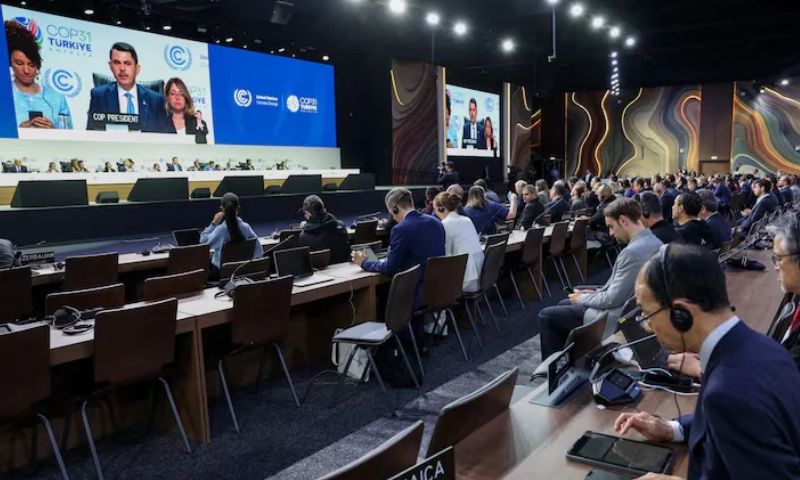
ANTALYA, Turkey: UN climate talks collapsed on Sunday after the European Union and other countries rejected a final draft deal put forward by COP31 presidents Turkiye and Australia, saying it was too weak to advance efforts to tackle global warming.
After more than two weeks of negotiations that extended two days beyond the scheduled deadline, COP31 President Murat Kurum told the closing plenary that he could see no agreement was possible and confirmed he would not put forward any new text. He later left the stage while country representatives were delivering speeches.
“There is nothing to do, we did all that we could. Since there are 196 countries, they will make the decision and we will respect their decision,” he said. “There will be no new text from now on.”
Australia’s COP31 negotiating president Chris Bowen said the failure to agree a deal at climate talks in Turkey was very disappointing, adding that wording on fossil fuels and climate finance were the main issues that broke the deal.
The last time UN climate talks failed to get a deal adopted by all was in Copenhagen in 2009.
The collapse this time is against the backdrop of competing crises, including wars and public outcry over the cost of living, that have distracted political attention from the problems caused by a warming climate.
Ireland’s environment minister Darragh O’Brien said the European Union could not support the proposed deal, in part because it made no mention of the fossil fuels that scientists say drive global warming.
“It is unconscionable that we would have a climate act that makes no reference to fossil fuel, no reference to transitioning away from fossil fuels,” he said.
Panama also said it could not support the text because it failed to address the scale and urgency of the climate crisis.
This year’s COP is the first since the UN’s environmental body in October confirmed the rise in global temperature was set to exceed 1.5 degrees Celsius (2.7 degrees Fahrenheit), a threshold countries agreed at Paris climate talks over a decade ago to try not to exceed, and beyond which extreme weather impacts intensify.
Pressure from Saudi Arabia and other oil producers
The proposed deal had acknowledged the overshoot, but called for faster development of carbon-removal technologies to eventually reverse it.
Observers at the venue said Saudi Arabia and other big oil-producing nations had pushed hard in negotiations for a text that left out explicit mention of fossil fuels, while including carbon removal technologies.
While scientists say removing carbon from the atmosphere — when paired with steep emissions cuts — is vital to avoiding the worst impacts of climate change, critics of the deal said they worried the carbon removal language would be used as a licence to keep pumping oil.
A representative for the Saudi delegation told the summit he was surprised at the resistance to technology.
“If indeed the climate challenge, as some have mentioned today, is so important, it makes no sense that solutions, concrete solutions… will be taken off the table,” he said.
The COP process is the main vehicle through which countries coordinate their efforts to curb global warming. Its annual summit provides an opportunity for nations to signal they are willing to work together to find solutions and help finance the problems rising temperatures cause.
While a blow to efforts to ratchet up international action, the failure to agree a political declaration in Antalya does not erase the obligations agreed by previous summits or remove the technical and legal frameworks governing multilateral action against climate change.
You May Also Like