- AFP
- November 21, 2026
Police submit challan in Hina Javed murder case after months of scrutiny
-

- Muhammad Zareef
- November 21, 2026
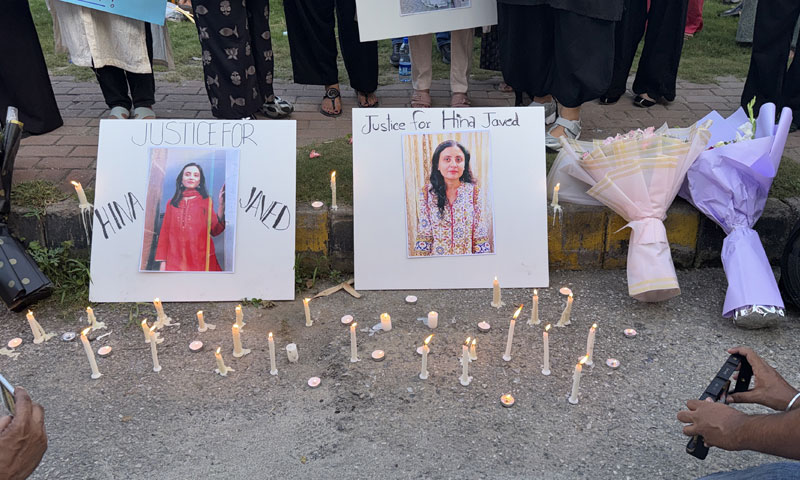
ISLAMABAD: Rawalpindi police have submitted the challan in the murder case of Hina Javed, a 45-year-old digital media professional who was found dead at her residence in August, following months of controversy over the investigation and allegations of evidence tampering raised by her family.
The challan was submitted to the court after the District Prosecution Branch sought an explanation from Rawalpindi police over delays in completing the investigation.
The prosecution branch had written to the City Police Officer (CPO) Rawalpindi on October 3, seeking a response regarding the submission of the challan.
Hina was found dead on August 20 at her residence in Rawalpindi’s Lal Kurti area, with signs of torture on her body. Her husband, Faisal Asghar Imam, domestic worker Zeeshan Arshad and father-in-law were named in the First Information Report (FIR).
The latest development comes amid questions over the handling of forensic evidence, conflicting police accounts and repeated demands from the victim’s family for an independent investigation.
It remains unclear which of the three individuals named in the FIR have been formally charged in the submitted challan.
Family raises questions over investigation
Hina’s murder came to light after her body was discovered in the bathroom of her apartment in Askari Apartments on August 20.
Her brother, Fahad Javed, registered a murder case at the Civil Lines police station under Sections 302 and 34 of the Pakistan Penal Code.
The FIR alleged that Hina had been subjected to physical and psychological abuse during her marriage, which had taken place approximately nine months before her death.
Investigators initially found her hands tied behind her back, while a wire was fastened around her neck and attached to a bathroom shower.
A subsequent post-mortem examination revealed multiple injuries, including a fractured neck bone and injuries to her ribs. Samples were sent for forensic analysis to establish the circumstances of her death.
Police arrested Hina’s husband and the domestic worker, who were subsequently remanded into police custody before being sent to jail on judicial remand in September.
The family repeatedly questioned the direction of the investigation, alleging that police were attempting to shift responsibility away from her husband and towards the domestic worker.
The allegations have not been established by a court.
DNA evidence and demands for judicial inquiry
In October, a summary of the forensic DNA report reportedly indicated matches linked to all three individuals named in the case.
DNA associated with Hina’s husband was reportedly detected at several locations, including items examined during the investigation.
The family questioned why the forensic findings had not resulted in greater scrutiny of the suspects and called for a judicial commission to independently review the evidence.
Speaking at a press conference, Fahad Javed accused investigators of overlooking evidence and demanded that the forensic findings be placed before the court.
“A killer can lie but DNA cannot lie,” he said, questioning the police’s handling of the investigation.
The family also alleged that evidence had been tampered with and that the investigation had been influenced to protect certain individuals.
Punjab government orders review, Naqvi promises fresh probe
Following concerns raised by the family, the Punjab government constituted a high-powered committee to review the investigation, headed by senior police officer Sohail Zafar Chattha.
The committee was tasked with examining the evidence, reviewing the original investigation and meeting the victim’s relatives.
However, the family subsequently rejected the committee’s findings, maintaining that significant questions about the forensic evidence and the involvement of individuals named in the FIR remained unanswered.
The controversy also reached the National Assembly Standing Committee on Interior and Narcotics Control.
During an October 29 meeting, Interior Minister Mohsin Naqvi assured the family that another committee could be constituted to investigate their concerns.
“The best officer in Punjab Police will investigate this matter,” Naqvi told the parliamentary panel.
Police officials, meanwhile, defended the investigation and presented their account of the evidence, including statements attributed to the domestic worker.
The family continued to challenge those findings and maintained its demand for an independent judicial inquiry.
The submission of the challan now moves the case towards further court proceedings, although questions remain over the prosecution’s final position on the three individuals originally named in the FIR and how the disputed forensic evidence has been addressed.
You May Also Like

- AFP
- November 21, 2026