- Reuters
- September 19, 2026
Dar, Araghchi discuss regional developments, emphasise energy security and dialogue
-

- WEB DESK
- September 19, 2026
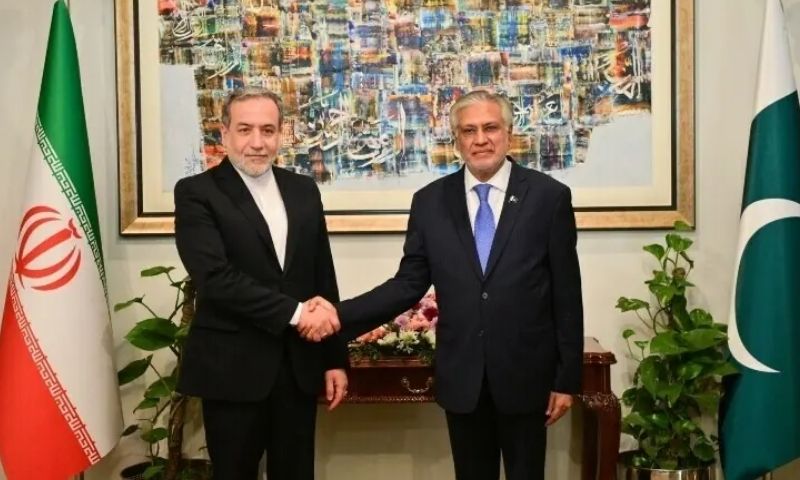
Deputy Prime Minister and Foreign Minister Ishaq Dar spoke with Iranian Foreign Minister Abbas Araghchi on Saturday to discuss the latest regional developments, with the two sides stressing the need for uninterrupted energy supplies and safe passage of ships.
According to a statement issued by Dar, he highlighted the importance of maintaining uninterrupted energy supplies and ensuring the safe and expeditious passage of ships, particularly given their impact on developing countries and global supply chains.
Dar stressed that dialogue and diplomacy remained the only viable means of ensuring peace and stability in the region.
The two foreign ministers agreed to maintain close coordination and cooperation and decided to meet in New York on the sidelines of the 81st session of the United Nations General Assembly.
On September 17, Araghchi also spoke by phone with Pakistan’s Chief of Defence Forces, Field Marshal Syed Asim Munir, to discuss the latest regional developments and matters of mutual interest, Iran’s state news agency IRNA reported. The conversation took place while Araghchi was in Beijing, where he also spoke with Turkish Foreign Minister Hakan Fidan. Iran’s Foreign Ministry provided no further details about the discussion. The calls came amid ongoing diplomatic consultations over rising regional tensions and developments, with Tehran engaging regional counterparts as it assesses the evolving security situation.
Trump to face sceptical world leaders at UN
Meanwhile US President Donald Trump is set to face a more skeptical international audience at the United Nations as the war with Iran enters its seventh month, with the conflict producing few signs of a decisive outcome and creating wider regional and economic risks.
When Trump addressed the UN a year ago, he portrayed US strikes on Iran’s nuclear facilities as a major success and said he had helped bring peace between Israel and Iran. Since then, however, the conflict has intensified. Trump joined Israel in striking Iran on Feb. 28, citing an imminent nuclear threat, but experts have disputed claims that Tehran was close to developing a nuclear weapon. Iran has continued to resist despite significant military and economic pressure.
Tehran has also retained a stockpile of highly enriched uranium believed to have survived earlier US strikes. At the same time, Iran has disrupted oil shipments through the Strait of Hormuz, contributing to higher global energy prices.
The emergence of Yemen’s Houthi movement as a stronger regional force has further complicated the situation. Houthi fighters have tightened their grip around the Bab el-Mandeb Strait, another vital shipping route, increasing pressure on global trade and energy supplies. Their advances have also raised concerns among US allies in the Gulf about Washington’s security commitments.
Trump has resisted calls from Saudi Arabia for direct US military intervention against the Houthis, reflecting concerns about expanding a conflict that has already stretched American military resources.
European and Asian allies have largely declined to support Trump’s war effort, while economic fallout, including high U.S fuel prices, has added domestic political pressure ahead of November’s midterm elections.
Trump has said he hopes the conflict is nearing an end, but analysts cited by Reuters expect the war could continue well beyond the elections.
Pakistan’s role in mediation
Pakistan has continuously called for de-escalation and has reiterated the need for dialogue to reach peace since it brought Iran and the US to the table in April this year. This role has also opened discussion about whether Islamabad can translate its peacemaking efforts into economic gains.
Earlier in June, Prime Minister Shehbaz Sharif and Field Marshal Munir took part in high-level talks in Switzerland aimed at advancing a deal to end the Iran-US conflict, marking the culmination of months of Pakistani diplomatic engagement. The effort has drawn appreciation from the United States, Iran and other countries as the war threatened to disrupt the Strait of Hormuz, global oil supplies and the wider economy.
As per Reuters report, analysts say Pakistan’s position as a peacemaker gives it diplomatic leverage with multiple sides, including Washington, Tehran, Gulf states, Türkiye and China. Unlike its role after the September 11 attacks, when Pakistan became a frontline state in a prolonged war in Afghanistan, Islamabad is now seeking to position itself as a force for de-escalation and dialogue.
That diplomatic capital could potentially support greater foreign investment, trade and economic partnerships. Analysts have pointed to opportunities for deeper integration with the Middle East, stronger economic and defence ties with Gulf countries and Türkiye, and expanded trade with Iran if sanctions are eased.
You May Also Like