- Web Desk
- 20 Minutes ago
Pakistan says Iran’s ballistic missile programme not part of Islamabad MoU
-

- Web Desk
- 5 Hours ago
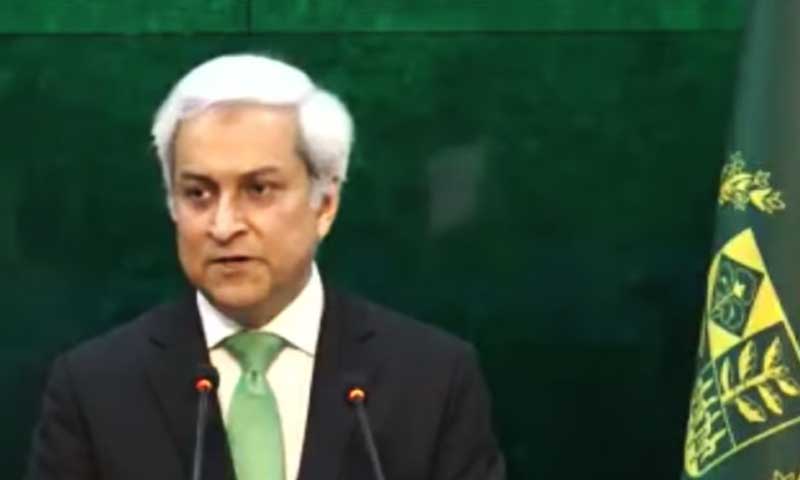
ISLAMABAD: The Foreign Office on Wednesday stated that Prime Minister Shehbaz Sharif had spoken clearly and deliberately on Iran’s ballistic missile programme, that the PM’s remarks in parliament were made in the context of the overall regional situation.
“The Prime Minister spoke in a measured and deliberate manner on Iran’s ballistic missile programme,” Foreign Office spokesperson Tahir Andrabi told reporters. “What he said in parliament was in the context of the broader situation as a whole.”
Strait of Hormuz
Andrabi said the blockade of the Strait of Hormuz had ended, with talks ongoing to determine its final status. He said Pakistan had supported maintaining the status quo of the strait, which Islamabad considers a vital international trade corridor. Pakistan’s question of a trade gateway with Iran, he added, remained linked to the lifting of sanctions.
“Our focus is on the future,” Andrabi said. R4, he noted, had backed the principle of resolving regional issues at the regional level.
Pakistan’s Mediating Role
The spokesperson said President Pezeshkian’s visit to Islamabad had reflected international confidence in Pakistan’s role as a mediator. He added that Pakistan was involved in technical-level talks connected to strategic matters, and that Pakistan’s UN representative Nabeel Munir had represented the country in technical negotiations on June 22.
Situation in Somalia
Addressing the scenerio of Pakistani hostages in Somalia, Andrabi said that a diplomatic team from Djibouti to Somalia has been dispatched as part of efforts to secure the release of Pakistani hostages, stressing that the matter remained a top government priority.
“The government of Pakistan’s foremost priority is the safe release of the hostages,” Andrabi told reporters at his weekly press briefing. “We are utilising multiple channels, diplomatic means, friendly countries, local NGOs, and assistance of activist Ansar Burney to secure their release.”
Pezeshkian’s Islamabad visit
The spokesperson also briefed journalists on Iranian President Masoud Pezeshkian’s visit to Pakistan, which took place on Tuesday at the invitation of Prime Minister Shehbaz Sharif. Pezeshkian was accompanied by a high-level delegation that included Foreign Minister Abbas Araghchi.
“The Iranian president held meetings with the President of Pakistan, the Prime Minister, and the Chairman of the Joint Chiefs of Staff,” Andrabi said. Delegation-level talks between PM Sharif and President Pezeshkian covered key aspects of bilateral relations, including the Islamabad Memorandum of Understanding (MoU).
Nuclear diplomacy
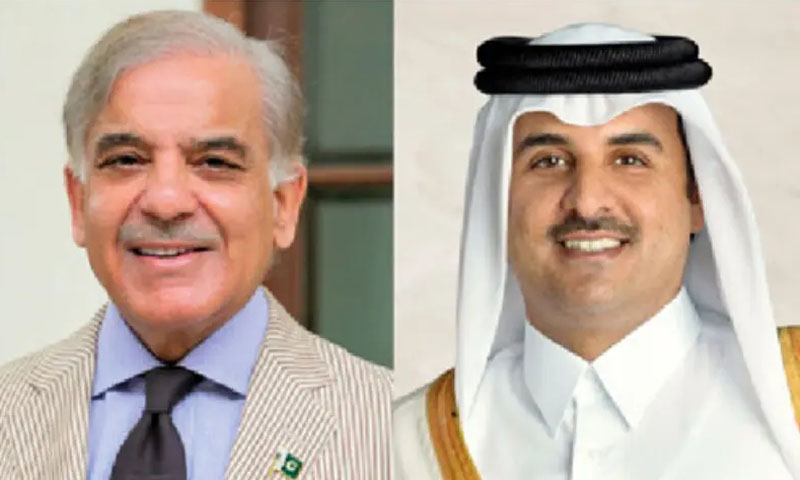
On the US-Iran nuclear negotiations, Andrabi said Pakistan and Qatar had jointly hosted the first high-level session under the Islamabad MoU framework, with PM Sharif, US Vice President JD Vance, and Iran’s Parliament Speaker all in attendance.
“Senior negotiators will regularly brief the high-level committee on progress in the negotiations,” he said. “Pakistan and Qatar will remain in continuous contact with American and Iranian technical teams in the coming weeks.”
Andrabi said Pakistan had taken note of the positive international reception to its mediating role. “Pakistan welcomes remarks from various countries and the international community regarding its positive and constructive role,” he said.
Gulf Attacks
On the attacks on Kuwait, Bahrain, and the UAE, Andrabi said Pakistan’s position was fully in accordance with international law, adding that Islamabad had remained in contact with the leadership of all three countries throughout.
China and Afghanistan
Andrabi acknowledged China’s role in regional security, particularly with regard to Afghanistan, saying Pakistan and China had close cooperation on the matter and would continue to do so.
“Both Pakistan and China face threats emanating from Afghanistan,” he said. “Pakistan faces the threat of terrorism from the TTP, while China faces a similar threat from ETIM. We will continue our cooperation with China in this regard.”
On India
Andrabi was characteristically brief when asked about provocative language from Indian leadership. “Abusive language from India’s top leadership is routine,” he said. “It is not surprising to us.”
You May Also Like