- WEB DESK
- October 27, 2026
Duki road named after Dr Mahnoor as Bugti pays tribute to acid attack survivor
-

- WEB DESK
- August 23, 2026
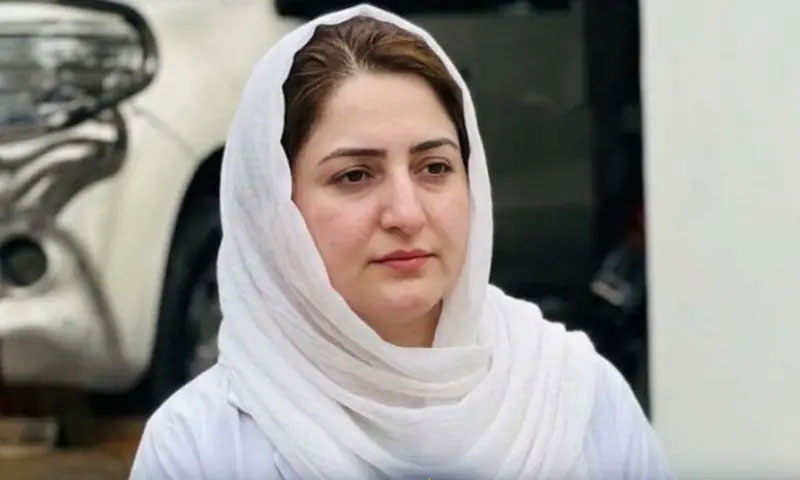
QUETTA: The Balochistan government has formally named a major road in Duki district after Dr Mahnoor Nasir, who survived a brutal acid attack in Quetta in June, in recognition of her bravery, resilience and dedication to her profession.
Balochistan Chief Minister Mir Sarfraz Bugti had earlier announced that a major road in Duki would be named after the 29-year-old doctor.
The Local Government and Rural Development Department has now issued a formal notification to implement the decision.
According to the notification, “Haji Amanullah Masjid Road, adjacent to Damani Chowk in Duki, has been renamed “Dr Mahnoor Nasir Road, Duki with immediate effect,” it said.
The chief minister shared the notification on X, saying Dr Mahnoor’s courage and determination were a source of pride for the daughters of Balochistan.
“Recognising the services of brave and duty-bound citizens and encouraging them is our responsibility,” Bugti said.
The naming of the road is intended as a tribute to Dr Mahnoor’s courage and resilience following the attack, which left her with serious burn injuries.
Doctor suffered serious injuries in acid attack
Dr Mahnoor, a doctor at Quetta’s Civil Hospital, was seriously injured on June 7 when a hospital employee allegedly threw acid on her outside the hospital.
The attack left her with severe burns to her face, chest, legs and other parts of her body, according to earlier reports.
The suspected attacker was identified by police as Humayun Shah, a hospital employee.
Police later said the suspect was killed in an encounter after law enforcement officials traced him while he was attempting to flee the area on a bus.
The incident triggered widespread outrage and renewed concerns about violence against women and the need for stronger measures to prevent acid attacks.
Dr Mahnoor’s case also prompted calls for greater protection for women, particularly those facing harassment and violence in workplaces and public spaces.
Bugti said Dr Mahnoor’s determination represented an example for the daughters of Balochistan and stressed that recognising and encouraging citizens who demonstrate courage and dedication was a responsibility of the government.
Acid attacks prompt calls for tougher law
The case also fuelled calls for tougher punishment for perpetrators of acid attacks.
A lawmaker subsequently moved a bill in the National Assembly seeking amendments to the Pakistan Penal Code to introduce capital punishment as the maximum penalty for acid throwing.
Nawabzada Mir Jamal Khan Raisani submitted the Criminal Law (Amendment) Act, 2026, to the National Assembly Secretariat, proposing changes to Section 336-B of the Pakistan Penal Code.
The proposed legislation argues that existing punishments have failed to provide sufficient deterrence against acid attacks, despite amendments to the law in 2011.
The bill proposes retaining existing penalties while introducing the death penalty as the maximum punishment and setting a minimum fine of Rs1 million to be paid to the victim.
The legislative initiative came in the wake of nationwide outrage over the attack on Dr Mahnoor and renewed debate over legal and institutional measures to combat gender-based violence.
‘Worse than murder’
The proposed legislation also refers to observations made by the Supreme Court of Pakistan regarding the lasting impact of acid attacks.
It argues that the consequences for survivors can extend throughout their lives, causing permanent physical injuries, psychological trauma, social isolation and financial hardship.
The bill cites the view that acid attacks can in some respects be more severe than murder because while a murder victim’s suffering ends with death, survivors of acid attacks may have to live with the physical and psychological consequences of the assault for the rest of their lives.
The government’s decision to name a road after Dr Mahnoor therefore comes amid wider calls for greater recognition of survivors of violence and stronger measures to protect women from such attacks.
You May Also Like

- WEB DESK
- October 27, 2026
Punjab govt moves to provide life insurance cover to employees

- AFP
- October 27, 2026