- WEB DESK
- October 25, 2026
NA lawmaker seeks death penalty for acid attack perpetrators
-

- Zafar Ali
- June 9, 2026
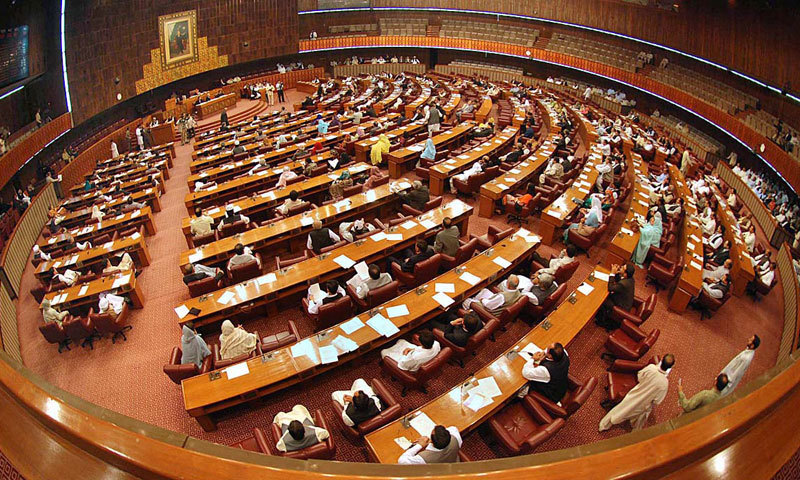
ISLAMABAD/QUETTA: A lawmaker has moved a bill in the National Assembly seeking the death penalty for perpetrators of acid attacks, arguing that existing laws have failed to deter a “brutal and unforgivable” crime that leaves victims with lifelong trauma.
Nawabzada Mir Jamal Khan Raisani submitted the Criminal Law (Amendment) Act, 2026, to the National Assembly Secretariat, proposing a critical amendment to Section 336-B of the Pakistan Penal Code (PPC).
The legislative push follows nationwide outrage over a recent high-profile acid attack in Quetta targeting a female doctor, Mahnoor Nasir, which revitalised calls for stringent judicial reforms regarding gender-based violence.
Capital Punishment as a Deterrent
Under the proposed amendment, capital punishment should be introduced as the maximum penalty for acid throwing. The bill seeks to retain the current legal provisions as baseline penalties, which include death penalty; life imprisonment, or a minimum fixed term of 14 years.
It has also proposed a minimum fine of Rs1 million, to be paid to the victim.
“Despite the introduction of stringent laws in 2011, incidents of acid throwing persist across the country,” the text of the bill states. “This underscores that the current punishments have failed to create an effective deterrence.”
‘Worse Than Murder’
The draft legislation heavily leans on judicial precedents, quoting past observations from the Supreme Court of Pakistan which categorised acid throwing as a crime “more severe than murder in some aspects.”
“A murder victim’s suffering ends, but an acid attack survivor is condemned to bear the physical and psychological scars of the crime for the rest of their life,” the bill notes, channeling the apex court’s historical stance.
The bill outlines the multi-layered devastation faced by survivors —predominantly women and vulnerable segments of society — who are forced into lifetime physical disability, severe psychological trauma, social isolation, and financial ruin.
Catalyst for Reform
While acid violence has historically plagued parts of rural and urban Pakistan, the legislative momentum picked up sharply following the attack on Dr Mahnoor Nasir in Quetta.
The bill explicitly cites her case as the tipping point that “shook the entire nation” and highlighted immediate gaps in public safety and legislative deterrence.
Speaking to journalists in Quetta, Raisani emphasised that the state bears a fundamental responsibility to protect its citizens from such heinous violations of human dignity.
“The objective of this amendment is to instill fear in the minds of potential criminals and send an unequivocal message: Pakistan will have zero tolerance for acid terrorism,” Raisani said.
He said that creating a safe environment for women requires punishments that match the absolute cruelty of the offense.
The bill will now be vetted by the relevant standing committee before it is put to a vote in the lower house of parliament.
You May Also Like