
- WEB DESK
- August 24, 2026
Elections underway for seven reserved seats in AJK Assembly
-

- WEB DESK
- August 24, 2026
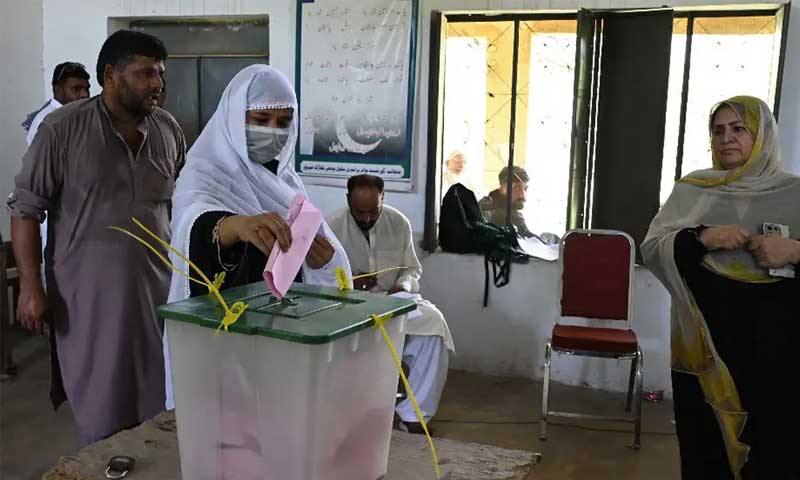
Voting for seven reserved seats in the Azad Jammu and Kashmir (AJK) Legislative Assembly is taking place on Monday, though polling, originally due to begin at 10am, had not yet started as scheduled. The voting window will remain open until 1pm.
Under Article 22(1) of the AJK Constitution, the Legislative Assembly is made up of 53 members: 45 directly elected through adult franchise, and eight chosen by those directly elected representatives.
The reserved seats up for election comprise five for women, and one each for Ulema-i-Din or Mashaikh, for Jammu and Kashmir State subjects living abroad, and for technocrats and other professionals. PML-N’s Chaudhry Abdul Rehman Arain was declared elected unopposed to the overseas state subjects’ seat after emerging as the sole candidate to file nomination papers for it.
Polling for seven of the 45 directly elected seats, five in Poonch district and two in Sudhnoti, could not proceed earlier due to law and order concerns in the region. As a result, only the 38 members elected so far, making up 84.4 percent of the directly elected house, will vote in today’s reserved-seat contests.
Six candidates are in the running for the five women’s seats, per the final list released by the Election Commission on Sunday: PML-N’s Riffat Abid, Sehrish Qamar, Maryam Idrees and Maryam Zaman (also known as Maryam Kashmiri), alongside PPP’s Farzana Yaqoob and Zobia Khurshid Raja. The Ulema and Mashaikh seat will be contested between PPP’s Hafiz Tariq Mahmood and PML-N’s Mohammad Mazhar Saeed, while the technocrats’ seat pits PML-N’s Barrister Syed Iftikhar Gillani against PPP’s Sahibzada Zulfiqar Ali.
The newly constituted Assembly’s first session has already been called for 2pm today, shortly after results are expected to be announced. All incoming members will be sworn in by outgoing Speaker Chaudhry Latif Akbar, who lost his own seat in the elections.
The broader AJK election exercise, originally slated for a single day on July 27, was split into multiple phases because of security concerns amid regional unrest, with voting held on July 27, August 2 and August 10. The third phase had initially been meant to cover the entire Poonch Division, spanning 11 constituencies across Bagh, Haveli, Poonch and Sudhnoti districts, but the Election Commission limited it to Bagh and Haveli alone due to law and order issues.
Of the 38 directly elected seats decided so far, PML-N has won 25 and PPP 12, with the sole winning candidate from the Awami Dast-o-Bazu party also aligning with PML-N. The PPP has meanwhile alleged large-scale rigging and stepped up its criticism of the ruling party in recent days.
Last week, PPP Chairman Bilawal Bhutto-Zardari said a genuine alliance with PML-N remained out of reach unless his party’s ‘grievances’ over the AJK polls were resolved, even as he opened formal channels with the PTI and offered to work with it in Parliament. He accused the federal government of keeping its political and administrative machinery active in AJK throughout the six-phase election process, calling this into question on transparency grounds.
Bilawal said the PPP had formally raised its objections with the Election Commission, Parliament and other constitutional forums, but that PML-N had neither addressed those concerns nor engaged in serious dialogue since the polls concluded. He further argued that understandings reached with PML-N ahead of the prime minister’s election had gone unfulfilled, and while the PPP had cooperated in the broader national interest, no real partnership could exist unless PML-N addressed the party’s poll-related concerns and honoured its commitments. He noted that the government still needed PPP support to pass key legislation, constitutional amendments and other contentious bills, adding that lawmaking could not be pushed through by numbers alone or through pressure tactics.
Tensions between the two parties surfaced again in the National Assembly on August 18, when the PPP forced the government to effectively shelve a packed legislative agenda of 21 bills for the day. Two days later, when the lower house passed a pair of bills concerning military and nuclear command structures, the PPP objected to how the legislation had been introduced, and although the party ultimately backed both bills, Bilawal criticised the government for failing to consult its coalition partners.