- AFP
- October 17, 2026
Fazl questions parliamentary supremacy after emergency, governor’s rule in KP
-

- WEB DESK
- October 17, 2026
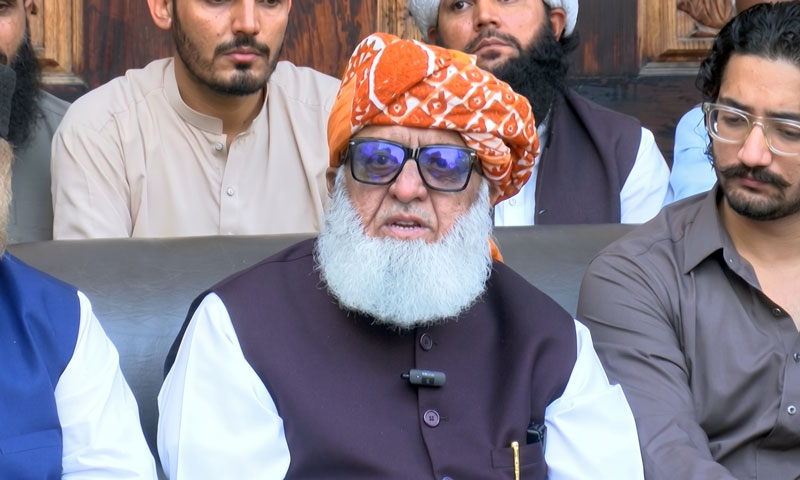
ISLAMABAD: Jamiat Ulema-e-Islam-Fazl (JUI-F) chief Maulana Fazlur Rehman questioned parliamentary supremacy on Saturday following the imposition of emergency and governor’s rule in Khyber Pakhtunkhwa (KP).
“If Parliament is supreme, then Parliament should make the decisions. What does it mean that decisions are made in Pindi and imposed on Parliament?” Fazlur Rehman said while addressing a press conference in Lahore.
He said his objection was not limited to whether similar measures would be introduced in other provinces, but centred on where decisions were being made and whether Parliament was being allowed to exercise its authority.
The federal government imposed emergency and governor’s rule in KP on October 11, citing a lack of cooperation from the Pakistan Tehreek-e-Insaf (PTI)-led provincial government in tackling terrorism. The measures transferred executive powers to the governor and established an 11-member advisory council to oversee provincial affairs.
Calls for parliamentary consultation
Fazlur Rehman said counterterrorism policy should be discussed through Parliament, proposing an in-camera session to bring the relevant stakeholders together and develop a consensus.
“If you want me not to speak publicly, at press conferences, seminars or public gatherings, then accept my offer and convene an in-camera session of the National Assembly,” he said.
He questioned how the public could be expected to support the fight against terrorism without being taken into confidence, arguing that Parliament was the appropriate forum for such consultation.
The JUI-F chief also questioned why emergency measures had been introduced in KP if terrorism was the principal justification, asking why similar action had not been taken in Balochistan.
He maintained that disagreeing with state policy did not amount to opposing the state, saying he had criticised policies on the basis of whether they served Pakistan’s interests.
Rejects allegations against PTI
Responding to allegations that the PTI government had facilitated or supported terrorism, Fazlur Rehman challenged the basis of the accusations and questioned the political record of those making them.
He questioned the framing of allegations against the PTI, pointing to former PTI leaders who had since moved into different political camps.
Fazlur Rehman said he had not criticised state institutions themselves but had raised questions about policies, particularly those affecting the economy and investment.
He argued that the government should explain its counterterrorism approach to Parliament and the public rather than expect people to support policies without being consulted.
Says government and PTI had reached understanding
The JUI-F chief also discussed his recent efforts to mediate between the government and the PTI, saying representatives from both sides had approached him to help resolve their differences.
He said he had met government representatives, including National Assembly Speaker Sardar Ayaz Sadiq and Rana Sanaullah, after the PTI had sought his intervention.
Fazlur Rehman said he subsequently met Prime Minister Shehbaz Sharif and participated in discussions with the PTI and government sides after being given their respective mandates.
According to him, the two sides had reached an understanding on the issues under discussion, although they now disagreed over who had backed away from the arrangement.
He questioned why the government had negotiated with the PTI if it considered the party or its leadership to be associated with terrorism.
“The matter had been settled between us,” he said, adding that both sides agreed an understanding had been reached but accused each other of violating it.
Fazlur Rehman said the JUI-F remained committed to cooperation with the opposition within Parliament but had made no commitment to a broader alliance or joint political action outside the legislature.
He also backed stronger ties between Pakistan and Saudi Arabia, condemning attacks on the kingdom and expressing support for its leadership and people.
You May Also Like
- Reuters
- October 17, 2026