- Reuters
- November 19, 2026
FCC strikes down provincial infrastructure cess in major relief to businesses
-

- Javed Soomro
- November 19, 2026
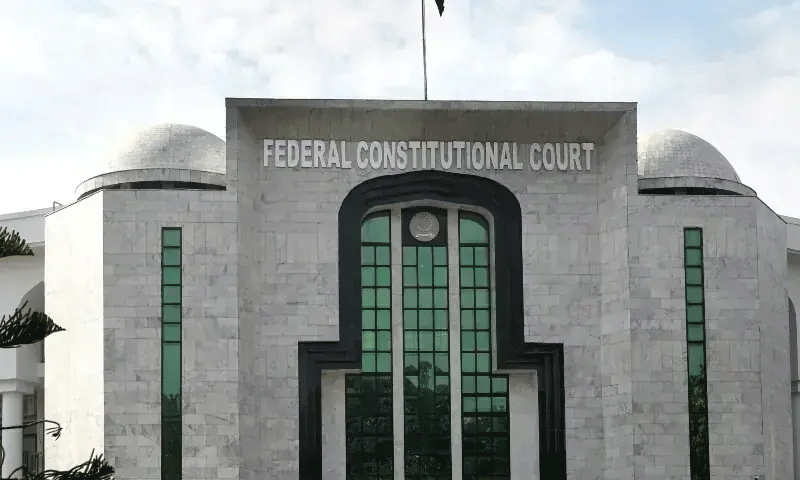
ISLAMABAD: The Federal Constitutional Court (FCC) has declared the infrastructure development cess imposed by provincial governments on imported and exported goods unconstitutional, ruling that imposing such a levy falls outside provincial legislative powers.
The cess is a special levy imposed on goods entering, leaving or passing through a province, ostensibly to finance the construction, development and maintenance of roads and other infrastructure.
Sindh introduced the levy in 1994, Punjab in 2015 and Khyber Pakhtunkhwa in 2022, although the legal frameworks and rates differed across the provinces.
Importers, exporters and manufacturers challenge cess
The legal challenge was brought by importers, exporters, manufacturers and business entities, who argued that the levy effectively amounted to a customs or export duty, a matter falling within the federal government’s exclusive legislative jurisdiction.
The petitioners maintained that provincial governments could not impose charges on international imports and exports under the pretext of infrastructure development, particularly when the levy was calculated on the value of goods and collected through the customs clearance mechanism.
Among the businesses involved in the litigation were Chashma Ghee Mills, Nestle Pakistan, Hameed Traders and Ablan Ali & Company. Senior lawyers Makhdoom Ali Khan, Raashid Anwer and Khalid Jawed Khan represented petitioners in the cases.
Provincial governments defended levy
The provincial governments had maintained that the cess was intended to finance the construction, development and maintenance of roads and infrastructure used for transporting commercial goods.
Sindh’s levy dates back to 1994 and was subsequently regulated through the Sindh Development and Maintenance of Infrastructure Cess Act, 2017. Punjab introduced its Infrastructure Development Cess Act in 2015, imposing a levy of 0.9 per cent, while KP enacted its own legislation in 2022. The KP rate was subsequently increased to two per cent through the Finance Act, 2024.
The levy had faced prolonged litigation, with the Peshawar High Court upholding the legality of KP’s infrastructure cess in November 2025 and dismissing 157 petitions challenging it.
Traders say additional levy undermined export competitiveness
The business community had repeatedly argued that the cess increased the cost of imported raw materials, machinery and finished goods, adding to manufacturers’ production expenses and making Pakistani products less competitive in international markets.
In September 2024, Commerce Minister Jam Kamal Khan called on provincial governments to withdraw the infrastructure cess, warning that it was increasing the cost of exporting Pakistani goods.
The National Export Development Board also urged provinces to abolish the levy in October 2024, saying it was undermining the competitiveness of Pakistani exports.
The ruling is expected to provide relief to importers, exporters and manufacturers by removing an additional cost associated with the movement of goods. However, the implications for previously collected amounts, pending liabilities and existing settlement arrangements will depend on the court’s operative directions.
You May Also Like