- WEB DESK
- September 16, 2026
Field Marshal Munir, FM Araghchi discuss regional de-escalation efforts in Tehran meeting
-

- Sadia Basharat
- May 23, 2026
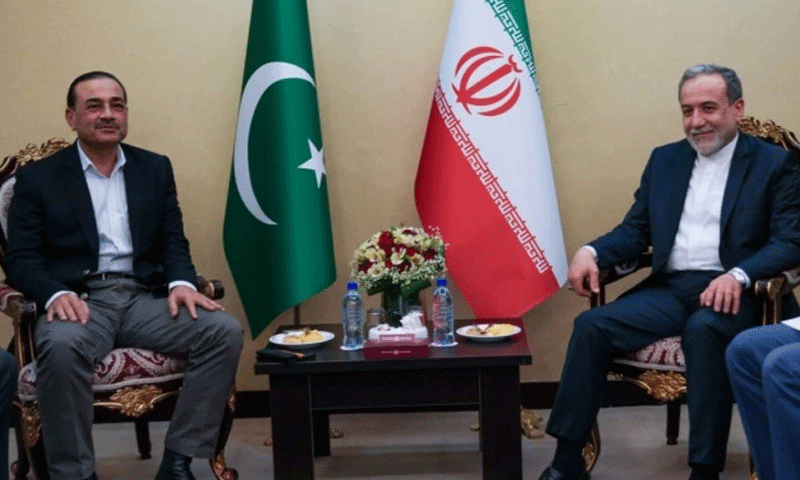
WEB DESK: Pakistan has intensified its high-level diplomatic efforts to avert a wider regional conflict, with Chief of Army Staff and Chief of Defence Forces Field Marshal Asim Munir holding late-night talks in Tehran with Iranian Foreign Minister Abbas Araghchi.
The crucial meeting on Friday night came as Washington considers renewed military options should ongoing indirect negotiations fail.
According to Iranian state media, Field Marshal Munir and Foreign Minister Araghchi exchanged views on the latest diplomatic initiatives aimed at preventing further escalation and securing a permanent end to the Iran war.
The Pakistani army chief, whose arrival in Tehran was confirmed by the Inter-Services Public Relations (ISPR), was received by Iranian Interior Minister Eskandar Momeni alongside Pakistan’s Interior Minister Mohsin Naqvi, underscoring the weight of Islamabad’s mediating role.
Washington prepares for all scenarios as Trump cancels holiday plans
The diplomatic push coincides with reports that the Trump administration is actively preparing for potential military operations against Iran if the current diplomatic track collapses.
President Donald Trump abruptly cancelled his scheduled Memorial Day weekend plans in New Jersey, returning to the White House due to what he described as “circumstances pertaining to Government.”
White House spokesperson Anna Kelly reiterated that the United States remains firm in its stance that Iran must not obtain a nuclear weapon, warning that Washington is prepared for all possible scenarios.
Consequently, US defence officials have begun reviewing personnel recall lists at overseas bases and adjusting troop rotations across the Middle East.
Meanwhile, Tehran is expected to respond shortly to a comprehensive US proposal delivered through Pakistani intermediaries, even as the Islamic Revolutionary Guard Corps (IRGC) warns that any fresh US or Israeli strikes could expand the conflict well beyond the region.
Regional diplomatic flurry intensifies ahead of crucial Iranian response
The delicate negotiations have triggered a broader flurry of diplomatic activity across the region. Turkish Foreign Minister Hakan Fidan held separate telephone consultations with Foreign Minister Araghchi, Qatari Prime Minister Mohammed bin Abdulrahman Al Thani, and Pakistani mediators to review the latest stage of the Tehran-Washington talks.
While a temporary ceasefire brokered by Pakistan on 8 April has successfully halted direct strikes since the heavy escalations of February which saw the temporary closure of the strategic Strait of Hormuz achieving a permanent peace remains a formidable task.
US Secretary of State Marco Rubio acknowledged some progress toward a deal but noted that “more work is required,” while Iran’s foreign ministry spokesman cautioned that the differences between the two adversaries remain deep and significant.
You May Also Like