- WEB DESK
- September 10, 2026
Govt announces parliamentary debate on creation of new provinces
-

- WEB DESK
- September 10, 2026
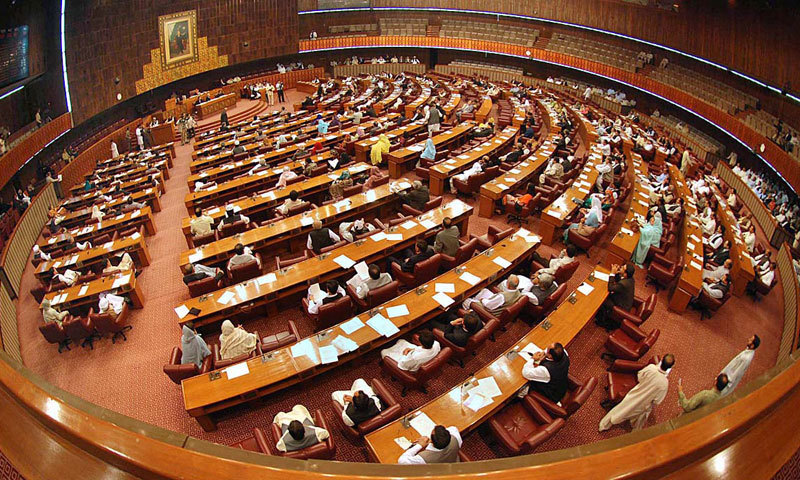
ISLAMABAD: Minister for Parliamentary Affairs Tariq Fazal Chaudhry announced on Thursday that the federal government will hold debates in the National Assembly and Senate on the creation of new provinces when both houses meet in October as a debate over restructuring Pakistan’s administrative map gains fresh momentum.
Chaudhry said that Parliament was the appropriate forum for discussion on the creation of new provinces and that different views on the issue should be brought before the two houses.
He said that the National Assembly and Senate would not hold sessions in September but were expected to meet in October, when the issue would be taken up for debate.
“The real forum for discussion on the creation of new provinces is Parliament,” Chaudhry said.
The announcement comes after weeks of renewed political debate over whether Pakistan’s four-province structure remains suited to a population of around 260 million and whether smaller provinces or empowered local governments would provide better governance and service delivery.
Islamabad not proposed as new province
Amid speculation about Islamabad, Chaudhry clarified that the federal capital was not being considered for conversion into a province.
He said Islamabad was instead moving towards a new governance model aimed at improving its administrative affairs.
“There is no proposal under consideration to make Islamabad a separate province,” he said, adding that work was under way on a new governance model for the capital.
Debate gains momentum
The issue was reignited in late July when Interior Minister Mohsin Naqvi called for the creation of additional administrative units or provinces, arguing that Pakistan’s existing governance structure had failed to adequately respond to the country’s administrative and development needs.
Naqvi has since defended the proposal, saying the question should ultimately be decided by the people. He has argued that smaller units could improve governance while preserving the cultural identities of existing regions.
Planning Minister Ahsan Iqbal subsequently proposed either creating as many as 15 new provinces or establishing around 160 fully empowered district governments, saying the existing two-tier federal and provincial system had failed to produce adequate improvements in social indicators.
The debate has since expanded beyond the question of simply creating provinces, with politicians, economists and governance experts discussing stronger local governments, greater fiscal devolution and administrative restructuring as possible alternatives or complementary reforms.
A national debate organised by the Sustainable Development Policy Institute in August brought together representatives of the PML-N, PPP, PTI, MQM-P, JI and JUI-F, as well as policymakers, technocrats and civil society representatives.
Participants differed over whether new provinces were necessary, but there was broad discussion about the need to decentralise political, administrative and financial authority and improve service delivery.
South Punjab, Bahawalpur and Hazara
The most prominent existing demands for new provinces include South Punjab, Bahawalpur and Hazara.
The demand for a separate South Punjab province has been on the political agenda for years. The National Assembly passed a resolution in May 2012 calling for the creation of a province to be known as Janoobi Punjab and specifically asked the Punjab Assembly to initiate the constitutional process under Article 239(4).
In 2019, the PML-N introduced a constitutional amendment bill in the National Assembly seeking the creation of both South Punjab and Bahawalpur provinces. The proposed South Punjab province was to comprise the Multan and Dera Ghazi Khan divisions, while Bahawalpur province was to comprise the existing Bahawalpur division.
The bill also proposed changes to parliamentary and provincial representation and other constitutional provisions.
The demand for Hazara province in Khyber Pakhtunkhwa is also longstanding. The KP Assembly passed a resolution in favour of a separate Hazara province in 2014, while constitutional amendment bills have subsequently been introduced in Parliament.
The issue received another boost last month when former federal minister Muhammad Ali Durrani said a constitutional amendment seeking the restoration of Bahawalpur and creation of Hazara province would be brought before Parliament. He also referred to the longstanding demand for South Punjab.
Istehkam-i-Pakistan Party President Abdul Aleem Khan has also backed Hazara, South Punjab and Bahawalpur provinces, saying growing populations and administrative needs required additional provinces.
Sindh resists division
The debate has encountered its strongest resistance in Sindh, where the Pakistan People’s Party has opposed any move to divide the province.
The Sindh Assembly unanimously passed a resolution on September 3 rejecting any proposal to divide Sindh or alter its territorial boundaries.
The resolution described Sindh as a historic, civilisational and constitutional entity and opposed changes to its territorial integrity.
The PPP has maintained that any move to create a new province must follow the constitutional procedure and have broad political consensus.
PPP Parliamentarians Secretary General Nayyar Hussain Bokhari said earlier this month that a constitutional amendment was required and that the matter could not be settled through political statements or executive action.
He also raised questions about how resources would be redistributed under the National Finance Commission and how parliamentary representation would be adjusted if new provinces were created.
PPP Chairman Bilawal Bhutto Zardari reiterated on Wednesday that the issue should be debated in Parliament rather than at business forums, saying political differences over the matter should be resolved through the parliamentary process.
MQM-P, meanwhile, has maintained its demand for additional provinces and administrative units, particularly in the context of Sindh.
Federal Health Minister Mustafa Kamal said his party had not backed away from the demand, while MQM-P leaders have called for a national dialogue among political parties to build consensus.
Constitutional hurdle
Any attempt to create a new province faces significant constitutional hurdles.
Article 239(4) of the Constitution provides that a constitutional amendment altering the limits of a province cannot be presented to the president for assent unless it has first been approved by the relevant provincial assembly by a vote of at least two-thirds of its total membership.
This means that a proposal involving the division of Punjab, Sindh or Khyber Pakhtunkhwa would require the consent of the respective provincial assembly in addition to the required majorities in Parliament.
Legal experts have also pointed out that establishing new provinces would require changes to a number of constitutional provisions dealing with the federation, parliamentary representation, provincial assemblies and other institutions.
Legal experts say that around a dozen constitutional articles could require amendments.
The constitutional requirement has become particularly significant in the case of Sindh following the provincial assembly’s rejection of any proposal to alter its boundaries.
New provinces or stronger local governments?
A parallel debate has emerged over whether Pakistan needs new provinces at all or whether the existing local government system should instead be strengthened.
Article 140-A of the Constitution requires each province to establish a local government system and devolve political, administrative and financial responsibility and authority to elected local representatives.
Several political parties and experts have therefore argued that governance problems could be addressed by empowering local governments rather than creating additional provinces.
At an SDPI discussion in August, representatives of several major parties favoured stronger local governments over the creation of new provinces, arguing that excessive concentration of authority in provincial capitals was contributing to poor service delivery.
Former Punjab chief minister Hamza Shehbaz has also argued that an empowered and continuously functioning local government system could reduce the need for creating new provinces.
He has called for the issue to be approached cautiously and resolved through detailed deliberation and political consensus.
JUI-F chief Maulana Fazlur Rehman has raised another major concern: the financial implications. He has argued that the debate over provinces is closely linked to the National Finance Commission and the distribution of financial resources among the federating units.
PTI calls for caution
The PTI has warned against what it considers a rushed move towards creating new provinces.
PTI Chairman Barrister Gohar Ali Khan has said any decision to divide a province without the consent of its people and representatives could weaken the federation.
KP Chief Minister Sohail Afridi has also said the PTI would not support the creation of new provinces without consulting party founder Imran Khan.
The differing positions underline the political difficulty of translating the renewed debate into legislation.
The planned parliamentary debate in October is therefore likely to provide the first major formal forum for the competing proposals, ranging from South Punjab, Bahawalpur and Hazara provinces to demands for additional administrative units and stronger local governments.
Any move from debate to actual creation of provinces, however, would require political consensus and completion of the constitutional process, including the approval of the relevant provincial assembly where provincial boundaries are altered.
You May Also Like
- WEB DESK
- September 10, 2026