- Reuters
- October 27, 2026
Hezbollah rejects US-backed ceasefire plan as Israel continues strikes in southern Lebanon
-

- Zafar Ali
- June 4, 2026
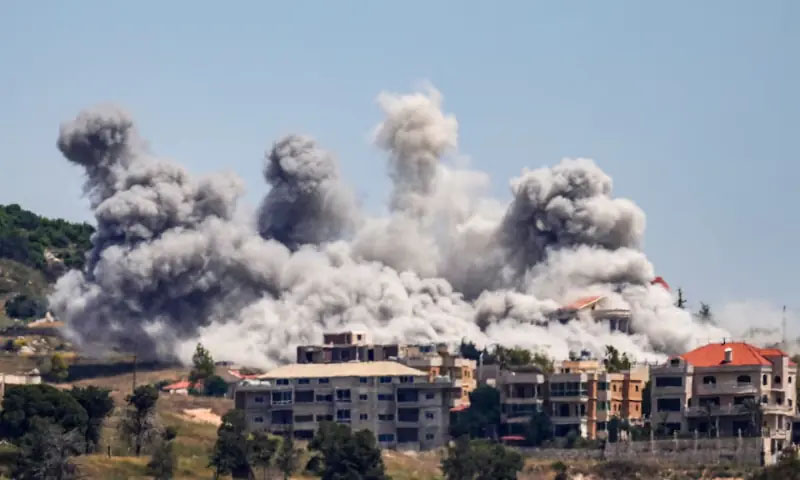
BEIRUT/JERUSALEM: Hezbollah on Thursday rejected a ceasefire framework announced by the United States after talks between Lebanon and Israel, while Israeli forces continued airstrikes and military operations in southern Lebanon.
The United States said on Wednesday that Lebanon and Israel had agreed to implement a ceasefire under which the Iran-backed Hezbollah group would halt attacks and withdraw its fighters from areas near the Israeli border.
However, Hezbollah leader Naim Qassem rejected the plan, saying the group was not a party to the negotiations and describing the U.S.-backed declaration as “a roadmap for the annihilation of a section of the Lebanese people and the enslavement of the rest.”
“As long as the occupation exists, the resistance will continue,” Qassem said in a statement.
Fighting between Hezbollah and Israel resumed on March 2 after the group launched attacks in support of Iran during the latter’s conflict with the United States and Israel. Despite several ceasefire announcements from Washington since April, hostilities have continued.
The conflict has become a major obstacle in diplomatic efforts aimed at easing broader regional tensions. Iran has repeatedly demanded an end to Israeli military operations in Lebanon as part of any wider agreement.
Qassem said any ceasefire arrangement must address southern Lebanon, where Israel has established what it describes as a security zone to protect northern Israeli communities from Hezbollah attacks.
He warned that northern Israeli towns would remain unsafe as long as Lebanese villages continued to face bombardment and destruction.
The commander of Iran’s Revolutionary Guards Quds Force said the “minimum demand of the resistance” was an Israeli withdrawal to positions held before the current conflict and before Israeli troops entered southern Lebanon.
Meanwhile, Israeli Defence Minister Israel Katz said military operations would continue despite the ceasefire announcement.
“Israel will, for the time being, continue its fire and operations on the ground,” Katz said, adding that Israeli forces would continue dismantling what he described as Hezbollah infrastructure.
The Israeli military also issued warnings to residents in southern Lebanon, saying operations against Hezbollah targets were ongoing.
Security sources reported multiple Israeli airstrikes across southern Lebanon. Lebanon’s National News Agency said at least five people were killed in strikes on the town of Sohmor, while drones were seen flying over Beirut.
Lebanese President Joseph Aoun described the U.S.-proposed framework as a final opportunity to achieve a comprehensive and lasting ceasefire. Speaking before Hezbollah formally rejected the proposal, Aoun said the agreement could come into effect within a day if all parties approved it.
According to a U.S. State Department statement, the ceasefire arrangement requires Hezbollah to completely halt military operations and withdraw all fighters from the area between the Israeli border and the Litani River.
The statement did not mention any Israeli withdrawal from southern Lebanon.
Katz said Israeli troops would remain in the security zone, including around the strategic Beaufort Castle area captured by Israeli forces at the weekend.
Israel’s military campaign has displaced around 1.2 million people, including hundreds of thousands from southern Lebanon, according to Lebanese authorities.
Under the framework, Lebanon and Israel agreed to establish “pilot zones” where the Lebanese Armed Forces would assume exclusive control and all non-state armed groups would be excluded.
Lebanese troops had already deployed to parts of southern Lebanon under a ceasefire agreement reached in November 2024 and announced earlier this year that they had established control over territory between the border and the Litani River.
A Lebanese official said the government intends to use the Beaufort Castle area as a model for future zones under army control.
President Aoun and Prime Minister Nawaf Salam have spent the past year pursuing the gradual and peaceful disarmament of Hezbollah, a policy that has increased tensions between the government and the group.
In Israel, National Security Minister Itamar Ben-Gvir criticised the ceasefire framework, calling it a “serious mistake” and demanding a cabinet vote.
Ben-Gvir argued that Hezbollah would not withdraw from areas south of the Litani River and said the Lebanese army lacked the capacity to enforce the agreement.
Israeli Prime Minister Benjamin Netanyahu has also faced criticism from political opponents and some coalition allies who accuse him of conceding too much to U.S. pressure.
Separately, the United Nations Interim Force in Lebanon (UNIFIL) said one of its peacekeepers died on Thursday from injuries sustained when mortar rounds struck a UN position near Marjayoun in southeastern Lebanon late on Wednesday night.
You May Also Like
- Reuters
- October 27, 2026