
- Reuters
- September 13, 2026
‘I might go for Islamabad talks,’ says Trump
-

- Sadiq Khan
- April 16, 2026
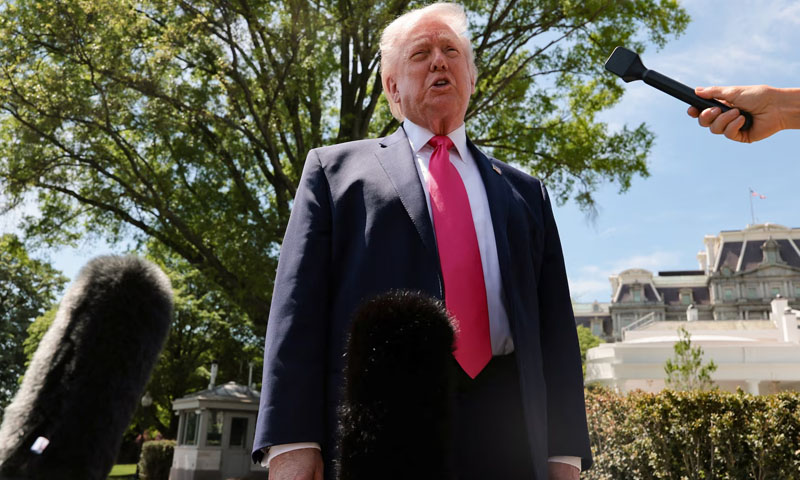
WASHINGTON: US President Donald Trump said his administration appreciates Pakistan’s role in facilitating ongoing US-Iran negotiations, hinting that he may personally attend talks in Islamabad as efforts intensify to reach an agreement.
“We are grateful for the job Pakistan is doing,” Trump said, adding, “I might go” for the Islamabad talks as the country remains actively engaged in pushing both sides toward a deal.
He expressed confidence that an agreement with Iran would be reached soon, saying, “The good news will happen very soon.” However, he stressed that any deal would depend on Iran compromising on its nuclear programme, reiterating that Tehran “cannot have nuclear weapons.”
Trump also underscored US military presence in the region, claiming that the US Navy has effectively enforced control over the Strait of Hormuz, with a “very powerful blockade” in place.
Commenting on other global conflicts, Trump urged both Russia and Ukraine to halt hostilities and work toward peace.
Addressing remarks attributed to Pope Leo III, Trump rejected any suggestion that Iran should possess nuclear weapons, stating firmly that such a scenario would not be acceptable.
It is worth noting that the Pope has previously called for an end to violence and emphasized the need for peace, while also voicing criticism of US foreign policy toward Iran.
10-day ceasefire between Israel and Lebanon
US President Donald Trump announced a ten-day ceasefire between Israel and Lebanon, saying that two countries have agreed to it, following diplomatic discussions in Washington.
In a statement shared on social media, Trump described “excellent conversations” with Israeli Prime Minister Benjamin Netanyahu and Lebanese President Joseph Aoun. He said that the agreement was reached with an immediate effect.
He further said that high-level delegations from both countries met in Washington earlier this week, marking what he called the first formal engagement between the two sides in 34 years.
Key details of the agreement
The reported ceasefire is said to last for 10 days, with the talks hosted in Washington under the supervision of the US State Department.
‘Peace team’ announced
Trump also announced a diplomatic team he referred to as a “peace team” to manage the transition toward a longer-term settlement.
The team includes Vice President JD Vance, Secretary of State Marco Rubio, and Chairman of the Joint Chiefs of Staff Gen. Dan “Razin” Caine.
General Caine’s statement
The United States has begun enforcing a naval blockade against Iran in the strategically vital Strait of Hormuz, a key global shipping route, according to US Joint Military Chairman General Caine.
Speaking on the operation, General Caine said the mission commenced on Monday at 10am Eastern Time, with enforcement taking place in international waters.
“US forces are actively pursuing vessels suspected of attempting to supply weapons to Iran,” he said.
Officials noted that the situation remains complex due to the narrow nature of the waterway, which increases risks for both military activity and commercial shipping. Despite these challenges, US agencies are closely monitoring vessel movements across the region.
General Caine confirmed that at least 13 ships have already turned back after receiving warnings from US forces. Approaching vessels are being issued clear instructions via loudspeakers, cautioning them against entering the restricted route.
“The Strait of Hormuz has been blocked by US forces. Please avoid using this route, otherwise force may be used,” a recorded warning message states.
A military official involved in the operation described the waterway as highly sensitive, requiring precise navigation and strict control measures. He added that US naval forces are employing advanced techniques to maintain control and ensure operational safety.
According to officials, around 50,000 personnel have been deployed as part of the mission, with support from allied forces. The United States is also coordinating closely with its partners to regulate maritime traffic in the strait.
The official further claimed that more than 1,300 strikes have been carried out, highlighting the use of advanced technology during operations. He added that US forces remain prepared to conduct precise strikes on key Iranian targets if necessary.
Recent operations have involved multiple naval units, including three from the United States and one allied force, as tensions in the region continue to escalate.
Pete Hegseth’s address
Meanwhile, US Defence Secretary Pete Hegseth said troop morale remains high, adding that concerns persist within Iran despite its strong rhetoric.
He maintained that US operations are focused solely on military targets and stressed that Washington aims to bring Iran to the negotiating table.
He also said that all decisions are being taken independently by Donald Trump, without external influence.
US navy official’s statement
A US Navy official added that the military remains committed to honouring its fallen soldiers, noting that he had personally visited personnel injured during Iranian retaliatory actions and witnessed their resilience and courage firsthand.
On the other hand, Chief of Army Staff Asim Munir held a meeting with commander of Iran’s Khatam al-Anbiya Central Headquarters. During the meeting, the Chief of Army Staff presented a detailed briefing on efforts aimed at ending the ongoing conflict, along with insights from his recent discussions in Tehran.
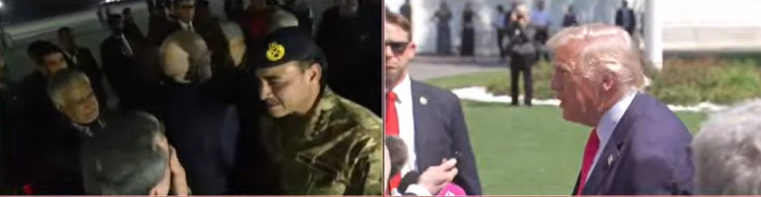
He reaffirmed Pakistan’s commitment to continued diplomatic engagement and de-escalation initiatives to help restore regional stability.
You May Also Like
- Reuters
- September 13, 2026
Trump says ‘very negative forces’ raising exaggerated concerns over AI
- Ayub Tareen
- September 13, 2026