
- Muhammad Zareef
- November 21, 2026
In New Delhi, Musadik says Pakistan will continue to play key role in regional peace efforts
-

- WEB DESK
- November 21, 2026
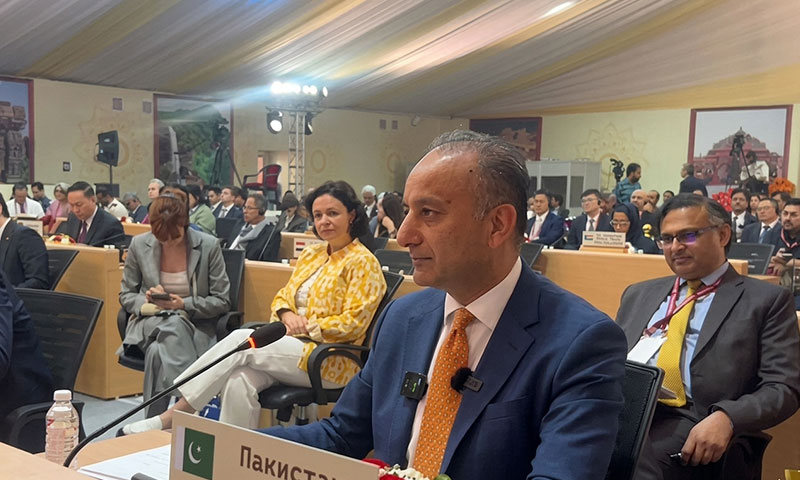
Federal Minister for Climate Change Musadik Malik said on Saturday that Pakistan will continue to play an important role in regional peace efforts, stressing that the country will maintain its contribution “wherever initiatives for peace” are pursued.
“Wherever there is talk of peace, Pakistan will continue to play its important role,” Malik said while addressing the Shanghai Cooperation Organisation (SCO) Civilisational Dialogue Forum in New Delhi.
He said Pakistan was actively contributing to efforts aimed at maintaining regional stability, adding that cooperation among countries was essential to addressing shared challenges.
The minister also warned that climate change had emerged as a growing threat to civilisation and historical heritage, stressing that its consequences were not confined to environmental damage.
“Climate change is not an issue of one country but a shared challenge for all humanity,” he said, calling for regional cooperation and a joint strategy to tackle environmental challenges.
He stressed that environmental challenges could not be addressed through isolated national efforts, adding that dialogue among countries was essential to developing a shared understanding of the threats facing the region.
The minister said the historical and cultural connections between different civilisations also offered an opportunity for countries to learn from one another and strengthen cooperation.
Malik highlights region’s shared history
Highlighting the region’s interconnected past, Malik said Pakistan was the custodian of three significant periods of its civilisational history, with its cultural links extending across South and Central Asia, Persia and the Arab world.
Referring to Delhi’s historic Purana Qila, he described the monument as a complete account of history, shaped by rulers from different periods.
Malik said Mughal emperor Humayun, the second Mughal ruler and son of Babur, established the city of Dinpanah at the site in 1533. His rule was interrupted in 1540 when Afghan ruler Sher Shah Suri defeated him and took control of Delhi, establishing the Sur dynasty.
Sher Shah, who ruled from 1540 to 1545, developed the fort complex and renamed it Shergarh. Humayun later reclaimed Delhi in 1555, restoring Mughal rule shortly before his death in 1556.
Citing the two former rivals, Malik said both had become part of the history of the same fort, illustrating how different rulers and civilisations collectively shaped the region’s historical heritage.
His example also appeared to carry a message for Pakistan and India, highlighting the importance of recognising shared history and finding common ground despite longstanding differences.
He said Pakistan’s historical connections extended northwards to Bukhara and Samarkand, while the Indus Valley and Gandhara civilisations reflected centuries-old cultural exchanges with Central Asia, Persia and the Arab world.
Malik also highlighted Gandhara’s Buddhist heritage, saying its artistic and architectural traditions travelled through the Silk Road towards Central Asia and China.
First ministerial visit from Pakistan since 2023
Malik is leading Pakistan’s delegation to the three-day SCO Civilisational Dialogue Forum, being held from November 20 to 22 at the historic Purana Qila in New Delhi.
He arrived in the Indian capital on Friday and attended the forum’s inaugural ceremony, addressed by Indian Prime Minister Narendra Modi.
The initiative was proposed by Modi at the SCO Council of Heads of State summit in Tianjin, China, in September last year. It brings together scholars, academics and cultural representatives from member states to explore shared civilisational heritage and promote cultural understanding.
Federal Minister Dr Musadik Malik attended the opening of the first SCO Civilisational Dialogue Forum at Purana Qila, #NewDelhi. https://t.co/RfXpURN8ZM
— Senator Musadik Office (@Team_Musadik) November 20, 2026
Speaking to Indian journalists ahead of his formal address, Malik described dialogue as an essential means of bringing together different identities and cultures.
He said diversity was central to meaningful engagement, adding that countries could learn from their shared histories despite political differences.
His visit marks the first by a Pakistani federal minister to India since former foreign minister Bilawal Bhutto Zardari attended the SCO Council of Foreign Ministers meeting in Goa in May 2023.
Strained Pakistan-India ties
The visit comes amid strained relations between Pakistan and India, the two nuclear-armed South Asian neighbours, whose ties deteriorated further following their days-long military confrontation in May last year.
Diplomatic engagement has remained limited, with longstanding disagreements over security and other bilateral issues continuing to affect relations.
High-level interactions between the two countries have largely taken place through multilateral platforms in recent years.
Bilawal’s 2023 visit to India and Indian Foreign Minister Subrahmanyam Jaishankar’s participation in the SCO meeting in Islamabad in 2024 provided opportunities for engagement, but did not lead to a formal resumption of bilateral dialogue.
Against this backdrop, the New Delhi forum provides another platform for representatives of both countries to participate in regional discussions alongside other SCO member states, although Malik’s visit is not a bilateral diplomatic engagement.
You May Also Like
- AFP
- November 21, 2026
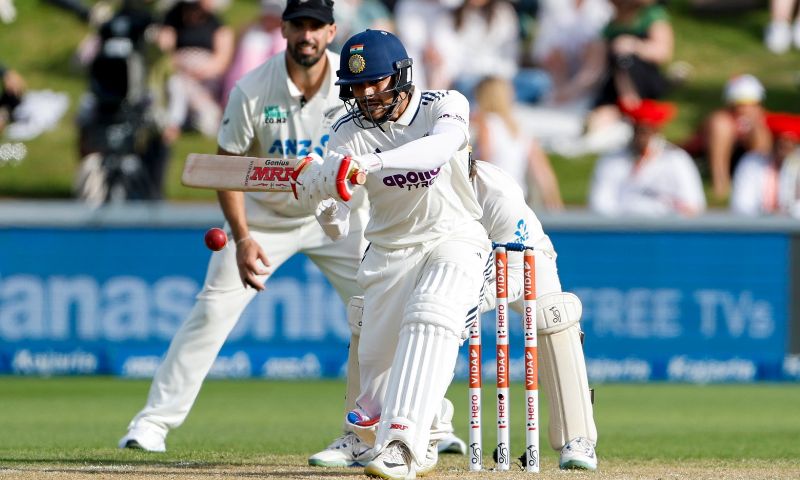
India take 118-run lead over New Zealand, reach 486-4 at stumps on day 3

- AFP
- November 21, 2026
