
- WEB DESK
- September 14, 2026
Iran reviews US response as Trump signals ‘positive’ talks
-

- Zoya Anwer
- May 4, 2026
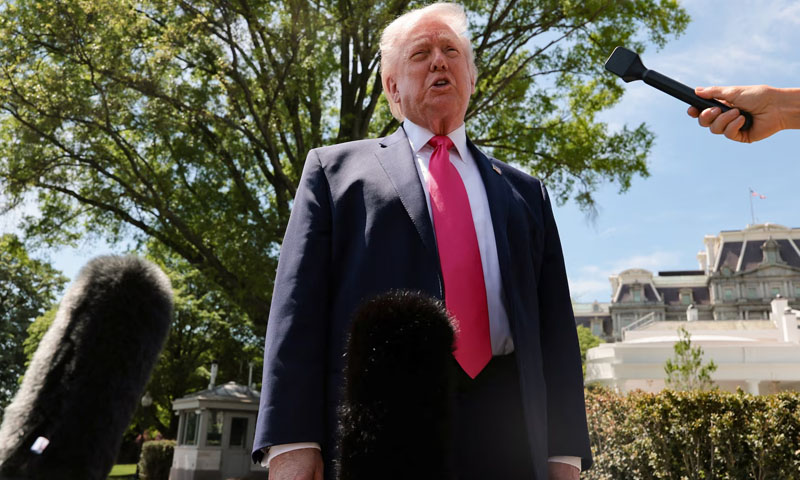
Iran is examining Washington’s reply to its proposed 14-point roadmap for de-escalation, while US President Donald Trump said ongoing contacts between the two sides were showing encouraging signs.
Tehran confirmed over the weekend that it had received a response from the United States through Pakistan, which has been facilitating communication between the rivals. Iranian officials said the proposal was under review, without offering details on Washington’s position.
Speaking publicly, Trump struck an optimistic tone, saying his representatives were engaged in “very positive discussions” with Iran that could lead to a favourable outcome. His remarks suggest a potential shift after weeks of strained rhetoric following a fragile ceasefire that halted open hostilities last month.
US Middle East envoy Steve Witkoff also confirmed that contacts were ongoing, noting that both sides were weighing the possibility of further negotiations to move beyond the current stalemate.
Strait of Hormuz plan and humanitarian push
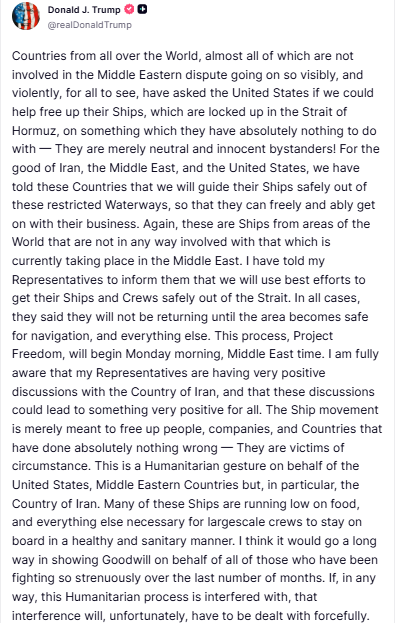
Alongside diplomatic developments, Trump unveiled a plan aimed at easing tensions in the strategically vital Strait of Hormuz, where commercial vessels have been stranded amid the crisis.
He said multiple countries had approached Washington for assistance in ensuring safe passage for ships caught in the waterway, which is a key global transit route. In response, the United States has proposed an initiative, dubbed “Project Freedom”, to help guide vessels and their crews out of the restricted zone.
According to Trump, the effort is intended as a humanitarian measure, particularly as some ships have reportedly been facing shortages of food and essential supplies. He emphasised that the operation was not meant to alter the strategic balance but to assist those affected by circumstances beyond their control.
However, he warned that any attempt to disrupt the mission would be met with a firm response, underscoring the fragile security environment in the region.
The maritime tensions are closely tied to the broader conflict dynamics, including a blockade affecting Iranian ports and the disruption of shipping lanes. Analysts say any progress in reopening the Strait would be a critical confidence-building step.
14-point proposal and diplomatic stakes
The diplomatic push centres on a comprehensive proposal submitted by Iran, which reportedly outlines a phased approach to ending the conflict and stabilising the region within a month.
The plan is said to include an initial stage focused on gradually reopening the Strait of Hormuz and lifting restrictions on Iranian ports. It also envisions Tehran taking responsibility for clearing sea mines, alongside broader measures to reduce military tensions.
Subsequent phases reportedly address nuclear and security issues, including limits on uranium enrichment under specific conditions and mutual commitments to refrain from attacks. The proposal does not include dismantling Iran’s nuclear infrastructure, a point likely to remain contentious in negotiations.
The final stage outlines a wider regional framework, with Iran proposing dialogue with neighbouring Arab states to establish a collective security arrangement across the Middle East.
Despite these proposals, uncertainty remains high. Trump had earlier expressed scepticism about the plan, suggesting it might not meet US expectations. Meanwhile, Iranian officials have stressed that the next steps depend on Washington’s willingness to pursue diplomacy.
Senior figures in Tehran have issued mixed signals, reiterating openness to talks while warning of consequences if tensions escalate. Officials have framed the situation as a choice for the United States between continued confrontation and a negotiated settlement.
Diplomatic observers note that while the current exchanges indicate a possible thaw, significant gaps persist on core issues, including sanctions, military activity, and nuclear policy. The coming days are likely to determine whether the tentative engagement evolves into formal negotiations or slips back into confrontation.
You May Also Like

- WEB DESK
- September 14, 2026
Petrol price rises by Rs4.42, diesel by Rs6.10 per litre
- WEB DESK
- September 14, 2026