
- WEB DESK
- September 14, 2026
Iran speaker says ‘new equation’ emerging in Strait of Hormuz amid rising tensions
-

- Zafar Ali
- May 5, 2026
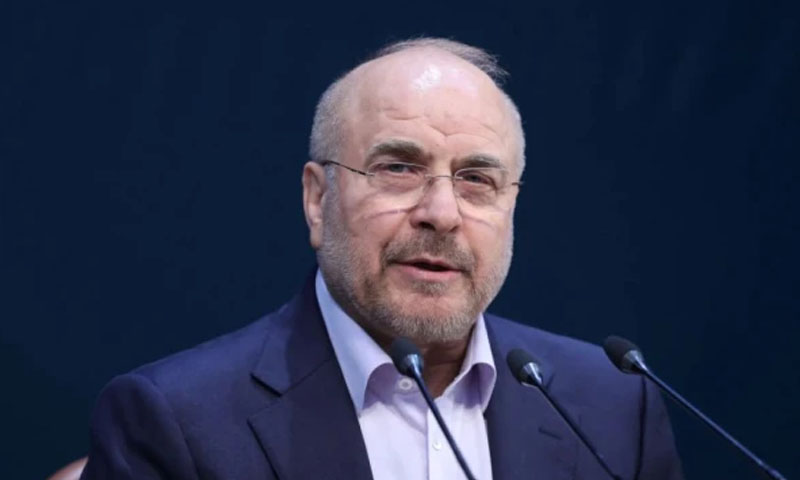
TEHRAN: Iran’s parliament speaker Mohammad Bagher Ghalibaf has said that escalating actions by the United States and its allies in the Strait of Hormuz were reshaping the regional balance of power, warning that a “new equation” was taking form with potential global consequences.
In a statement posted on X, Ghalibaf accused Washington and its allies of violating a ceasefire and endangering maritime navigation and energy shipments in the strategic waterway, through which a significant share of the world’s oil supply passes.
“Iran is fully aware of the situation, and the current conditions will not be tolerable for the United States,” he said, adding that Tehran had yet to fully deploy its broader strategy.
The remarks come amid heightened tensions in the Gulf, where, according to Iranian officials, the United States has imposed a naval blockade on Iranian ports and shipping since April 13, further escalating the standoff.
US President Donald Trump recently announced a naval initiative dubbed “Project Freedom”, aimed at ensuring safe passage for commercial vessels and reopening shipping lanes in the Strait of Hormuz. Under the plan, the US Navy would escort merchant ships through the corridor.
Iran has reacted sharply to the move, viewing it as a provocation and a challenge to its influence in the region.
Analysts say the rising tensions in the Strait of Hormuz — a critical artery for global oil supplies — pose significant risks to the world economy and energy markets, as any disruption could send shockwaves through oil prices and trade flows.
No immediate response was available from US officials to Ghalibaf’s latest remarks.
Events in Hormuz highlight absence of military solution: Araghchi
Earlier, Iran’s Foreign Minister Abbas Araghchi said that events in the Strait of Hormuz highlight the absence of a military solution to an ongoing political crisis as he cautioned against renewed escalation despite ongoing diplomatic efforts involving Pakistan.
In a statement posted on X, Araghchi said recent developments in the strategic waterway, a key global oil transit route, demonstrate that force cannot resolve entrenched political disputes. His remarks come as talks aimed at de-escalation are reportedly making progress, with Pakistan playing a mediatory role.
Iranian says US naval forces attack civilian vessels in Gulf
Earlier, Iranian said US naval forces attacked civilian vessels in the Gulf, killing five people, and warned Washington against further attempts to enter the Strait of Hormuz, according to remarks reported by Al Jazeera.
Iranian officials rejected U.S. claims that the targeted boats were linked to the Islamic Revolutionary Guard Corps (IRGC), saying they were civilian vessels.
They also said U.S. destroyers had attempted to enter the Strait of Hormuz with their radar systems turned off, but were detected once the systems were activated, as Iranian naval forces monitor the area.
According to the Iranian account, naval units then engaged the U.S. vessels and issued warning shots, including the use of drones, missiles and rockets, forcing the destroyers to turn away.
Iran warned that any further attempt by U.S. naval forces to enter the waterway would be considered a violation of an existing ceasefire.
There was no immediate comment from the U.S. military on the claims.
The Strait of Hormuz, a narrow shipping lane between Iran and Oman, is a vital route for global oil supplies, and rising tensions in the area have heightened concerns over energy security and regional stability.
You May Also Like



- Reuters
- September 14, 2026
