- WEB DESK
- October 27, 2026
Iran warns of striking US, Israeli energy hubs if infrastructure attacks persist
-

- Sadia Basharat
- June 8, 2026
WEB DESK: Iran’s armed forces will directly target oil and gas facilities tied to the United States, Israel, and their regional allies if strikes against Iranian energy infrastructure continue, a senior military source warned on Monday.
The statement, carried by the semi-official Fars News Agency, marks a sharp escalation in regional rhetoric following a major breach of the April 8 ceasefire and raises the stakes for global energy markets already rattled by the ongoing conflict.
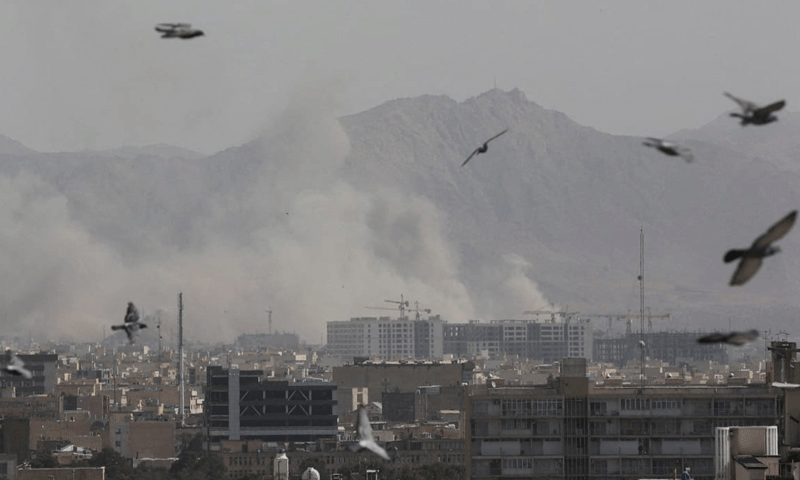
The ultimatum comes in the wake of a recent strike attributed to the Israeli Air Force against the Mahshahr petrochemical complex in southwest Iran.
Local security officials in Khuzestan province confirmed that the Karoon petrochemical plant sustained partial damage, representing the first major hit on a domestic energy asset since the spring truce.
In immediate retaliation, the Islamic Revolutionary Guard Corps (IRGC) launched heavy ballistic missile salvos targeting industrial and military infrastructure in Israel under Operation Nasr, signaling a definitive shift from purely military engagements to economic warfare.
Threats to global energy security
According to the military source quoted by Fars News, the Iranian command has warned that any further targeting of its civilian or oil-related infrastructure will trigger asymmetric counter-strikes.
The IRGC noted that its operational scope extends well beyond the immediate combat zone, threatening to target Western-tied economic assets and regional facilities hosting American personnel or military bases. The military leadership explicitly warned that such a response aims to deprive the United States and its allies of regional oil and gas supplies for years to come.
Compounding the threat to international energy security, Tehran has hinted at leveraging its strategic control over the Strait of Hormuz. Through this vital maritime chokepoint, approximately one-fifth of the world’s liquefied natural gas and oil passes daily.
Iranian officials have threatened to impose stringent new transit regulations and financial fees on shipping, a move analysts suggest could severely disrupt Western supply chains and spark a fresh wave of global economic instability.
Iran denies Saudi attack amid regional tensions
Iran on Monday strongly rejected reports suggesting that its armed forces had launched attacks against Saudi Arabia, maintaining that any military operations undertaken by the country are always explicitly and publicly announced.
The statement by the Iranian Foreign Ministry came on a day of dramatic escalation in the Middle East, as Israel launched heavy airstrikes against Iranian strategic defence systems and energy infrastructure, triggering a second wave of retaliatory Iranian ballistic missiles that sent sirens blaring across Israel.
Speaking at a tense press briefing in Tehran, Iranian Foreign Ministry Spokesperson Esmaeil Baghaei categorically denied allegations of any military action directed towards Riyadh. “We have not attacked Saudi Arabia,” the spokesperson declared, adding that “our armed forces explicitly announce any target they attack.
Diplomatic efforts hanging by a thread
The latest exchange of heavy missile salvos and aggressive rhetoric has severely complicated international mediation efforts. The escalating crisis threatens to completely derail ongoing diplomatic peace talks initiated by the Trump administration, which had aimed to restore the fragile April ceasefire.
Analysts note that by expanding the conflict’s target parameters to include critical national infrastructure, both sides are entering a dangerous phase of attrition where economic survival hinges on deterrence.
As regional proxy networks brace for potential secondary fallout, defense observers remain focused on how Washington and its Gulf allies will respond to Tehran’s explicit red lines.
With both Iranian and Israeli forces maintaining high operational readiness, the prospect of an expanded conflict encompassing the broader Middle East energy corridor remains critically high, leaving the international community scrambling to avert a full-scale regional war.
You May Also Like