
- Reuters
- September 15, 2026
Ishaq Dar calls Marka-e-Haq a symbol of national unity, courage
-

- Sadia Basharat
- May 7, 2026
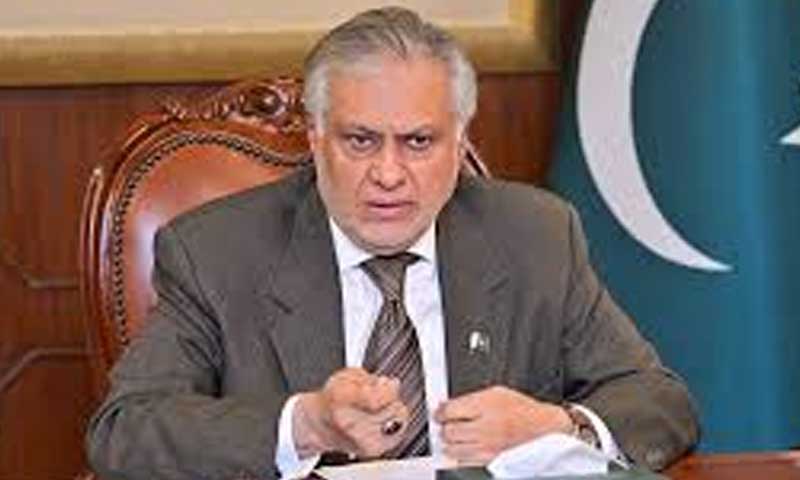
WEB DESK: Deputy Prime Minister and Foreign Minister Ishaq Dar has lauded the country’s conduct during last year’s military stand-off with India, describing the response as “measured, responsible, and precise.”
Speaking on Thursday to mark the first anniversary of Marka-e-Haq, Dar paid tribute to the “unwavering resolve” of the nation and its armed forces during the 2025 conflict.
The conflict, which began following the Pahalgam attack on 22 April 2025, culminated in a ceasefire on 10 May after the launch of Operation Bunyan-ul-Marsoos.
In a message issued by the Ministry of Foreign Affairs, Dar characterised the period as a “defining moment” that demonstrated how no force could shake Pakistan’s foundations when its people stood united.
He emphasised that under the leadership of Prime Minister Shehbaz Sharif, the state acted with “moral clarity,” guided by principle rather than emotion.
Military success and the right to self-defence
Reflecting on the operational achievements of the crisis, the Foreign Minister stated that Operation Bunyan-ul-Marsoos was “more than a military success,” asserting that Pakistan had exercised its inherent right to self-defence under the UN Charter.
Dar specifically praised Air Chief Marshal Zaheer Ahmad Babar Sidhu and Admiral Naveed Ashraf for their leadership.
He highlighted the Pakistan Air Force’s “notable operational successes,” which included the downing of multiple Indian fighter jets among them three Rafale aircraft and the neutralisation of strategic military targets.
The minister noted that these actions were a direct response to Indian hostilities, which had escalated sharply on 7 May 2025, when missile strikes hit six cities across Punjab and Azad Jammu and Kashmir (AJK).
Those strikes resulted in the destruction of a mosque and the deaths of dozens of civilians. Dar maintained that Pakistan’s subsequent retaliation against Indian airbases and missile storage sites was a necessary step to protect territorial integrity and deter further aggression.
Diplomatic resolve and the path to peace
Beyond the battlefield, Dar highlighted the crucial role of the Foreign Office in presenting Pakistan’s position on global platforms.
He reiterated that while Pakistan remains committed to regional stability through dialogue, lasting peace in South Asia is impossible without addressing the “core issue” of Jammu and Kashmir.
The 2025 crisis saw a significant diplomatic breakdown, with India suspending the 65-year-old Indus Waters Treaty, closing the Wagah-Attari border, and ordering the shutdown of the Pakistan High Commission in New Delhi.
The hostilities eventually ceased on 10 May 2025, following intensive overnight diplomatic efforts involving US President Donald Trump.
Closing his address, Dar called on the nation to remain unified, stating that the anniversary was not merely a look back at the past but a commitment to “shaping the future.”
He urged citizens to reject division and work towards a prosperous Pakistan, while warning that any future threats to the homeland would be met with “unshakable resolve and strength through all means available.”
You May Also Like

- WEB DESK
- September 15, 2026
Petrol price rises by Rs4.10, diesel by Rs6.41 per litre
- Reuters
- September 15, 2026
Samson, Reddy lead India to series-clinching win over Afghanistan

- WEB DESK
- September 15, 2026