- Waqas Buneri
- October 9, 2026
Karachi police seek travel ban on four individuals linked to ‘Pinky’ drug case
-

- Zafar Ali
- May 16, 2026
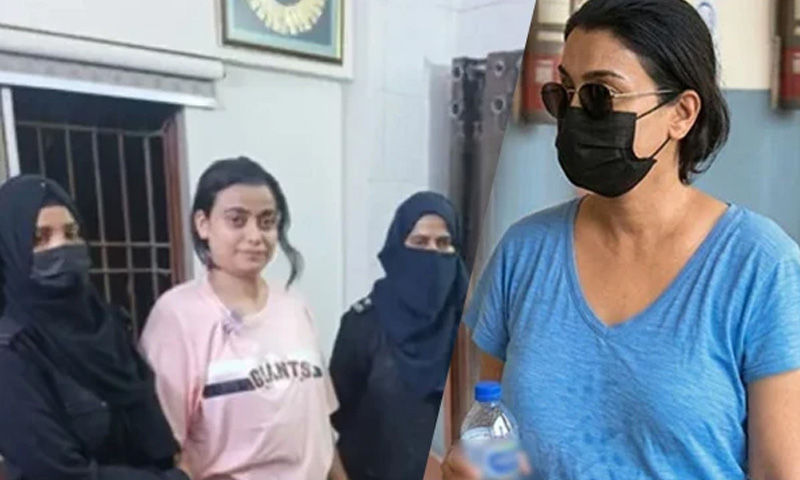
KARACHI: Karachi police have recommended placing four individuals linked to alleged drug trafficker Anmol alias “Pinky” on Pakistan’s Provisional National Identification List (PNIL), as authorities widen an investigation into a sprawling narcotics network operating across multiple cities in Pakistan and internationally.
According to sources, Karachi South Zone have police sent a letter to the authorities concerned seeking restrictions on foreign travel of four individuals believed to be connected to the case.
According to sources, authorities have sought travel bans on Pinky’s two former husbands, identified as Nasir Ali and police officer Akram, as well as her brothers, Nasir and Shaukat Bakhsh.
Police investigators said that the four were required for questioning and expressed concerns that they could attempt to flee the country following the suspect’s arrest and subsequent disclosures during interrogation.
Earlier Karachi Police Additional Inspector General (AIG) Azad Khan told a press conference that authorities had recommended the immediate placement of four names on the PNIL watchlist.
Azad Khan said that the suspect had disclosed the names of several individuals during questioning, though investigators would proceed only after verification of evidence and links.
The case also triggered wider debate in the Sindh Assembly, where lawmakers and ministers discussed the spread of narcotics networks and allegations of institutional protection for drug traffickers.
Sindh Home Minister Zia-ul-Hassan Lanjar said during the assembly session that preliminary investigations suggested Pinky’s alleged network was not limited to Karachi and Sindh.
“Pinky was also operating in Islamabad and Punjab, and names of her customers have also emerged,” Lanjar said, while cautioning against making unverified allegations public.
The minister said that the suspect had been remanded for further interrogation and that the investigation was continuing with the support of intelligence agencies.
Lanjar defended the Sindh police operation that led to the arrest, describing it as a significant achievement, while also criticising police officers accused of giving the suspect preferential treatment during her court appearance.
“The officers who provided protocol to Pinky have been suspended, and if necessary they will also be arrested,” he said.
The minister told lawmakers that narcotics had penetrated households and were damaging the younger generation, adding that the government intended to make the case a “role model” for future anti-drug operations.
Opposition lawmakers sharply criticised the authorities over the proliferation of narcotics in Karachi.
Pakistan Tehreek-e-Insaf lawmaker Bilal Jadoon told the assembly that drugs were being openly sold in areas including Hijrat Colony and near railway tracks in Karachi, accusing the system of failing to curb the trade.
He also criticised the treatment accorded to the suspect during court proceedings, saying it reflected poorly on state institutions.
Senior Sindh Minister Sharjeel Inam Memon said that the government was committed to dismantling drug trafficking networks across the province.
“We have launched the strictest possible campaign against narcotics,” Memon said, adding that drug trafficking was not only a Sindh issue but a global problem requiring collective action.
He said that authorities had arrested and killed several drug traffickers in recent operations and vowed action against anyone found involved in narcotics distribution, regardless of background or profession.
Memon also said the government possessed a “long list” of individuals allegedly connected to drug-related activities but declined to disclose names publicly.
Sindh Excise Minister Mukesh Kumar Chawla said that the excise department was also conducting anti-narcotics operations and described Pinky’s arrest as a major success for the Sindh government and police.
“We seized 700 kilograms of ice (methamphetamine),” Chawla told the assembly, adding that combating drugs was a collective responsibility.
The latest developments come a day after Karachi police disclosed details suggesting the alleged network may have international dimensions.
AIG Azad Khan said that investigators recovered 869 contacts from the suspect’s mobile phone, including 132 numbers traced to Karachi.
According to police, financial investigations have identified transactions worth around Rs300 million linked to the suspect, while authorities are reviewing multiple bank accounts.
Karachi police said that the investigation had uncovered suspected links with individuals from African countries as well as operatives based in Lahore.
Some foreign nationals believed to be connected to the network were currently in Lahore, investigators said.
Police also said the suspect had allegedly been involved in narcotics trafficking since 2014 and expanded operations in Karachi in 2018, using online networks to facilitate distribution.
The suspect was arrested on May 12 during an intelligence-based operation in Karachi. Police said a cocaine dealer was also arrested in the same raid and a 9mm pistol was recovered.
Investigators said coordination is under way with the Federal Investigation Agency and cybercrime authorities as efforts continue to trace financial flows, communication records and possible international links tied to the alleged network.