- WEB DESK
- October 29, 2026
Khawaja Asif swears Fazlur Rehman would not have criticised govt ‘if given share in KP’
-

- WEB DESK
- October 29, 2026
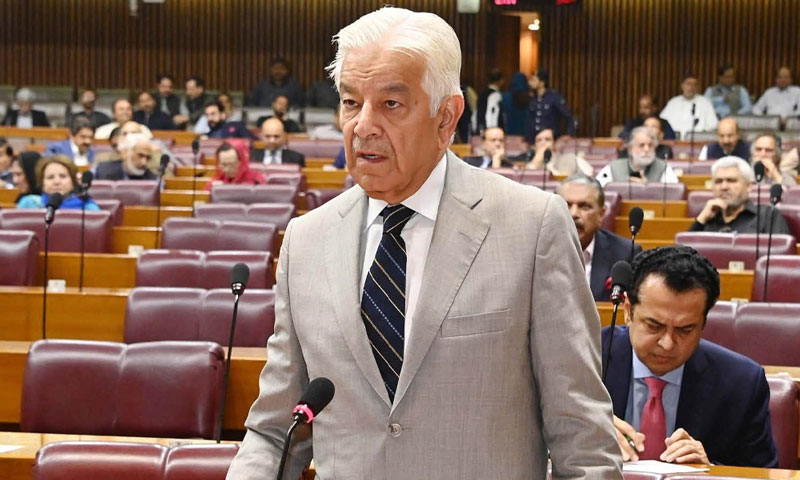
ISLAMABAD: Defence Minister Khawaja Asif on Thursday claimed that Jamiat-e-Ulema-Islam (JUI-F) chief Maulana Fazlur Rehman would not have criticised the government’s diplomatic efforts had the party chief been given a share in the Khyber Pakhtunkhwa government, accusing him of using political pressure to secure a place in the ruling coalition.
Speaking in the National Assembly on Thursday, Asif said the criticism levelled by Fazlur Rehman a day earlier reflected his dissatisfaction with the government’s political arrangements rather than genuine concerns about Pakistan’s diplomacy.
“If they had been given a share in the government in Khyber Pakhtunkhwa, yesterday’s speech would not have happened,” Asif said, adding that he was making the claim “under oath.”
He also alleged that Fazlur Rehman’s criticism was an attempt to extract political concessions from the government, saying the JUI-F chief wanted the government to approach him to secure his support.
The defence minister was responding to Fazlur Rehman’s remarks in the National Assembly on Wednesday, when the JUI-F chief questioned his absence from high-level talks in Tehran involving Iranian officials and representatives of Pakistan, Saudi Arabia and Turkiye.
Asif defends Pakistan’s diplomatic role
Asif rejected the criticism over his absence from Tehran, saying the discussions were aimed at promoting regional peace rather than negotiating a defence agreement.
He said Chief of Defence Forces Field Marshal Asim Munir had taken on the role of facilitating dialogue following the conflict of the past year and a half, with the objective of preventing further escalation and establishing peace in the region.
“The Ministry of Defence did not have a mandate for what was happening in Tehran,” Asif said, describing Munir as a messenger of peace who had helped create conditions for negotiations.
He said his presence in Tehran had not been necessary and described the criticism of his absence as misplaced. He added that the diplomatic efforts had helped ease tensions that could otherwise have deteriorated, particularly over Yemen.
The defence minister also said two defence agreements had already been signed: one involving Pakistan, Saudi Arabia and Turkiye, and another involving Pakistan, Qatar, Turkiye and Indonesia. He said he had attended the signing of both agreements in his capacity as defence minister.
Fazlur Rehman had criticised Asif on Wednesday, saying a defence agreement was being discussed in Iran while the defence minister remained in Pakistan.
“Khawaja Asif sahib is also present here. A defence agreement is being made in Iran, and the defence minister is sitting here,” he said before repeating Asif’s earlier phrase: “Koi sharam hoti hai, koi haya hoti hai” (Have some shame, have some decency).
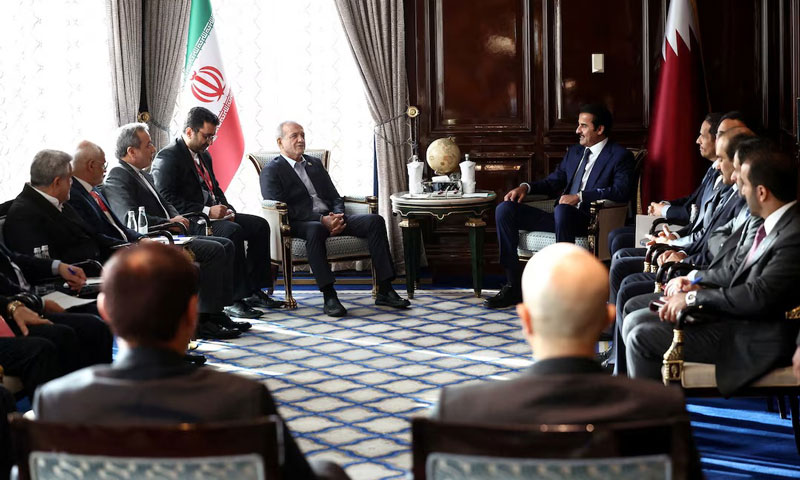
The Tehran meeting on Monday brought together Munir, Saudi Defence Minister Prince Khalid bin Salman and Turkish intelligence chief Ibrahim Kalin with Iranian President Masoud Pezeshkian and other senior Iranian officials. The envoys represented the Makkah Joint Defence Agreement, signed by Pakistan, Saudi Arabia and Turkiye in August.
Questions Fazlur Rehman’s Kashmir record
Asif also challenged Fazlur Rehman’s record as chairman of the parliamentary Kashmir Committee, questioning what he had achieved during his 10-year tenure.
He said the chairmanship of a committee dealing with Kashmir at international forums required impeccable credentials and argued that political leaders should be judged by their record rather than their criticism of others.
Asif accused Fazlur Rehman of benefiting from political arrangements and government positions over several decades while criticising others for their past decisions.
He also referred to the JUI-F chief’s previous participation in governments and his political alliances, saying his record included periods of cooperation with parties and leaders with whom he had subsequently disagreed.
The defence minister acknowledged his own past support for military rule, saying he had previously apologised for positions he considered justified in their historical context but which he later believed were wrong.
He urged Fazlur Rehman to apply the same standard to his own political history.
Calls for unity amid regional tensions
Asif also criticised opposition parties for what he described as their reluctance to acknowledge Pakistan’s military and diplomatic achievements.
He said political differences should not prevent parliamentarians from recognising matters of national importance, particularly at a time when Pakistan faced significant regional challenges.
According to Asif, Pakistan had gained international recognition following its confrontation with its longstanding adversary and subsequent diplomatic efforts. He said countries including Iran, Gulf states and major powers had acknowledged Pakistan’s role, but opposition politicians had been reluctant to praise the government’s performance.
He also criticised what he described as the growing political alignment between Fazlur Rehman and Pakistan Tehreek-e-Insaf (PTI), arguing that opposition parties were increasingly turning to the JUI-F chief for political support.
Asif said politicians should distinguish between their political disagreements and issues concerning national security and sovereignty.
“We should do politics based on the Constitution, the integrity of this country and the protection of this country,” he said, urging parliamentarians to send a message of unity to the public rather than allowing personal and political disputes to dominate parliamentary proceedings.
He said he had initially sought to maintain restraint in his response to Fazlur Rehman’s remarks but felt compelled to address what he described as misleading statements and criticism of Pakistan’s diplomatic efforts.
You May Also Like