
- WEB DESK
- September 9, 2026
Khawaja Asif says Makkah pact could become operational after Houthi attacks on Saudi Arabia
-

- WEB DESK
- September 9, 2026
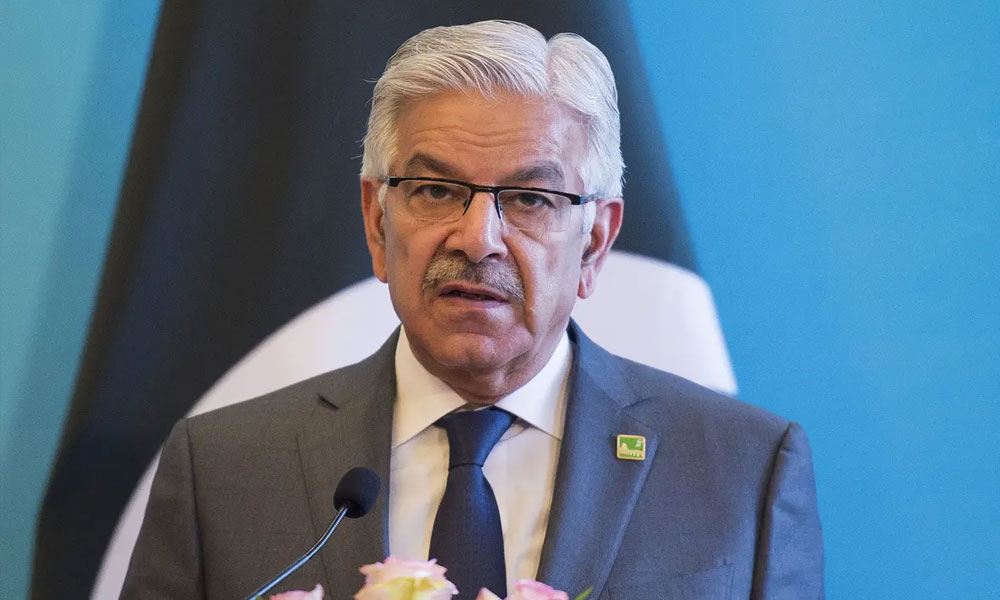
ISLAMABAD: Defence Minister Khawaja Asif has said that Pakistan is bound to defend Saudi Arabia under a new trilateral security pact with Saudi Arabia and Turkiye if the kingdom faces aggression.
His comments come a day after a wave of Houthi attacks wounded 73 people in southern Saudi Arabia.
Asif said the Makkah Joint Defence Agreement, signed by the three countries last month, would become operational in the event of aggression against any of its members.
“The three countries are bound under the agreement to help each other,” Asif said in an interview with Geo News, adding that there should be no doubt about Pakistan’s commitment to the pact.
The agreement stipulates that an armed attack against any one of the three countries will be regarded as an attack against all three.
Pakistan has described the pact as defensive in nature and said it is intended to strengthen collective deterrence rather than target any particular country.
Asif said that the agreement was not a bilateral arrangement between Pakistan and Saudi Arabia but a three-way pact involving Turkiye, meaning its provisions applied to all three signatories.
“If there is aggression against one member country, all three countries will respond,” he said, according to the interview.
The comments came a day after Yemen’s Houthi forces launched attacks on several locations in southern Saudi Arabia, hitting civilian and economic sites as well as energy infrastructure, according to Saudi authorities.
The Saudi-led coalition said that 73 people, including women and children, were wounded in attacks on Abha, Khamis Mushait, Jazan and Najran. Fires were reported at several energy facilities and some operations were temporarily halted.
Saudi Arabia has vowed to take measures to deter further attacks, describing the strikes as a dangerous escalation and a violation of its sovereignty.
The Houthis, who control large parts of northern Yemen, have said their attacks are in response to Saudi military action in Yemen. The escalation comes amid a broader regional conflict involving Iran, the United States and their respective allies.
Pakistan condemns Houthi attacks
Earlier, Pakistan’s Foreign Office strongly condemned the Houthi attacks, saying the targeting of civilian and economic sites in Abha, Khamis Mushait and Najran was a violation of Saudi Arabia’s sovereignty and territorial integrity.
Islamabad said that the attacks threatened regional peace and stability and could undermine efforts towards a peaceful and lasting settlement of the Yemen conflict.
Pakistan reiterated its support for the Saudi leadership and people and said it would continue to back the kingdom’s sovereignty, territorial integrity and security.
Asif recalls earlier Saudi support
Asif also pointed to Pakistan’s longstanding defence relationship with Saudi Arabia, saying Islamabad had supported the kingdom even before the two countries had a formal defence pact.
He recalled that he was defence minister in 2014 when Saudi Arabia came under attack and said he travelled to the kingdom around March 26 or 27 at the time. Pakistan provided assistance to Saudi Arabia, although Asif did not disclose details of the support.
Pakistan and Saudi Arabia subsequently formalised their security relationship through the Strategic Mutual Defence Agreement, signed in Riyadh on September 17, 2025. That bilateral pact provides that aggression against either country would be considered aggression against both.
The 2026 Makkah agreement therefore builds on an already established Pakistan-Saudi defence relationship while adding Turkiye to a three-way collective security framework.
What is the Makkah Joint Defence Agreement?
Pakistan, Saudi Arabia and Turkiye signed the Makkah Joint Defence Agreement on Augugust 7, 2026, at Al-Safa Palace in Makkah during the Makkah Al-Mukarramah Summit for Joint Defence.
The accord was signed by Saudi Crown Prince and Prime Minister Mohammed bin Salman, Turkish President Recep Tayyip Erdogan and Pakistani Prime Minister Shehbaz Sharif.
Its central provision is that an armed attack against one of the three states will be regarded as an attack against all three. The agreement also calls for broader defence cooperation and stronger collective deterrence against aggression.
Pakistan’s Deputy Prime Minister and Foreign Minister Ishaq Dar subsequently clarified that the pact is purely defensive, is not directed against any country and does not replace or cancel existing bilateral or multilateral agreements involving the three countries.
He said the collective-defence provision is consistent with the right of individual and collective self-defence under Article 51 of the UN Charter.
The pact also remains open to other regional countries willing to adhere to its principles and settle disputes through peaceful means, according to Dar.
How the agreement is being implemented
The agreement moved beyond a political declaration at the end of August, when the three countries held the inaugural meeting of its Strategic Political and Defence Committee in Istanbul.
The meeting brought together foreign and defence ministers and senior military commanders from Pakistan, Saudi Arabia and Turkiye. Pakistan was represented by Dar, Asif and Chief of Defence Forces Field Marshal Asim Munir.
The three countries agreed to establish a permanent secretariat in Saudi Arabia, headed initially by a Pakistani secretary-general for three years.
They also agreed to deepen defence-industry cooperation, joint technology development and production, as well as joint activities designed to strengthen military capabilities and the cohesion of their armed forces.
The Istanbul meeting also underscored that the three countries intended to use the framework not only for military coordination but also for de-escalation and efforts towards regional peace and stability.
Why the pact matters
The agreement brings together three countries with significant but different strategic capabilities: Pakistan has one of the region’s largest militaries and is a nuclear-armed state; Turkiye is a NATO member with a growing defence industry; while Saudi Arabia is a major Gulf power with extensive financial and strategic influence.
For Pakistan, the agreement formalises a longstanding defence relationship with Saudi Arabia while deepening its strategic partnership with Turkiye. For Riyadh, it adds two significant military partners to its security relationships at a time of heightened regional tensions.
The pact also comes after Pakistan and Saudi Arabia had already entered into their bilateral Strategic Mutual Defence Agreement in 2025, making the Makkah accord an expansion of an existing security relationship rather than an entirely new defence partnership.
Iran-US tensions
Asked about the wider confrontation between Iran and the United States, Asif said the door to diplomacy had not completely closed and that indirect contacts between the two sides continued.
Pakistan, he said, had been trying to persuade all parties to the conflict to pursue a peaceful settlement.
Islamabad has sought to maintain relations with Iran while also preserving its longstanding ties with Saudi Arabia, Turkiye and other regional and Western partners, leaving it with a delicate diplomatic balancing act as fighting spreads across the region.
The latest Houthi attacks have added another layer to those challenges, potentially putting the newly established Makkah defence framework under its first serious test.
You May Also Like
- WEB DESK
- September 9, 2026
Eleven terrorists killed in security operations in Balochistan: ISPR

- WEB DESK | Saba Bajeer
- September 9, 2026