- WEB DESK
- August 31, 2026
Khawaja Asif’s post sharing Imran Khan’s sons’ NICOP details draws criticism
-

- WEB DESK
- August 31, 2026
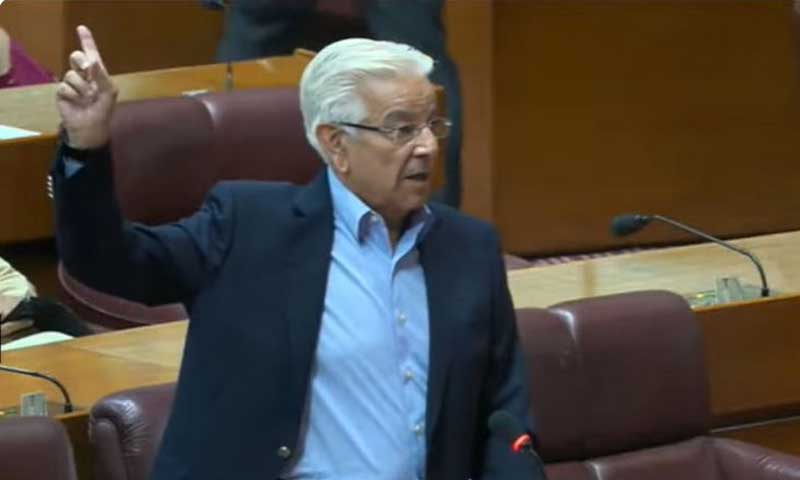
Defence Minister Khawaja Asif has come under fire after publicly sharing the NICOP numbers and expiry details of Pakistan Tehreek-e-Insaf (PTI) founder and former prime minister Imran Khan’s sons, with critics questioning whether disclosing their personal identification data was lawful.
In posts on his official X and Facebook accounts, Asif said Khan’s sons, Sulaiman Khan and Kasim Khan, last travelled to Pakistan in 2022 using their National Identity Cards for Overseas Pakistanis (NICOPs). He said they could still travel to Pakistan using the same documents if they wished.
The minister accompanied his remarks by publishing the two brothers’ NICOP numbers and their expiry dates.
The posts came days after Sulaiman and Kasim spoke to Sky Sports about their father’s detention, alleging that Khan was being denied adequate medical treatment, kept in solitary confinement and prevented from meeting family members regularly.
The interview, broadcast on August 27, triggered a separate dispute involving the Pakistan Cricket Board (PCB), which reportedly protested against its airing and warned that Pakistani players could withdraw from the remainder of the match if it went ahead. The match was ultimately completed after discussions with the England and Wales Cricket Board, with England winning by 194 runs and taking the series.
Questions over personal data
Asif’s decision to publish the brothers’ identification details prompted criticism on social media, with users raising concerns about privacy and the protection of personal data.
Former Associated Press of Pakistan news director Shafiq Qureshi said the Prevention of Electronic Crimes Act (PECA) 2016 criminalises the unauthorised transmission or use of another person’s identification information.
He also pointed to the NADRA Ordinance, arguing that citizens’ identity records are treated as confidential, and cited Article 14 of the Constitution, which provides protection for the dignity and privacy of individuals.
Other users similarly questioned the publication of the NICOP details and urged X to take action over the post.
Under Section 16(1) of PECA, unauthorised obtaining, possession, transmission or sale of another person’s identity information can carry a sentence of up to three years in prison, a fine of up to Rs5 million, or both.
The social media debate, however, extended beyond the privacy issue.
‘Why would they risk coming to Pakistan?’
Several users argued that Sulaiman and Kasim may be reluctant to travel to Pakistan because of concerns that they could face arrest.
They questioned whether, despite holding NICOPs, the two would be treated differently from other overseas visitors once they entered the country, given their father’s ongoing incarceration.
Some users suggested that the brothers’ decision not to visit Pakistan could be linked to fears that they might face legal action or detention after arrival. These claims were raised by users on social media and were not independently established.
Others responded to Asif by pointing to Khan’s sisters, who are in Pakistan, questioning whether their presence in the country has enabled them to regularly meet their father.
The discussion also drew a wave of abusive and personal comments directed at the defence minister, reflecting the highly polarised political debate surrounding Khan’s imprisonment and his family.
The controversy has consequently shifted attention from Asif’s original argument, that Khan’s sons can enter Pakistan using their NICOPs, to a broader debate over the handling of citizens’ identification data and the security concerns surrounding the former prime minister’s family.