
- AFP
- November 26, 2026
Kushner confirms talks with Iranian officials, says Trump keeping ‘all options on the table’
-

- WEB DESK
- November 26, 2026
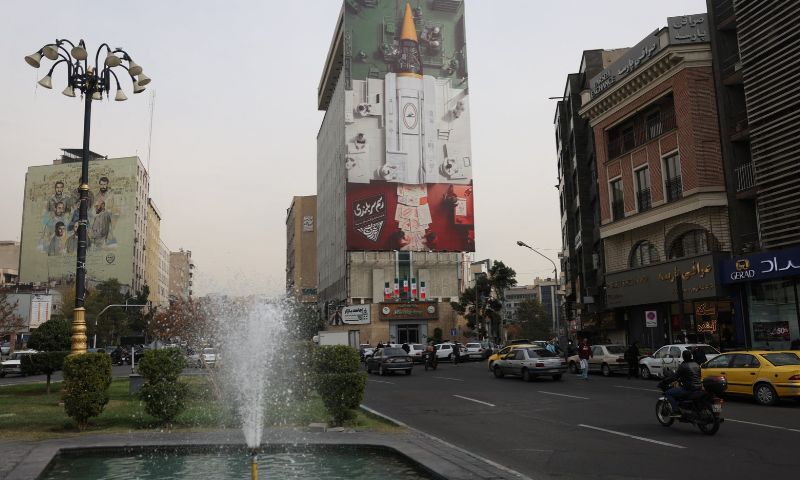
The United States has held multiple rounds of discussions with Iranian representatives amid continued uncertainty over the prospects of a negotiated settlement, with US envoy Jared Kushner saying President Donald Trump has not ruled out further military action against Tehran.
Speaking to Mathias Dopfner on the MD Meets podcast, Kushner confirmed his involvement in diplomatic efforts led by US Vice President JD Vance, revealing that he had met Iranian officials on several occasions, Al Jazeera reported.
“President Trump always keeps all his options on the table,” Kushner said when asked about the possibility of renewed US military action against Iran.
He added that Trump remained focused on the conflict and had assembled a team to address the crisis.
The US envoy also criticised Europe’s response to the conflict, expressing dissatisfaction with the level of support Washington had received from its European partners.
“The Europeans ask a lot of America,” Kushner said, adding that their response to the situation involving Iran had not impressed him.
Iran stands firm on seven conditions for negotiations
Iranian Parliament Speaker Mohammad Baqer Ghalibaf, on the other hand, ruled out further negotiations with the United States until Tehran’s seven conditions were fulfilled, warning that renewed US military action could expand the conflict beyond its current geographical boundaries.
Addressing a public session of parliament on Tuesday, Ghalibaf criticised recent remarks by Trump and other US officials, accusing Washington of relying on threats and economic pressure because of what he described as its inability to effectively confront Iran.
Describing Tehran’s position on negotiations as “clear and firm”, Ghalibaf reiterated that Iran would not take further steps towards diplomatic engagement unless its demands were met.
“As we have stated previously, no steps will be taken and no negotiations will be held until Iran’s seven conditions are fulfilled,” he said.
The parliament speaker also reaffirmed Iran’s readiness to respond to any renewed US military aggression, warning that the geographical scope of the conflict could widen should Washington resume attacks against Tehran.
Tensions persist in Strait of Hormuz
Meanwhile, Iran’s Islamic Revolutionary Guard Corps (IRGC) Navy said on Wednesday that two oil tankers had caught fire after striking naval mines in the Strait of Hormuz, according to a statement carried by Iranian state media.
The IRGC warned vessels against navigating the strategically important waterway without prior coordination with Iranian authorities, Reuters reported.
Tehran has maintained that normal maritime traffic through the strait will not resume until Washington meets its demands, including lifting the US naval blockade of Iranian ports and ending hostilities across the region. reuters.com
Disruptions to shipping through the Strait of Hormuz have remained a major concern for international energy markets, with the conflict placing considerable economic pressure on oil-importing countries.
Diplomatic efforts continue
Efforts to secure a lasting agreement between Washington and Tehran have continued through international mediators, although significant differences remain over the conditions for ending the war.
Earlier this month, negotiations involving Qatari mediators concluded without a breakthrough. Proposals under discussion included the removal of restrictions on Iranian oil exports, the lifting of the US naval blockade and the restoration of maritime traffic through the Strait of Hormuz, according to Reuters. investing.com
Qatar’s prime minister has also warned against renewed escalation, saying the Middle East cannot withstand another confrontation between Washington and Tehran, Al Jazeera reported on Monday. aljazeera.com
Pakistan’s role in peace efforts
The war began on February 28 following joint US-Israeli strikes against Iran, subsequently drawing other countries in the region into the conflict.
Pakistan brokered a ceasefire between Washington and Tehran on April 8 before hosting direct negotiations in Islamabad on April 11 and 12. Although the talks concluded without a comprehensive agreement, diplomatic engagement continued through subsequent meetings in Switzerland and Qatar.
Nearly nine months since the outbreak of the war, differences over sanctions, maritime restrictions and the conditions for a permanent cessation of hostilities continue to stand in the way of a negotiated settlement.
You May Also Like
- Reuters
- November 26, 2026
Yemen’s Houthis claim attack on Saudi Arabia’s largest refinery

- WEB DESK
- November 25, 2026