
- Reuters
- November 26, 2026
Pakistan not among 14 economies targeted in latest US tariff proposals
-

- AFP
- November 26, 2026
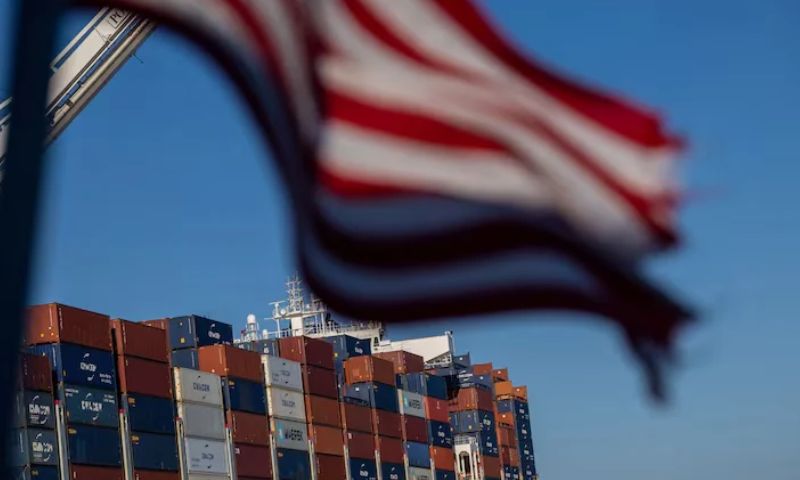
WASHINGTON: Pakistan has been left out of the latest round of proposed US tariffs targeting 14 economies, including neighbouring China and India, following a months-long investigation into alleged excess manufacturing capacity, AFP reported on Wednesday.
The proposed duties, ranging up to 20 per cent, mark the latest move by US President Donald Trump’s administration to reshape Washington’s global trade relationships and encourage domestic manufacturing.
While several Asian economies, including Bangladesh, India, China and Vietnam, have been targeted under the latest proposals, Pakistan does not feature on the list.
A senior US official, speaking on condition of anonymity, accused the targeted economies of promoting production and manufacturing capacity that did not correspond with market demand.
The proposed tariffs target China, the EU, India, Bangladesh, Cambodia, Indonesia, Japan, South Korea, Malaysia, Singapore, Switzerland, Taiwan, Thailand and Vietnam.
China faces a proposed tariff of 20 per cent, the joint-highest rate among the targeted economies.
The duties will be subject to a public consultation period before taking effect, with implementation expected in January at the earliest. The official added that existing trade agreements had been taken into consideration when determining the proposed rates.
In a separate announcement, the Office of the United States Trade Representative (USTR) also proposed additional tariffs on Brazilian goods, including aircraft, citing alleged insufficient action to address Washington’s trade concerns.
The announcements come ahead of the G20 summit in Miami in December, where Trump is expected to host world leaders.
The senior US official downplayed concerns that the proposed duties could strain relations with trading partners ahead of the summit, suggesting that further trade agreements could be signed during the gathering.
Concerns over rising inflation
The investigation into excess manufacturing capacity covered several industries, including batteries, cement, chemicals and processed foods.
The proposed tariffs could increase costs for US businesses already dealing with earlier trade levies, potentially placing further financial pressure on consumers.
The rising cost of living was a major issue in the recent US midterm elections, which saw Trump’s Republican Party lose control of both houses of Congress to the Democrats.
US consumer inflation stood at 3.7 per cent year-on-year in September, approaching a three-year high amid the economic effects of the war on Iran, existing tariffs and increased investment in artificial intelligence (AI).
While US Federal Reserve policymakers believe that most of the inflationary effects of Trump’s earlier tariffs have passed through the economy, additional duties could contribute to further price increases.
Fresh tariffs follow Supreme Court ruling
The latest proposals follow an investigation launched by the USTR in March to determine whether excess manufacturing capacity in other economies resulted from unreasonable or discriminatory practices that adversely affected US commerce.
The investigation was initiated days after the US Supreme Court struck down Trump’s earlier sweeping global tariffs, ruling that the president lacked the authority to impose them under the legislation cited by his administration.
Trade lawyer Ryan Majerus told AFP that the investigation could be among the Trump administration’s most significant trade actions, citing concerns that excess manufacturing capacity abroad could result in an oversupply of goods, lower prices and the weakening of US manufacturing.
The proposed measures are expected to face opposition from China and other trading partners. Beijing has long rejected accusations that its economy relies excessively on exports.
How will the new tariffs apply?
Although the US Supreme Court struck down Trump’s global tariffs in February, sector-specific duties, including those on automobiles and steel, remain in place.
According to the senior US official, the newly proposed tariffs will not be imposed on top of these existing sector-specific duties.
In July, Trump also imposed a separate round of tariffs on 60 economies over allegations of insufficient action against forced labour.
For economies subject to both the forced labour and excess production tariffs, the higher of the two rates will apply rather than a combination of both duties.
You May Also Like


- WEB DESK
- November 25, 2026
WhatsApp users can now schedule messages up to 14 days in advance

- Abdul Basit
- November 25, 2026