- Farah Mehjabeen
- October 26, 2026
Lebanon announces limited Israel-Hezbollah truce as fighting persists in south
-

- Reuters
- June 2, 2026
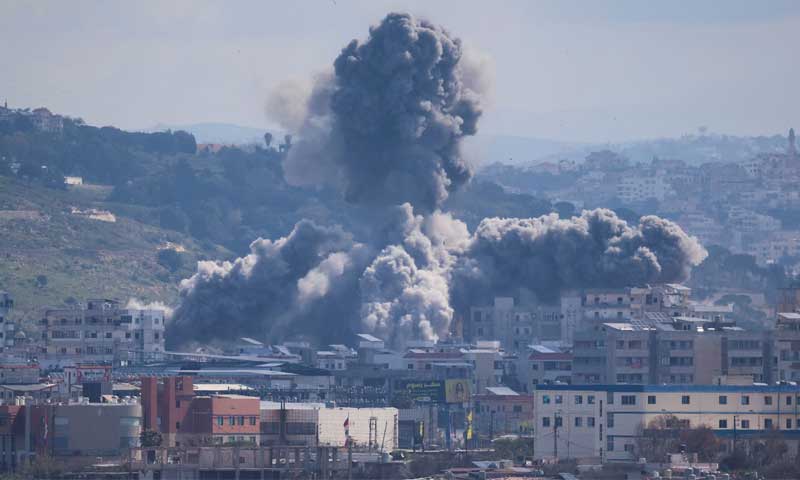
BEIRUT/JERUSALEM: Lebanon said on Monday that Israel and Hezbollah had agreed to a limited ceasefire aimed at reducing hostilities around Beirut, although clashes continued in southern parts of the country, underscoring the fragility of the arrangement.
The announcement marked the first significant effort to ease tensions in the conflict that has claimed thousands of lives and become closely linked to the wider confrontation involving Iran, Israel and the United States.
Limited ceasefire around Beirut
According to Lebanese officials, the understanding does not amount to a comprehensive ceasefire. Instead, Israel is expected to halt strikes on Beirut and surrounding Hezbollah-controlled areas, while Hezbollah would suspend attacks on Israeli territory.
Despite the announcement, military activity continued in southern Lebanon, where Israeli forces have been conducting ground operations since March. Early on Tuesday, the Israeli military reported intercepting two rockets launched from Lebanon towards northern Israel, adding that there were no casualties.
US President Donald Trump, who first disclosed details of the arrangement, said Hezbollah had communicated through intermediaries that it would refrain from attacking Israel. He also stated that Israeli Prime Minister Donald Trump had agreed to withdraw forces preparing for operations against Beirut.
However, Israeli Prime Minister Benjamin Netanyahu later made clear that military operations in southern Lebanon would continue. Israeli troops are currently advancing towards the Zaharani River, representing the deepest Israeli incursion into Lebanon in more than two decades.
Hezbollah seeks broader agreement
Hezbollah lawmaker Hassan Fadlallah welcomed efforts toward a broader ceasefire but said any lasting agreement would require the withdrawal of Israeli forces from Lebanese territory. He stopped short of explicitly confirming that Hezbollah would suspend all attacks on Israel.
Lebanese authorities said they would seek to broaden the agreement during talks with Israeli representatives scheduled to take place in Washington later this week.
The limited truce could potentially revive diplomatic efforts to end the wider regional conflict that erupted following US and Israeli military action against Iran earlier this year. Negotiations aimed at reaching a broader settlement have stalled for weeks despite an existing but fragile ceasefire between Washington and Tehran.
Iran links Lebanon to wider negotiations
The Israel-Hezbollah confrontation began in early March as an extension of the larger regional conflict and has remained closely intertwined with it.
Iran has repeatedly insisted that Israeli military operations in Lebanon must cease as part of any broader agreement. The United States, however, has maintained that developments in Lebanon should be treated separately from negotiations over Iran.
Iranian Foreign Minister Abbas Araqchi said any ceasefire involving Iran and the United States should apply across all fronts, including Lebanon.
Meanwhile, Iranian state media reported that Tehran was suspending indirect negotiations with Washington and was considering abandoning the ceasefire framework that has largely held since April. Iranian officials did not immediately confirm the reports.
Trump dismisses concerns over talks
Trump said he had received no such message from Tehran and downplayed concerns about the future of the negotiations. Speaking in a television interview, he described the talks as increasingly unproductive and suggested he was unconcerned if they collapsed altogether.
Despite repeated claims by Trump since March that a peace agreement was close, no formal deal has been reached. In recent days, both Iran and the United States have accused each other of carrying out limited military strikes despite the ceasefire.
Shipping threats push oil prices higher
Adding to concerns over regional stability, Esmaeil Qaani warned that Iran could expand disruptions to maritime traffic from the Strait of Hormuz to the Bab el-Mandeb Strait, another critical global shipping route connecting the Red Sea to the Gulf of Aden.
The threat heightened concerns over energy supplies. Iran’s actions in the Gulf have already disrupted shipping through waters that normally handle a significant share of global oil and liquefied natural gas exports.
Oil prices climbed about 4pc on Monday amid growing fears that escalating tensions could further affect global energy markets.
You May Also Like